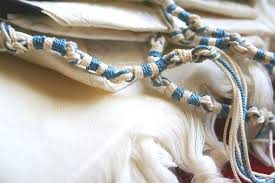
As a tallit maker, I have had a long time interest in the subject of Techelet (blue dye) as the blue dyed threads in tzitziot, were required in Biblical times.
Tzitziot are the threads tied on the four corners of a tallit (prayer shawl) that represent the 613 mitzvot, or good deeds, the Israelites and Jews of today are meant to fulfill.
The tzitziot are the only reason a tallit is worn; to remind the wearer of the mitzvot.
This is also why a tallit is worn only during daylight hours; as prior to the use of electricity, daylight was the only time one could properly see tzitziot (or anything else, for that matter).
The practice of including a blue thread in the threads of the tzitziot was discontinued at some point during ancient times, as the cost of obtaining the blue threads was too expensive, and out of reach to many.
With the passing of time the dye-making process was forgotten.
Only recently, has the process been rediscovered.
Techelet is made from the murex shell, which can be found at various spots off the coast of lsrael. The dye is difficult and time-consuming to produce as there is only one drop of dye in a single murex shell.
For successful techelet dye production in ancient times, a spot needed to be found overflowing with murex shells.

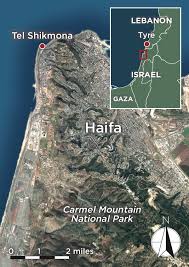
That spot was Shikmona off Haifa’s coastline.
The mound area of Shikmona was thoroughly excavated between 1963 and 1977 by archaeologist Dr. Yosef Elgavish on behalf of the Haifa Municipality’s museums department. The results of the dig were only published in part at the time. Pitchers, and hundreds of pottery fragments were stored in the basement of the Maritime Museum in Haifa.
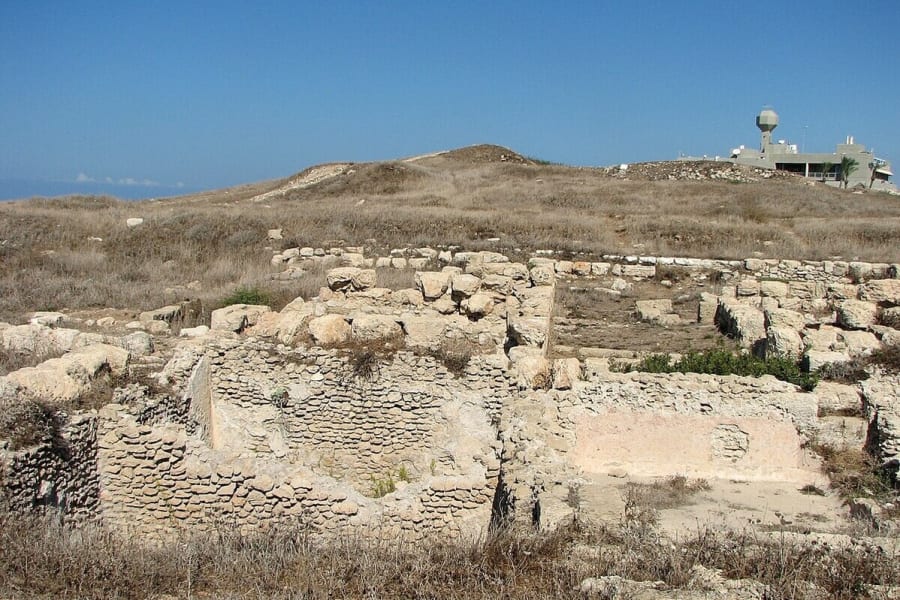
Archaeological site of Tel Shikmona, an ancient mound located near the seashore at the southern entrance to modern-day Haifa, Israel. The building in the distance is the Haifa University Institute of Marine Research.
In 1999, Prof. Ayelet Gilboa, and one of her research students, Golan Shalvi, of the University of Haifa Department of Archaeology, Zinman Institute of Archaeology, examined and studied the pitchers, and pottery fragments revealing that the ancient Shikmona site operated a facility for the production of the techelet dye and the dying of woven materials. Until this time, no direct archaeological evidence existed for techelet-colored dye and textile factories from the Iron Age (1200 BCE to 550 BCE).
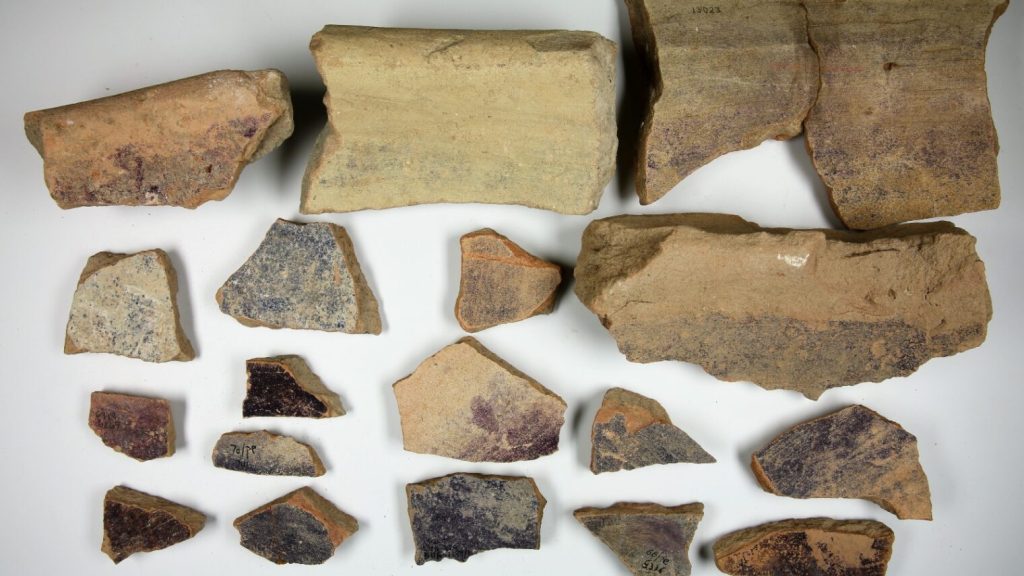
Purple dye can still be seen on these fragments from Tel Shikmona, site of a biblical-era dye factory near Haifa. Photo courtesy of University of Haifa
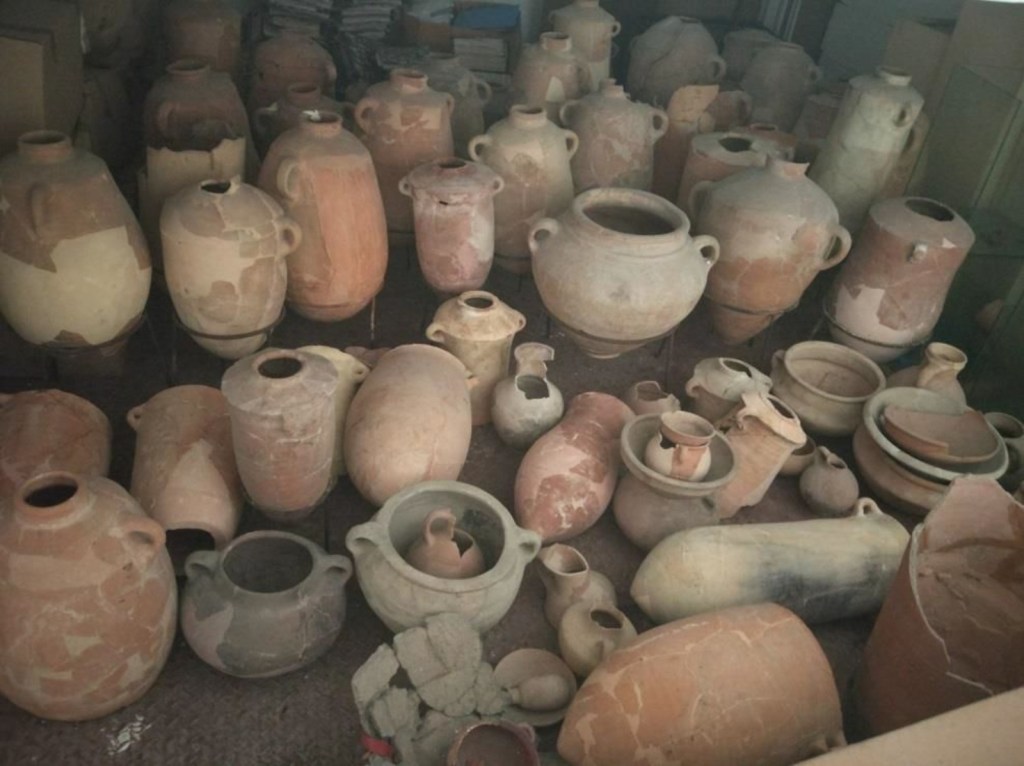
Ceramic vats from Tel Shikmona used for manufacturing purple dye.
Photo courtesy of the University of Haifa
Earlier this month more information regarding the vats used to produce the dye and to dye woven materials was published.
Biblical-Era Facility for Manufacturing Purple Dye Discovered
Archaeological proof of an ancient industry and its possible use in adorning Solomon’s temple
By Brent Nagtegaal • August 20, 2019
ttps://armstronginstitute.org/185-biblical-era-facility-for-manufacturing-purple-dye-discovered
Israeli scholars find ancient manufacturing site of purple dye near Haifa
Jo Elizabeth | Published: May 3, 2025
https://allisraelnews.com/israeli-scholars-find-ancient-manufacturing-site-of-purple-dye-near-haifa
Golan Shalvi Papers available for download
https://www.academia.edu/128831933/Tel_Shiqmona_during_the_Iron_Age_A_first_glimpse_into_an_ancient_Mediterranean_purple_dye_factory
 Israelcraft
Leave a comment