Structure of the fortress
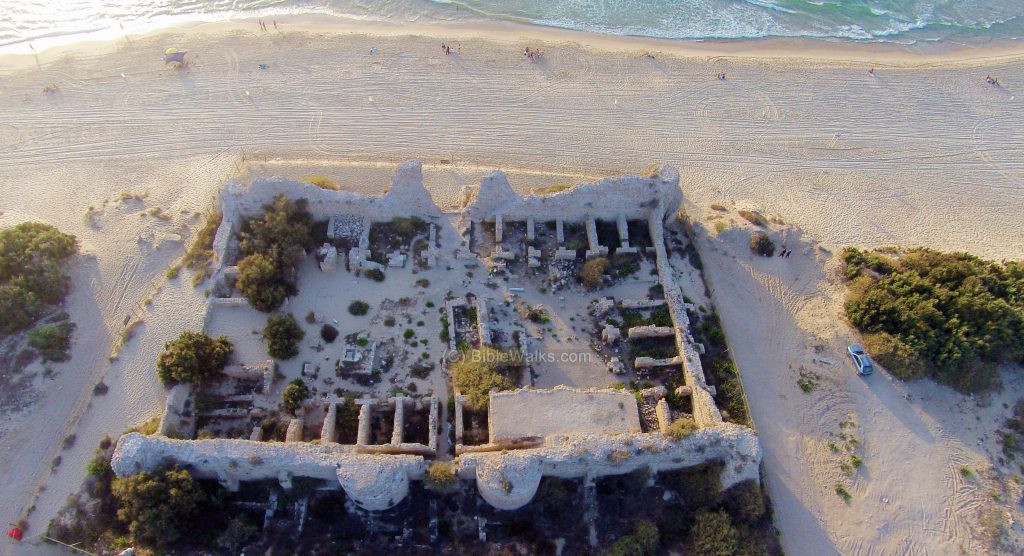
This fortress is rectangular; forty by sixty meters, made of dressed calcareous limestone. The fortress has two gates: the eastern land gate and the western sea gate. Towers are located in the corners of the fortress and on both sides of the gates. The fortress’ two western towers and four gate towers are round; the two eastern towers are rectangular. In the center of the fortress is the remains of a courtyard surrounded by domed rooms.

The Canaanite City Gate
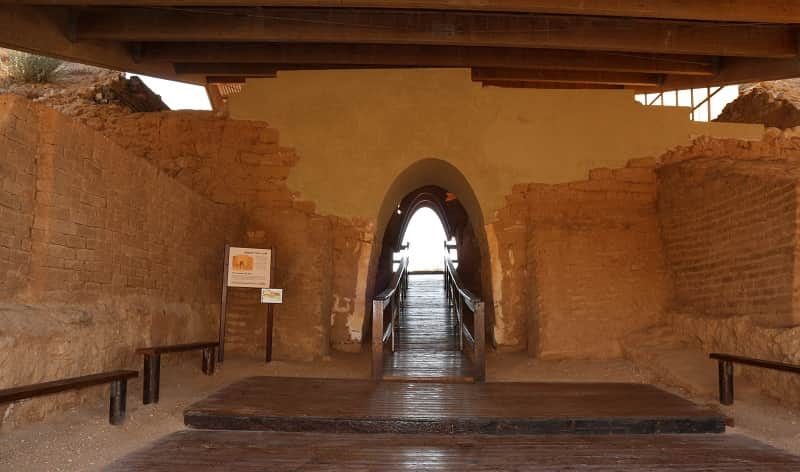
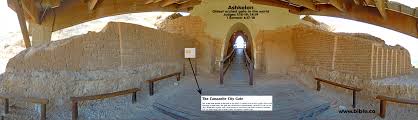
The Canaanite City Gate is the most ancient arched gate in the world. It consists of an arched corridor with arched openings on both ends. The gate was constructed in approximately 1850 BCE as part of the city’s fortification system, and is built mostly of mud bricks and calcareous limestone. It is 15 meters long, over 2 meters wide, and almost 4 meters high.
The mudbrick city gate had a stone-lined, 8 feet (2.4 meters) wide tunnel-like barrel vault due to the immense thickness of the walls. It was coated with white plaster, to support the superstructure.
The first gate which was built between 1825-1775 BCE, was added to between 1775-1725 BCE, and again between 1725-1650 BCE. During the last phase (1650 BCE) the gate was converted to a small foot bridge, while the north gate was moved to the east.
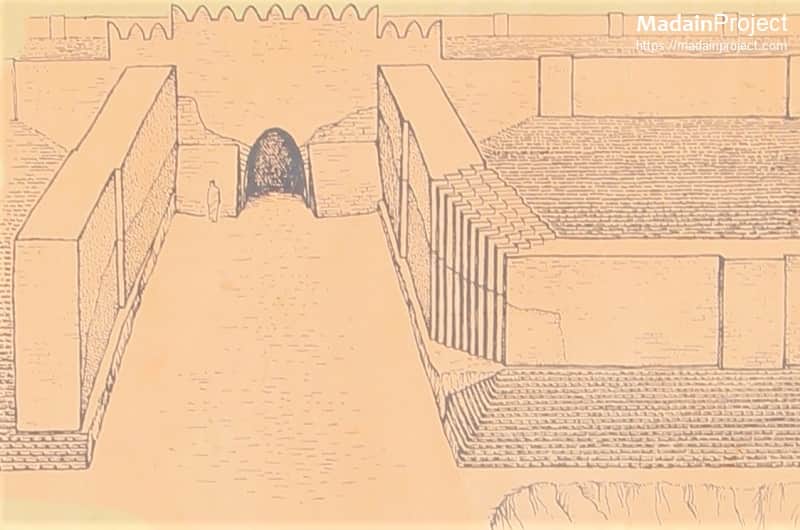

The gateway was built into the large brick wall, just above the earthen rampart. The top of the arch collapsed in ancient times, and was filled in, thus preserving the gate. The width of the gate is 2.5 meters (8 feet) and its height is 3.5 meters (12 feet). It is built of mudbricks and is well-preserved; the inner passage is approx. 2 meters wide and it is approx. 4 meters long. This allows a standard Bronze period wagon to pass through the gate.
The mud brick walls along the sides of the gate, are the towers that flanked the gateway as a second story. These walls reach a height of 6 meters (20 feet).
Photos from a group excursion of retired Bank Ha Poalim employees to Ashkelon National Park on March 5, 2022, organized by Yael Eshet.


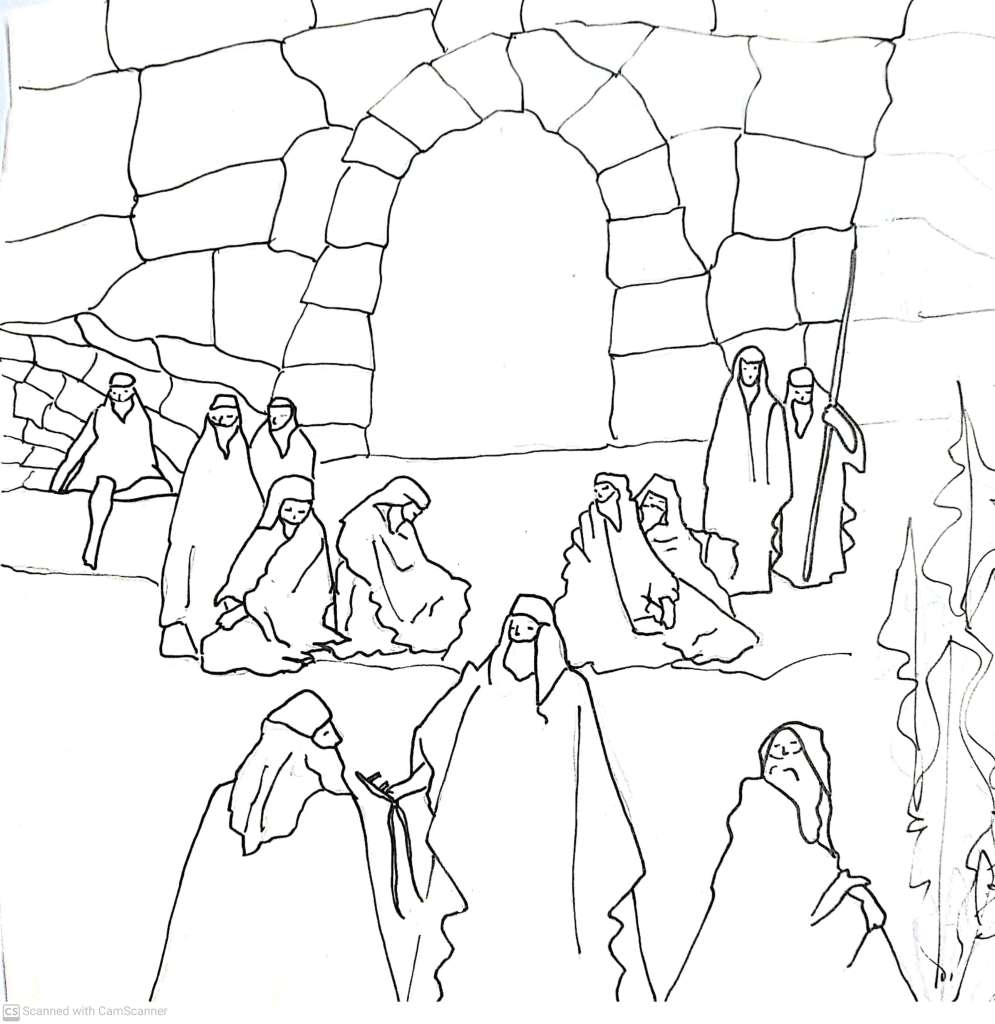
Ceremony at City Gate, from The Book of Ruth
Sample of free illustration for download from Israelcraft
Canaanite Ramparts
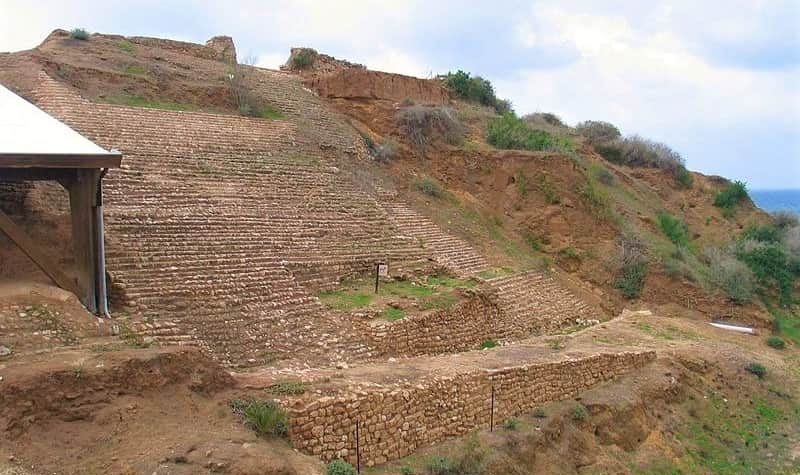
The Canaanite rampart was 15 meters (50 feet) high and 46m (150 ft) thick. During the Middle Bronze age (2000 to 1600 BCE), the Canaanites moved an enormous amount of earth to create these huge artificial slopes around the entire sandstone hill on which the city was located. The slope was 33-35 degrees on the outer face, making the attackers’ ascent difficult.
Sanctuary of the Silver Calf
The statuette is 10.5 cm tall and 11 cm long (4.2″x4.4″), and the model shrine 25 cm tall and 12 cm wide (10″ x 4.8″).
The shrine with the calf statuette were found inside of a structure at the foot of the Canaanite rampart, just outside the city gate, on a slope descending toward the sea.
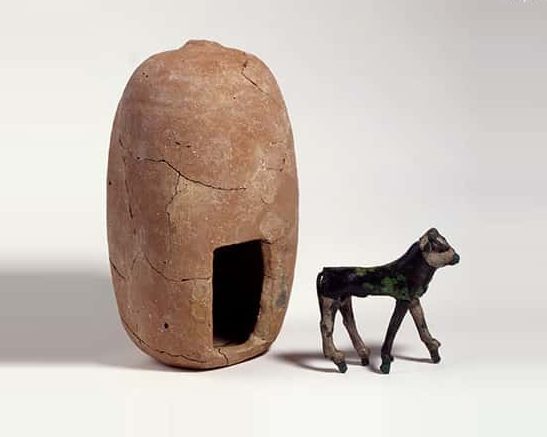
The calf was a symbol of the Canaanite deity Ba’al and the shrine may have served for worship. Scholars believe the shrine was located on the way to Ashkelon’s port so that those embarking on a sea voyage or returning from one could pray or give thanks to the deity for the success of their journey.
Some text (with modification), and photos were taken from:
https://madainproject.com/ashkelon_canaanite_city_gate#google_vignette
Some text was photographed from written descriptions at the site: Ashkelon National Park, Israel 0n March 5, 2022.
 Israelcraft
Leave a comment