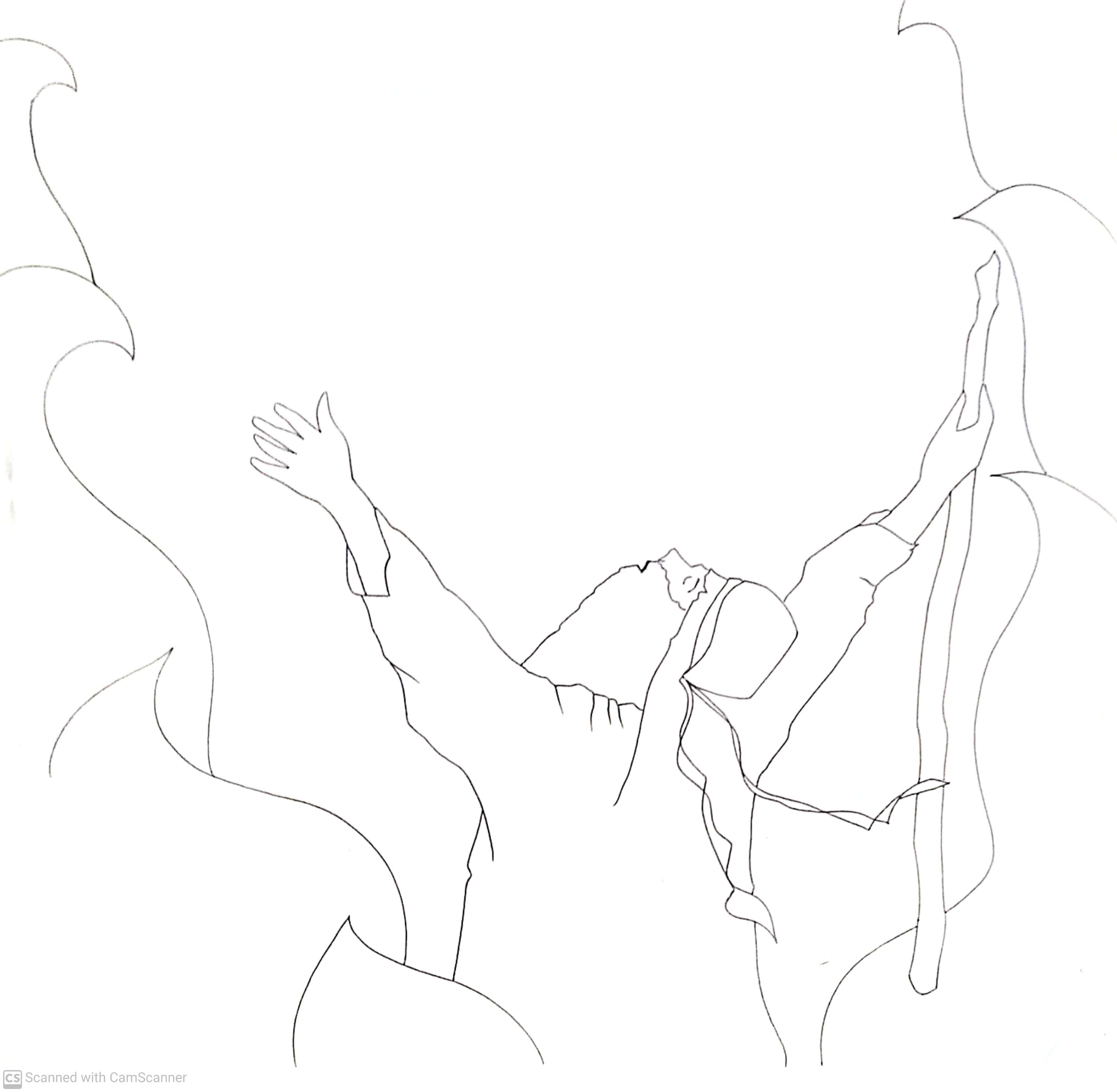
Having multiplied in the land of Goshen, the Israelites were enslaved and oppressed in various ways by a “new king” who “knew not Joseph.” Alarmed at their increase, he determined to prevent their becoming strong enough to act decisively against Egypt in case of war. Moses, who after various vicissitudes had been summoned from Midian to demand his people’s freedom “to depart and serve Yhwh,” and had brought ten Plagues upon the king and his people, was finally bidden by Pharaoh to lead the Hebrews out of the death-ridden land. More than six hundred thousand able-bodied men, not counting women and children and the “mixed multitude,” with their cattle and other property, marched out in one night from Rameses in the direction of Succoth (Ex. xii. 37, 38; xxxviii. 26; Num. i. 46, ii. 32, xi. 21, xii. 37, xxvi. 51); then, leaving this latter station, they encamped at Etham, at the edge of the desert. For God had resolved not to conduct them along the nearer route, “the road of the Philistine” (Ex. xiii. 17, Hebr.), fearing they might regret and retreat to Egypt when war (against the Philistines) became necessary. So Yhwh commanded Moses to lead them back and encamp before Pi-hahiroth, “between Migdol and the [Red] sea” (Ex. xiv. 2). This retrogressive movement would encourage Pharaoh to pursue the fugitives. The Egyptian king, in fact, starts out with horse and 600 chariots and a vast army to recapture the Israelites. He comes upon them “at Pi-hahiroth before Baal-zephon” (Ex. xiv. 9). Terrified, the Israelites cry out to Yhwh, and reproach Moses for having brought them there to die, though graves in plenty might have been found in Egypt. Then the help of Yhwh is miraculously manifested. They pass dry-shod over the sea, which divided at the lifting of Moses’staff and the blowing of a strong east wind. The Egyptians, thrown into confusion by a change in the position of the “angel of God,” pursue after them, but the returning waters sweep their king and all his hosts to a watery grave (Ex. xiv., xv.). (From Jewish Encyclopedia)
 Israelcraft
Leave a comment