- Devarim Tallit
- Vaetchanan Tallit
- Eikev Tallit
- Re’eh Tallit
- Shoftim Tallit
- Ki Teitzei Tallit
- Ki Tavo Tallit
- Nitzavim-Vayeilech Tallit
- Ha’azinu Tallit
- Vezot Haberahah Tallit
Devarim Tallit
Parasha Devarim “Words” פָּרָשַׁת דְּבָרִים Deuteronomy 1:1-3:22, is the first Torah portion in Deuteronomy, the 5th and last Book of the Bible, and the 44th weekly Torah portion in the annual Jewish cycle of Torah reading which begins on Rosh Ha Shana, the Jewish New Year.

Parasha Devarim recounts the Israelite's forty years of wandering in the desert. Joshua scouts out the land they are about to enter.
Devarim Band I
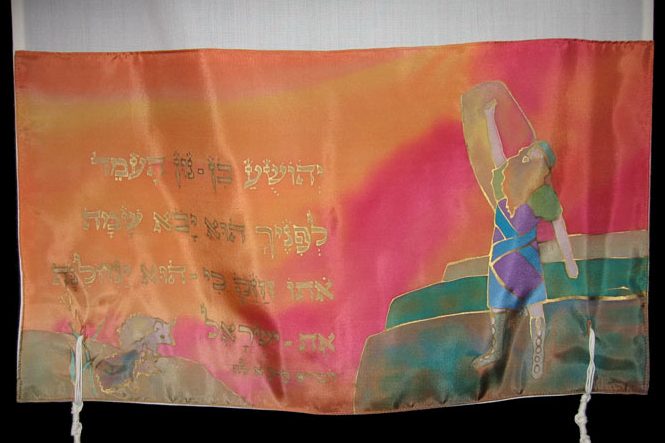
Tallit Band I
Joshua Son of Nun prepares to conquer the land of Canaan.
Translation of Hebrew (Deuteronomy 1, 38):
“Joshua, the son of Nun, who stands before thee, he shall go in thither: encourage thou him, for he shall cause Israel to inherit it.”
Devarim Band I
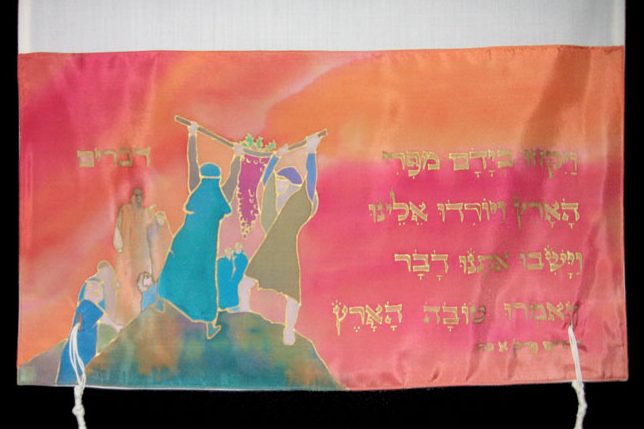
Tallit Band II
The bounty of the land is revealed.
Translation of Hebrew (Deuteronomy 1, 25):
“And they took of the fruit of the land in their hands, and brought it down unto us…”
Vaetchanan Tallit
Parasha Vaetchanan “I Pleaded” פָּרָשַׁת וָאֶתְחַנַּן Deuteronomy 1:1-3:22, is the second Torah portion in Deuteronomy, the 5th and last Book of the Bible, and the 45th weekly Torah portion in the annual Jewish cycle of Torah reading which begins on Rosh Ha Shana, the Jewish New Year.
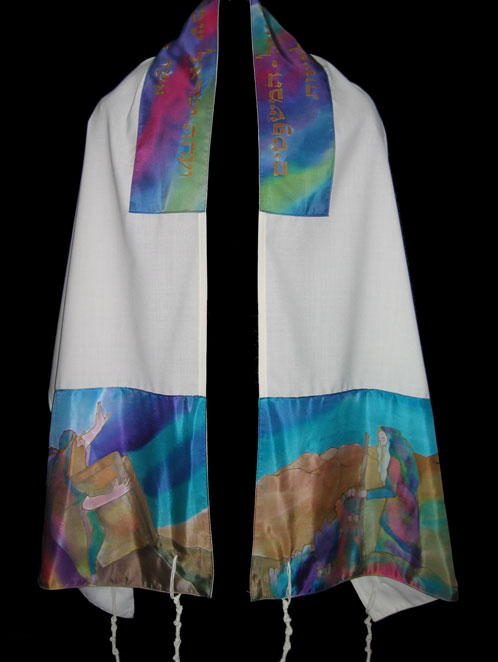
In Parasha Vaetchanan, Moses pleas in vain to be allowed to enter the land before his death. Cities of refuge, the Ten Commandments, and the Shema, are mentioned.

Translation of Hebrew on Neckband: (Deuteronomy 4, 1)
"Hear Israel, listen to the rules and laws that I am teaching you to do."
Vaetchanan Band I
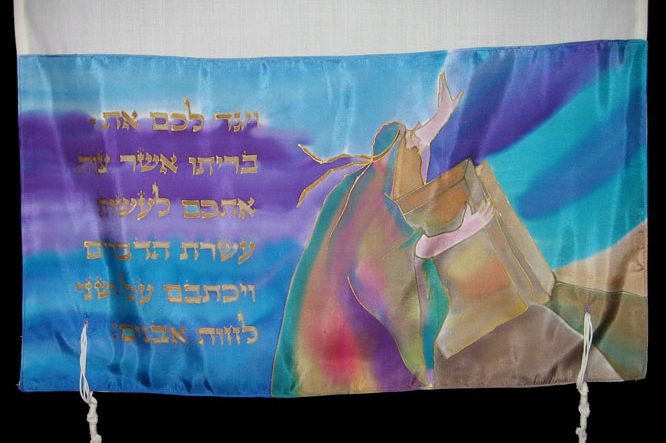
Tallit Band I
Moses receives the Tablets of the Ten Commandments.
Translation of Hebrew (Deuteronomy 4, 13):
“He announced to you His covenant, instructing you to keep the Ten Commandments and He wrote them on two stone Tablets.”behind the alter of offering.
Vaetchanan Band II
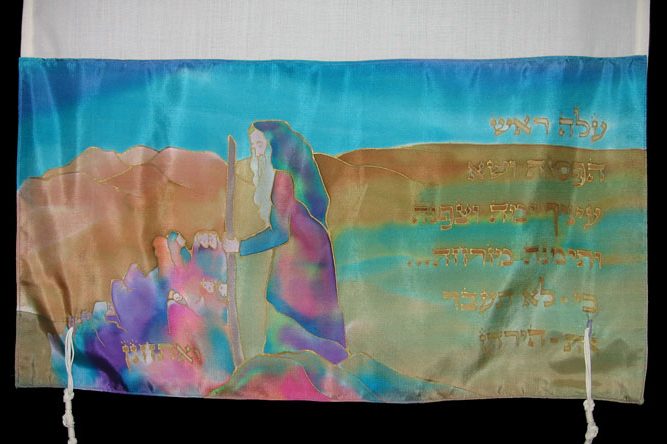
Tallit Band II
Moses yearns for the land he will not set foot in.
Translation of Hebrew (Deuteronomy 3, 27):
“Climb to the top of the cliff, and gaze to the west, north, south and east. Let your eyes feast on it, since you will not cross the Jordan.”
Eikev Tallit
Parashat Re’eh “See” פָּרָשַׁת רְאֵה Deuteronomy 11:26-16:17, is the third Torah portion in Deuteronomy, the 5th and last Book of the Bible, and the 46th weekly Torah portion in the annual Jewish cycle of Torah reading which begins on Rosh Ha Shana, the Jewish New Year.
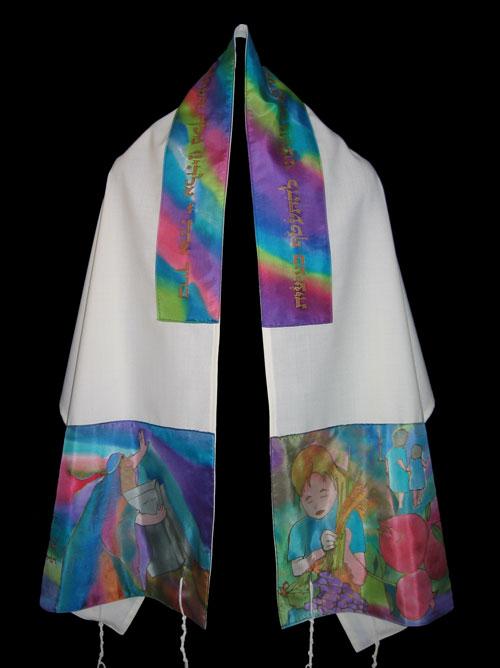
Moses describes the rewards of following the Torah and retells how he received the tablets of the law.
Eikev Band I

Band I
Moses receives the tablets of the law.
Translation of Hebrew (Deuteronomy chapter 9, verse 10):
“And the LORD delivered unto me two tables of stone written with the finger of God.”
Eikev Band II
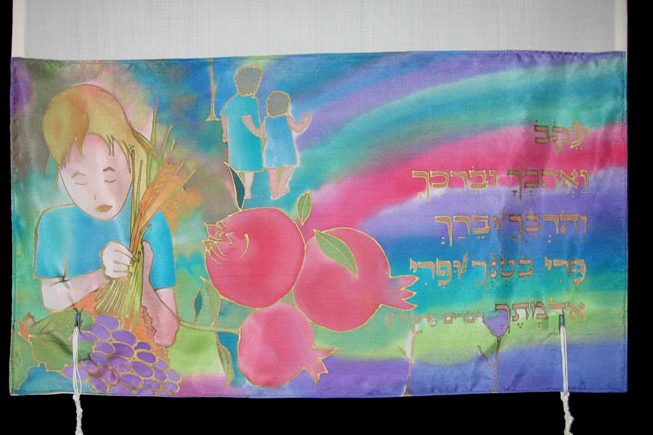
Band II
A child is collecting grain, amidst the fruit of the land.
Translation of Hebrew (Deuteronomy chapter 7, verse 13):
“And He will love thee, and bless thee, and multiply thee; He will also bless the fruit of thy body and the fruit of thy land.”
Re’eh Tallit
Parashat Re’eh “See” פָּרָשַׁת רְאֵה Deuteronomy 11:26-16:17, is the third Torah portion in Deuteronomy, the 5th and last Book of the Bible, and the 46th weekly Torah portion in the annual Jewish cycle of Torah reading which begins on Rosh Ha Shana, the Jewish New Year.
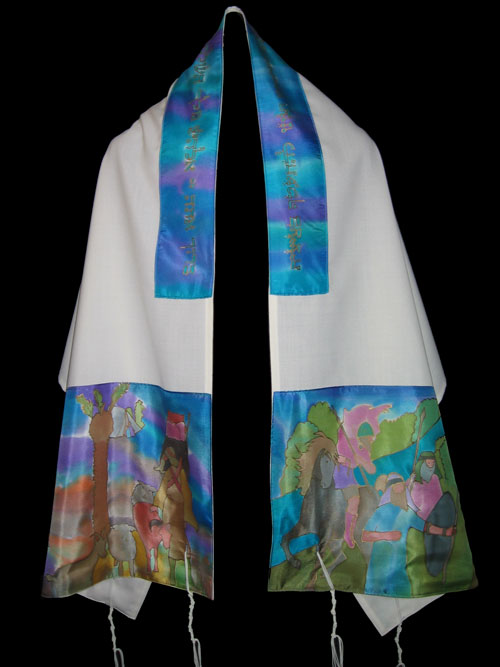
Parasha Reeh tells of Joshua Ben Nun crossing the Jordan River into the land which has been promised to the Israelites and discusses rules of conduct including the freeing of slaves after a six year period.
Reeh Band I
Band II
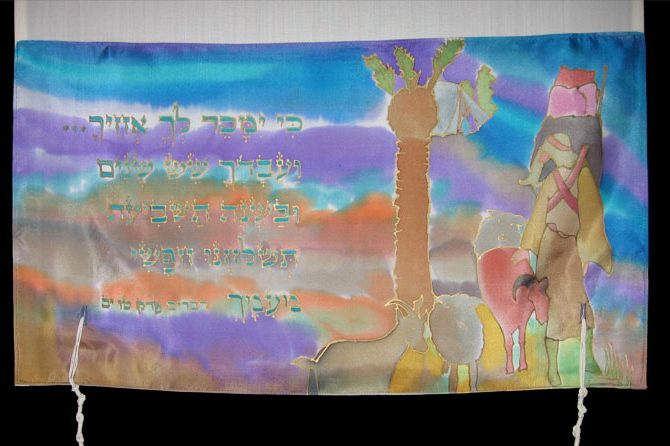
A slave is freed.
Translation of Hebrew (Deuteronomy chapter 15, verse 12):
“If thy brother, a Hebrew man, or a Hebrew woman, be sold unto thee, he shall serve thee six years; and in the seventh year thou shalt let him go free from thee.”
Reeh Band II
Band I
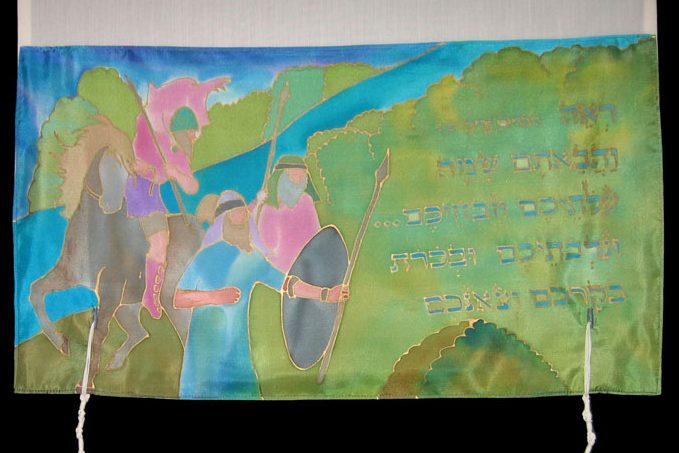
Joshua Ben Nun is crossing the Jordan, based on Deuteronomy chapter 12 verse 6, “For ye are to pass over the Jordan to go in to possess the land…”

Shoftim Tallit
Parashat Shoftim “Judges” פָּרָשַׁת שׁוֹפְטִים Deuteronomy 16:18-21:9, is the fourth Torah portion in Deuteronomy, the 5th and last Book of the Bible, and the 48th weekly Torah portion in the annual Jewish cycle of Torah reading which begins on Rosh Ha Shana, the Jewish New Year.
Parasha Shoftim discusses the appointment of judges and cases involving cities of refuge.
Shoftim Band I
Band I
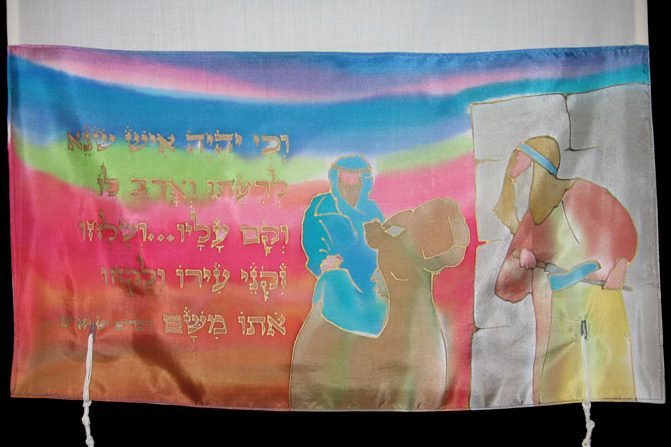
A man is lying in wait for his neighbor.
Translation of Hebrew (Book chapter 19, verse 11 and 12):
“But if any man hate his neighbor, and lie in wait for him, and rise up against him, and smite him mortally that he die; and he flee into one of these cities; [12] then the elders of his city shall send and fetch him thence…”
Shoftim Band II
Band II
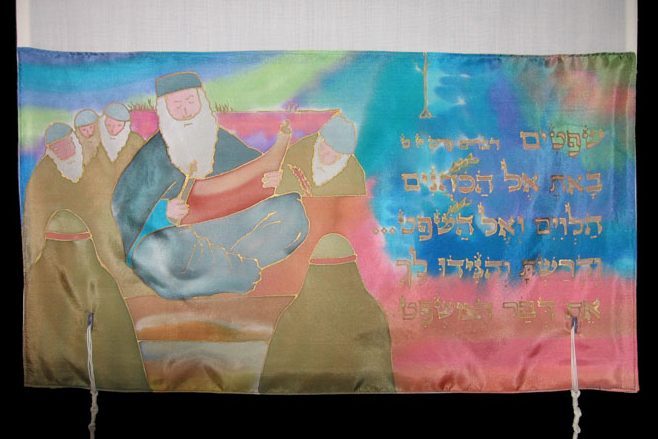
A priest is listening to a dispute.
Translation of Hebrew (Book chapter 17, verse 9):
“And thou shalt come unto the priests the Levites, and unto the judge that shall be in those days; and though shalt inquire, and they shall declare unto thee the sentence of judgment.”
Ki Teitzei Tallit
Parashat Ki Teitzei “When You Go Out” פָּרָשַׁת כִּי־תֵצֵא Deuteronomy 21:10-25:19, is the fifth Torah portion in Deuteronomy, the 5th and last Book of the Bible, and the 48th weekly Torah portion in the annual Jewish cycle of Torah reading which begins on Rosh Ha Shana, the Jewish New Year.
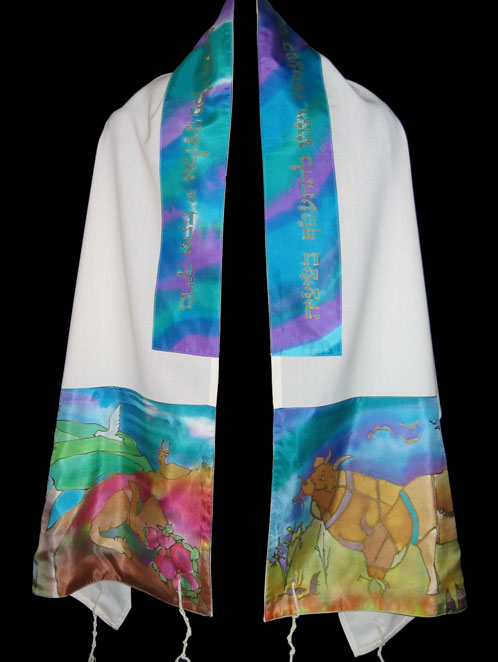
Parasha Ki Teitzei deals with laws of war, inheritance, marriage and divorce, and proper conduct in regard to all of God’s creatures.
Ki Teitzei Band I

Tallit Band I
This scene expresses the peace and tranquility which can be enjoyed by the animal kingdom as well as by mankind if the laws of the Torah are practiced.
Ki Teitzei Band I
Tallit Band II
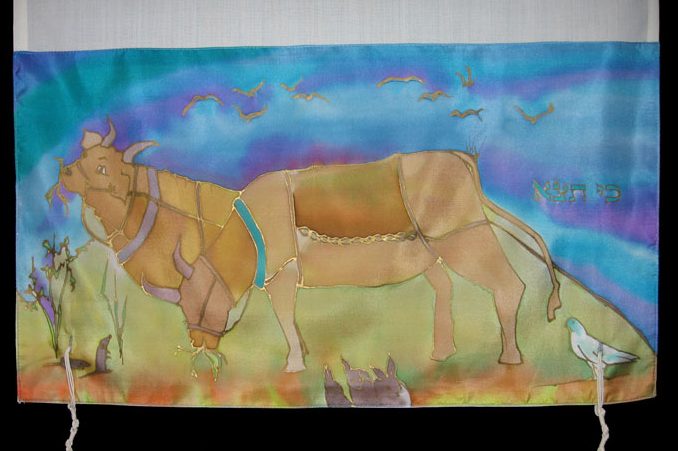
Oxen work the fields unmuzzled so they can eat if they are hungry. They are paired with their own kind in order to share their burden equally, as required by Jewish law.
Ki Tavo Tallit
Parashat Ki Tavo “When You Come” פָּרָשַׁת כִּי־תָבוֹא Deuteronomy 26:1-29:8, is the sixth Torah portion in Deuteronomy, the last Book of the Bible, and the 50th weekly Torah portion in the annual Jewish cycle of Torah reading which begins on Rosh Ha Shana, the Jewish New Year.

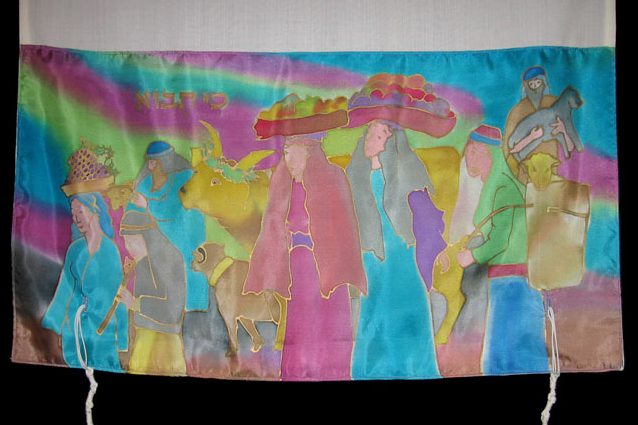
Parasha Ki Tavo deals with how the Israelites are to enter the land with Joshua as their leader. They are to bring the first fruits. At Mount Ebal, they are to erect stones on which the law is to be written, and build an alter.
Translation of Hebrew on Neckband: (Deuteronomy 26, 15)
“Look down from Your holy habitation in heaven, and bless Your people Israel.”
Ki Tavo Band I

Tallit Band II
The Israelites are setting up the prescribed stones and alter at Mount Ebal.
Translation of Hebrew (Deuteronomy chapter 27, verse 4-5):
“When you cross the Jordan, you shall set up the stones…on Mount Ebal…there you shall then build an altar”
Ki Tavo Band I
Tallit Band II
The first fruits are being brought.
Nitzavim-Vayeilech Tallit
Parashat Nitzavim “Standing” פָּרָשַׁת נִצָּבִים Deuteronomy 29:9-30:20, is the seventh Torah portion in Deuteronomy, the last Book of the Bible, and the 51st weekly Torah portion in the annual Jewish cycle of Torah reading which begins on Rosh Ha Shana, the Jewish New Year.
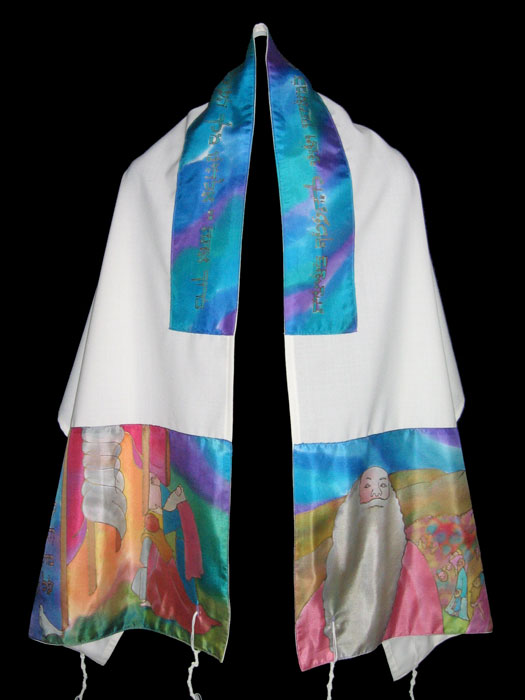
Nitzavim-Vayeilech Tallit
Parasha Nitzavim and Parasha Vayeilech are read together on regular years and read separately on leap year.
Both have been designed here as one tallit.
Parasha Nitzavim discusses G-d’s covenant.
Parasha Vayeilech deals with new leadership and the final preparations for entering the promised land.
Vayeilech Band

Band I Parasha Vayeilech
Joshua Ben Nun and Moses present themselves at the Tent of Meeting where God has appeared in a pillar of smoke.
Translation of Hebrew (Deuteronomy 31, 14-15):
“And the Lord said unto Moses: ‘…call Joshua, and present yourselves in the tent of meeting…’ And Moses and Joshua went, and presented themselves in the tent of meeting. (15) …and the pillar of cloud stood over the door of the Tent…”
Nitzavim Band

Band II Parasha Nitzavim
Moses on Mount Nebo speaking to the Israelites
Ha’azinu Tallit
Parashat Ha’azinu “ Listen” פָּרָשַׁת הַאֲזִינוּ Deuteronomy 32:1-32:52, is the ninth Torah portion in Deuteronomy, the last Book of the Bible, and the 53rd weekly Torah portion in the annual Jewish cycle of Torah reading which begins on Rosh Ha Shana, the Jewish New Year.
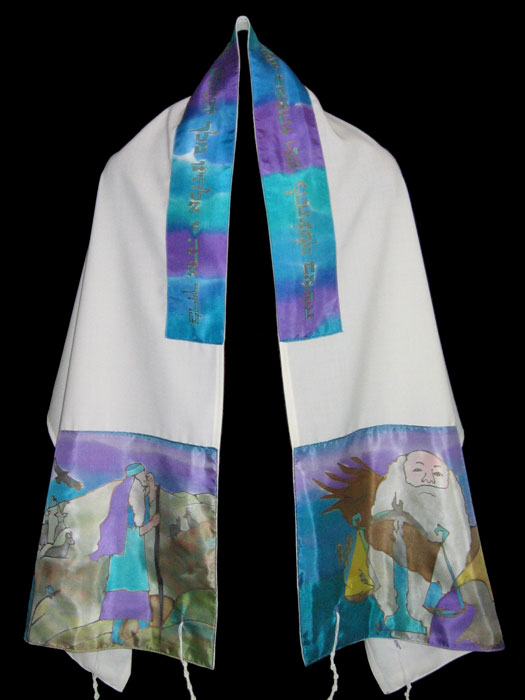
Ha’azinu Tallit
Moses calls upon the nations to rejoice in his farewell poem, and ascends Mount Nebo from where he can see the Promised Land.
Ha’azinu Band I
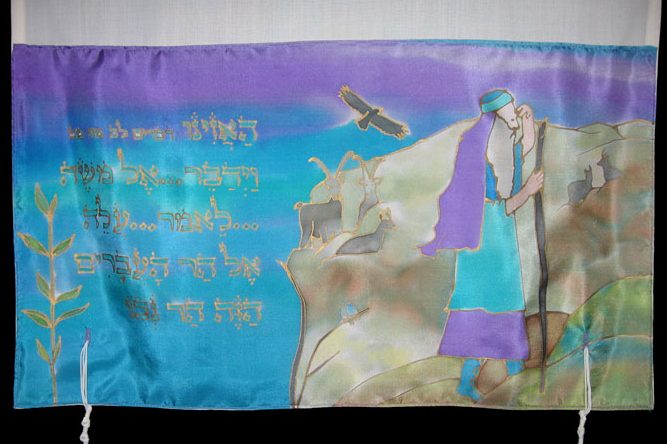
Tallit Band I
Moses ascends Mount Nebo.
Translation of Hebrew (Deuteronomy 32, 48):
“And the Lord spoke unto Moses…saying…’Get thee up into this mountain of Abarim, unto mount Nebo…’ “
Ha’azinu Band II
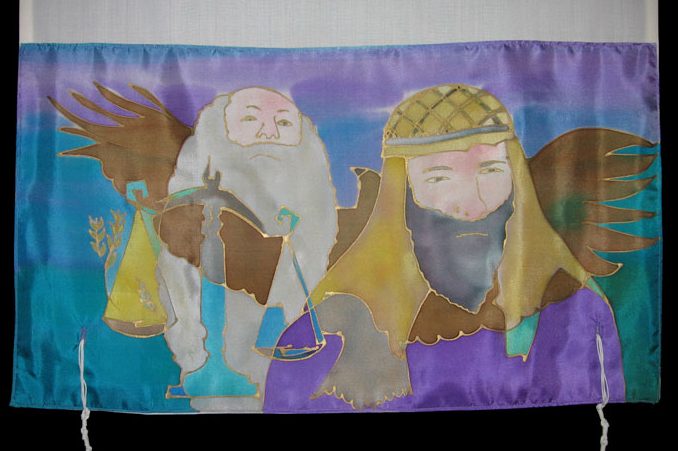
Tallit Band II
A montage of themes from Moses’ farewell poem: the eagle who treats his young with love and affection, a metaphor for G-d, who has everlasting patience for his people; the scales of justice; Moses, the elderly lawgiver; and Joshua Ben Nun who is about to take his place.
Vezot Haberahah Tallit
Parasha Vezot Haberahah “ And this is the blessing” פָּרָשַׁת וְזֹאת הַבְּרָכָה Deuteronomy 33:1-34:12, is the last Torah portion in Deuteronomy, the last Book of the Bible, and the 54th weekly Torah portion in the annual Jewish cycle of Torah reading which begins on Rosh Ha Shana, the Jewish New Year.
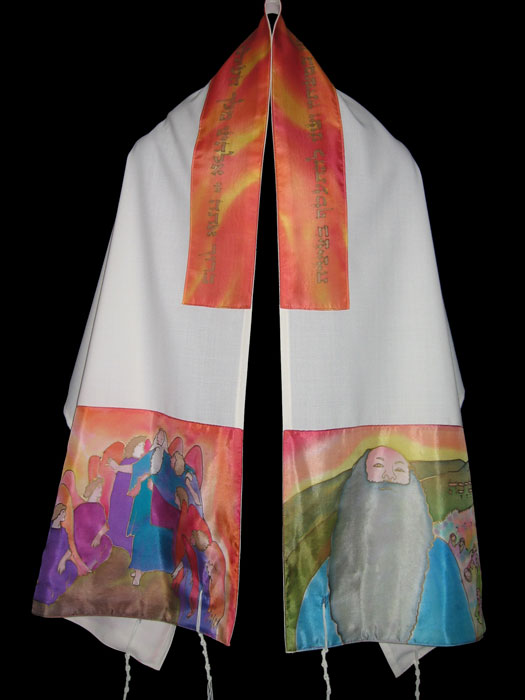
Vezot Haberahah Tallit
Moses speaks to the Israelites, blesses the tribes, and dies at the age of one hundred and twenty.
Vezot Haberahah Band I
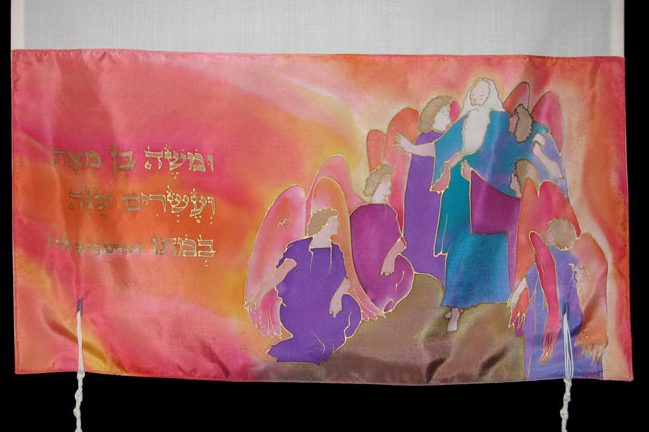
Band II
Moses dies.
Translation of Hebrew (Deuteronomy chapter 34, verse 7):
“And Moses was a hundred and twenty years old when he died…”
Vezot Haberahah Band II
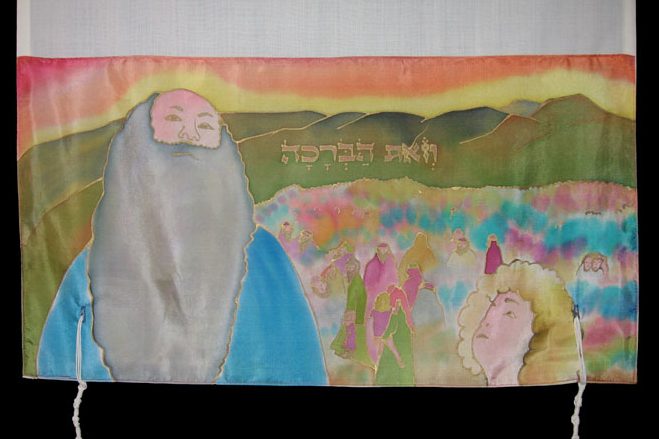
Tallit Band I
Moses appears to the Israelites for the last time.
 Israelcraft