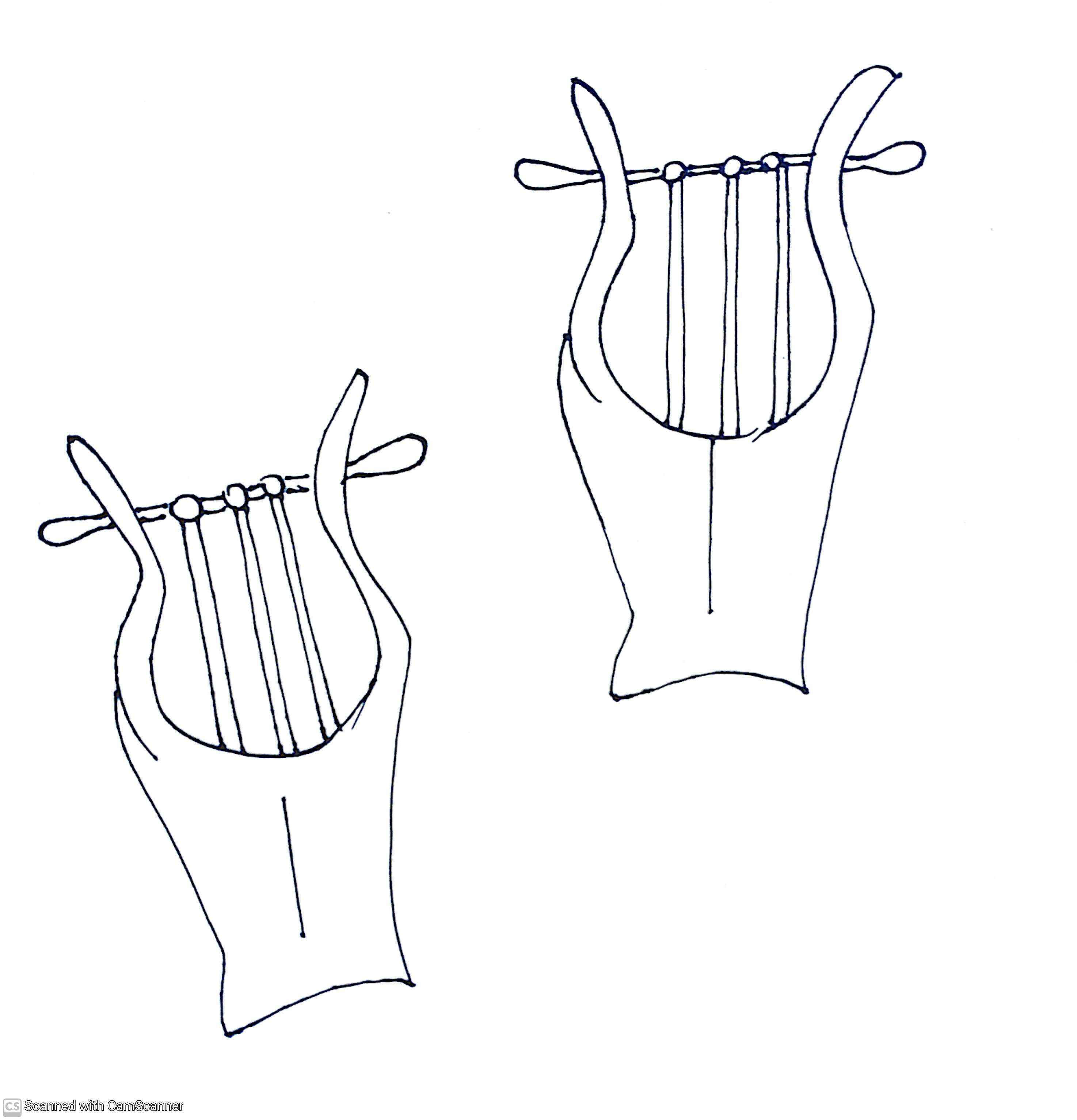
Book of Genesis
Weekly Portion Bereshit
October 17, 2025
Sample of free illustrations for download

Creation
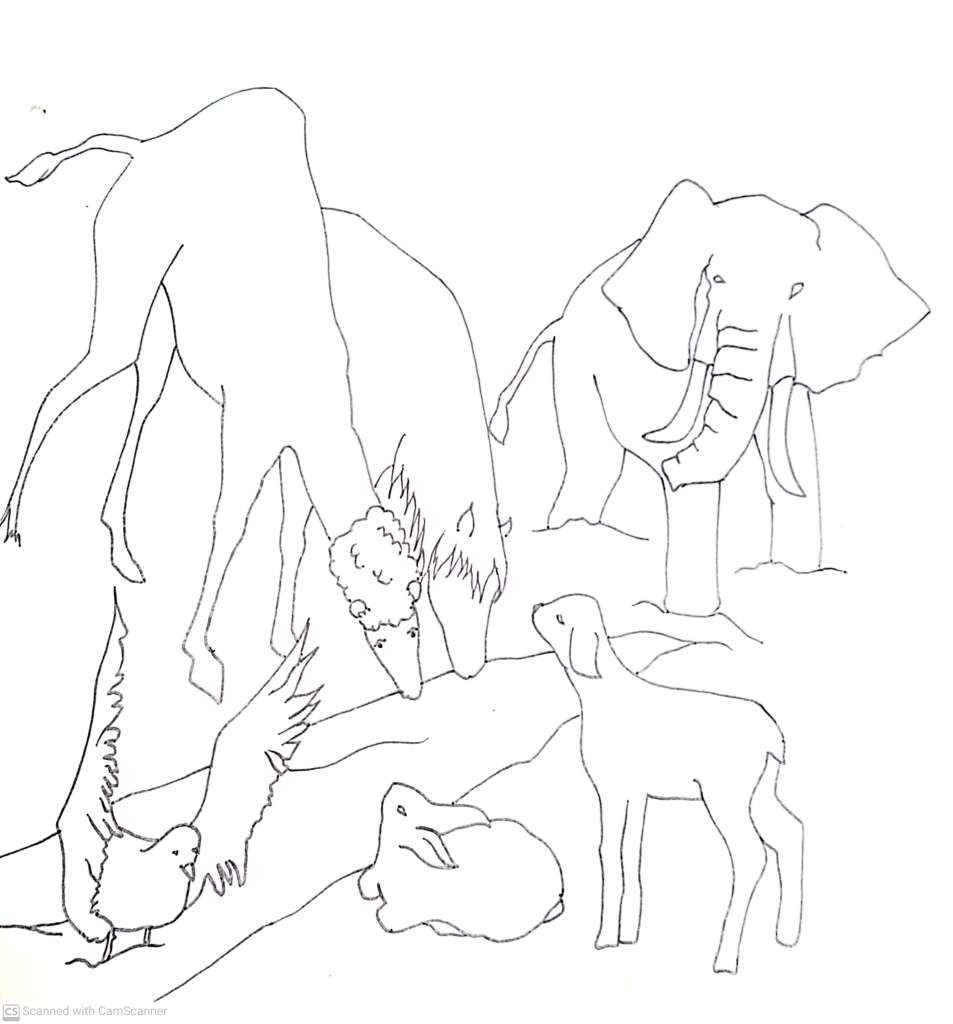
Creation Harmony

In the Garden of Eden

Adam and Eve leaving the Garden of Eden
Parasha Bereshit “In the Beginning” בְּרֵאשִׁית Genesis 1:1-6:8, is the 1st weekly Torah portion in the annual cycle of Torah reading beginning on Rosh Ha Shana, the Jewish New Year.

It begins with G-d’s Creation of the world.
On the first day, G-d creates light; on the second day, the sky; on the third, the earth, seas, and vegetation; on the fourth, the sun and moon; on the fifth, animals of the air and sea; on the sixth, land animals and Adam; and Eve from his rib.
G-d rests from his work on the seventh day, the Sabbath.
Adam and Eve, eat from the Tree of Knowledge and are banished from the Garden of Eden. Their elder son, Cain, kills their younger son, Abel, and Cain is destined to a life of wandering.
Creation Tallit
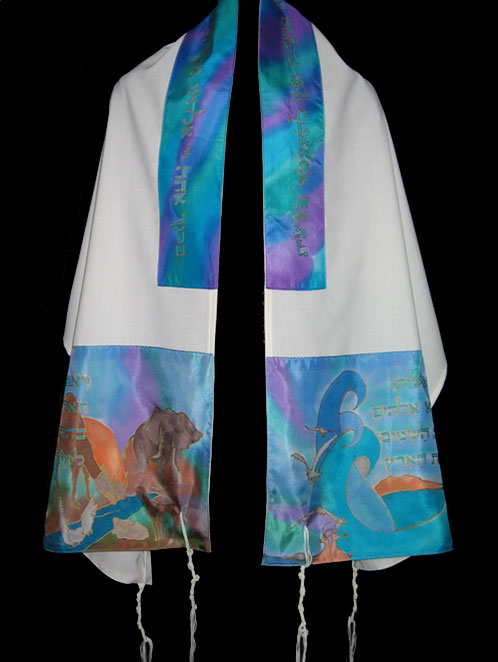
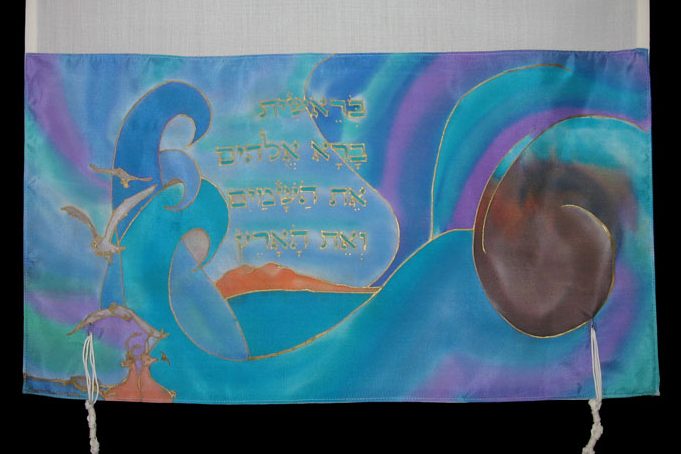
Creation Band I
This band is a telescoped view of the first five days of creation.
Translation of Hebrew (Genesis 1, 1):
“In the beginning God created the heaven and the earth.”
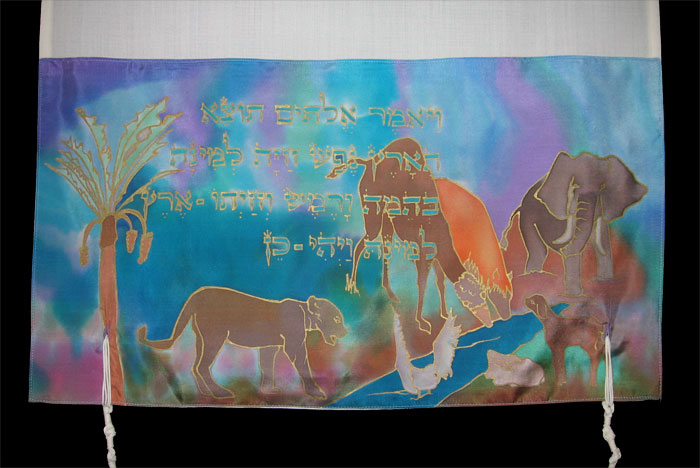
Creation Band II
Animals congregate in harmony in this pastoral scene.
Translation of Hebrew (Genesis 1, 24):
“And God said: ‘Let the earth bring forth the living creature after its kind, cattle, and creeping thing, and beast of the earth after its kind.’ And it was so.”
Weekly Portion Noah
October 25 2025
Sample of free illustrations for download
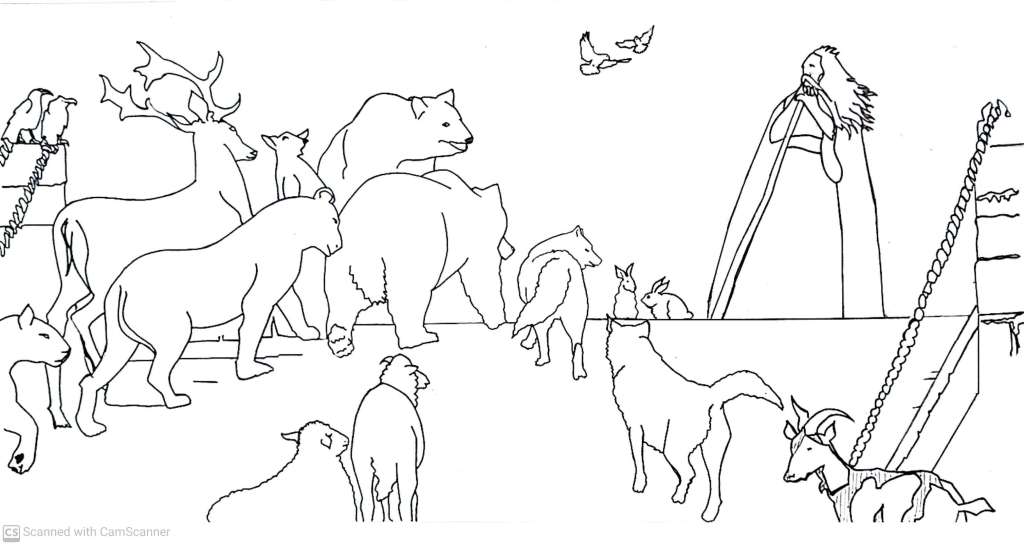

Parashat Noah נֹח Genesis 6:9-11:32, is the 2nd weekly Torah portion in the annual Jewish cycle of Torah reading beginning on Rosh Ha Shana, the Jewish New Year.
Parashat Noah נֹח
Genesis 6:9-11:32, is the 2nd weekly Torah portion in the annual Jewish cycle of Torah reading.
It begins as G-d decides to destroy mankind with a Flood.
He gives Noah specific instructions in the making of an ark to save a remnant of humanity and all living animal species during the Flood.
And G-d confounds the speech of those building the Tower of Babel.
There is a recounting of all the generations down to Abram ending with Terach, father of Abram, Nachor and Haran, whose son is Lot, in Ur Casdim.
Abram marries Sarai. Nachor marries Milcah, the daughter of Haran. Sarai is sterile. Terach travels with his son Abram, Sarai, and his grandson Lot, and leaves Ur Casdim for the land of Canaan. They come as far as Charan and settle there.
Noah Tallit

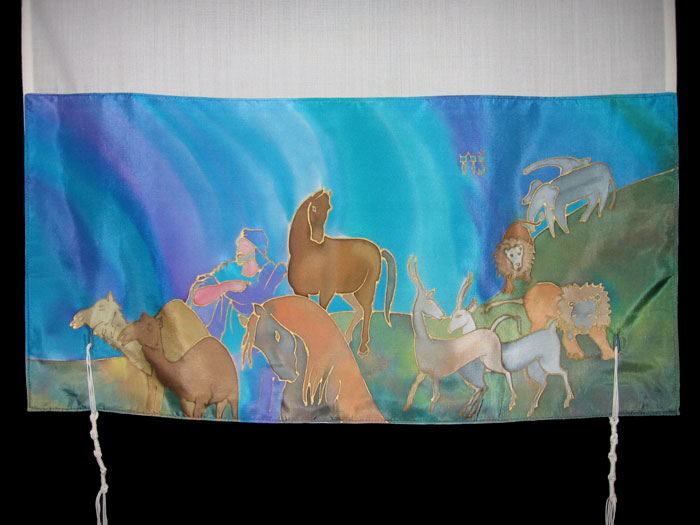
Band I
Noach leads horses onto the ark.
The detail of Noah is adapted from a Purim story lithograph of 18th century French lithographer Gustave Dore.
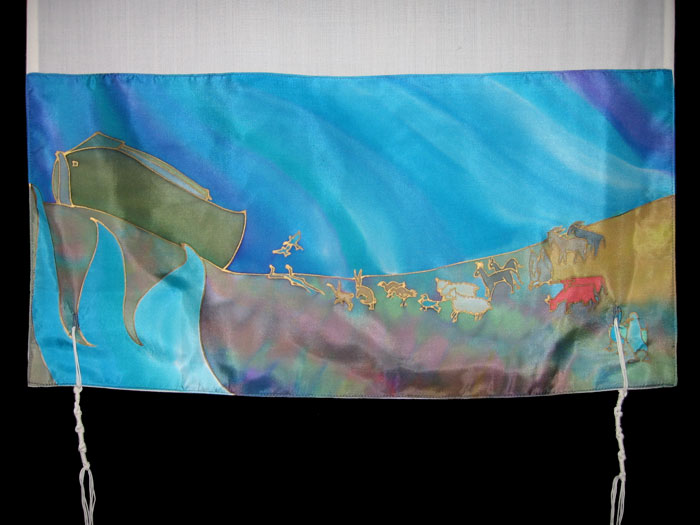
Tallit Band II
Animals approach the ark, two by two.
Weekly Portion Lech-Lecha November 1, 2025
Sample of free illustrations for download
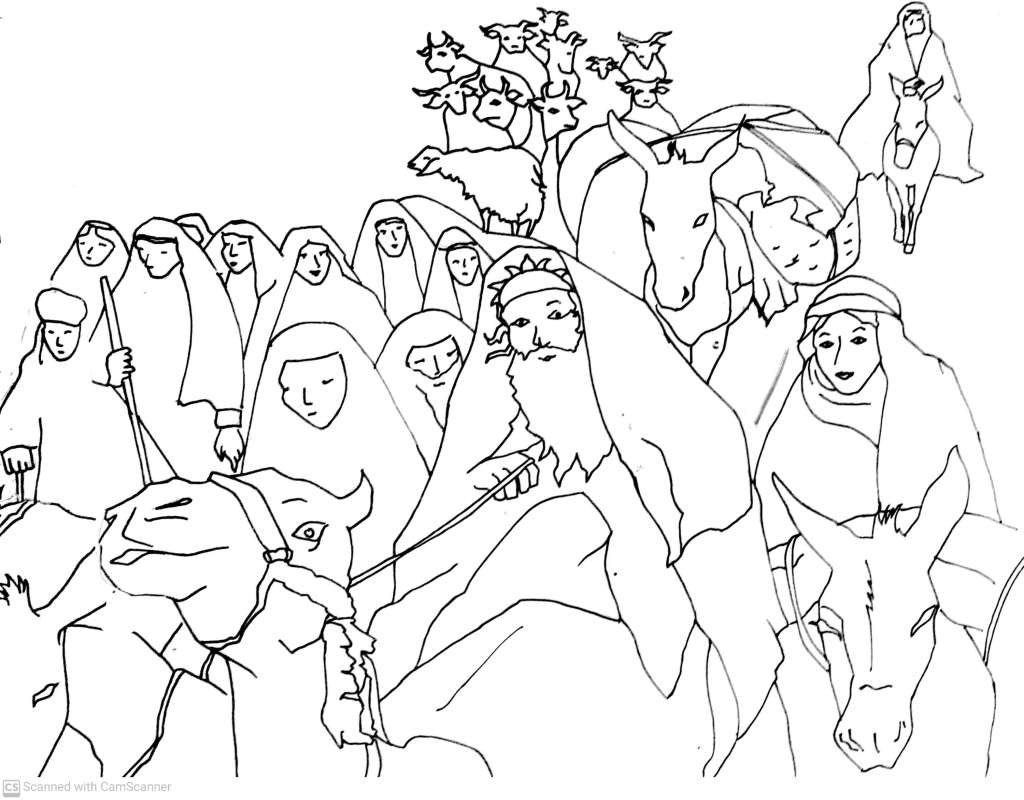
Journey to Canaan
Parashat Lech-Lecha “Go Forth”  לֶךְ־לְךָ
Genesis 12:1-17:27 is the 3rd weekly Torah portion in the annual Jewish cycle of Torah reading.

It recounts Abram's first encounter with G-d, when his name becomes Abraham;
his journey to Canaan;
a trip to Egypt due to famine;
Sara, his wife's, maidservant, Hagar, becoming pregnant with Abram's child and being sent away by Sara;
Hagar's return and the birth of Ishmael;
the covenant with G-d to make Israel a great nation;
and G-d’s commandment of circumcision.
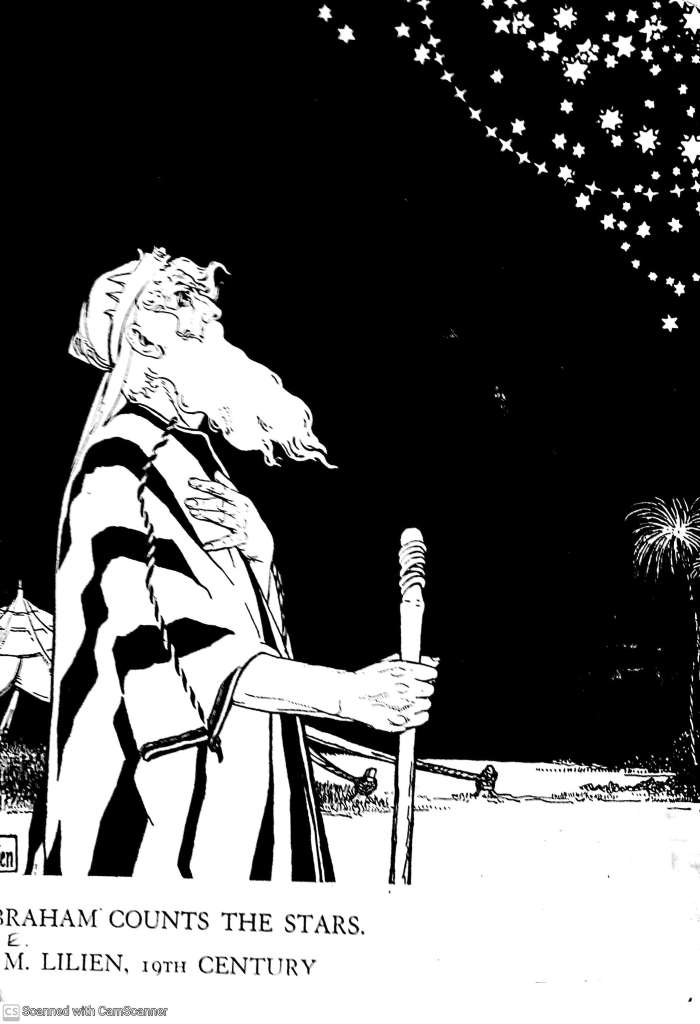
Abraham Counts the Stars
Lech Lecha Tallit

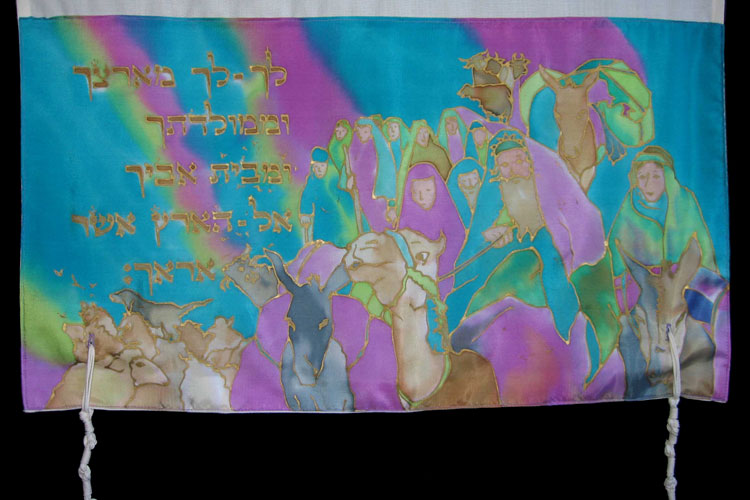
Tallit Band I
Abraham and his family travel west to the land of Canaan.
Genesis 12:1 “Get thee out of thy country and from thy kindred, and from they father’s house, unto the land that I will show thee.”
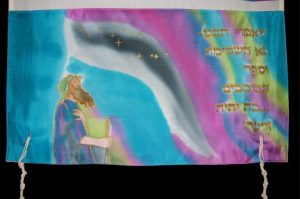
Tallit Band II
Abraham gazes at the stars. [The image of Abraham is taken from E.M. Lillian’s nineteenth century etching “Abraham Counts the Stars.”]
Translation of Hebrew Genesis 15, 5:
“Look now toward heaven, and count the stars…so shall be thy seed.”
Weekly Portion Vayera
November 8, 2025
Sample of free illustrations for download

Vayera Tallit

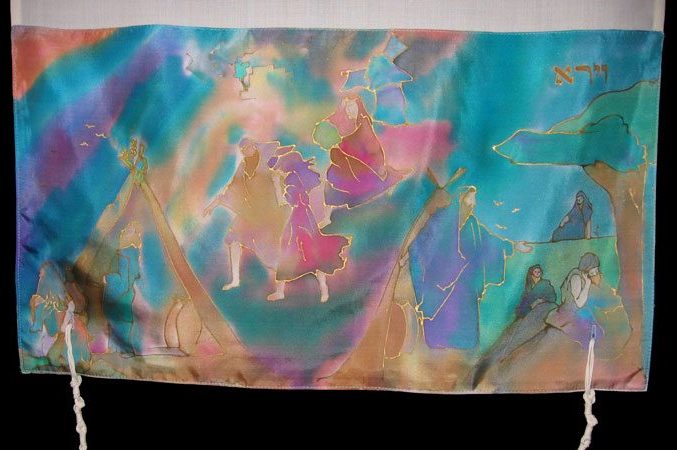
Band I Scene I (on right) takes place at the home of Abraham and Sarah, where they are receiving guests, who are, in fact, angels who bring Sarah the message that she is to have a child.
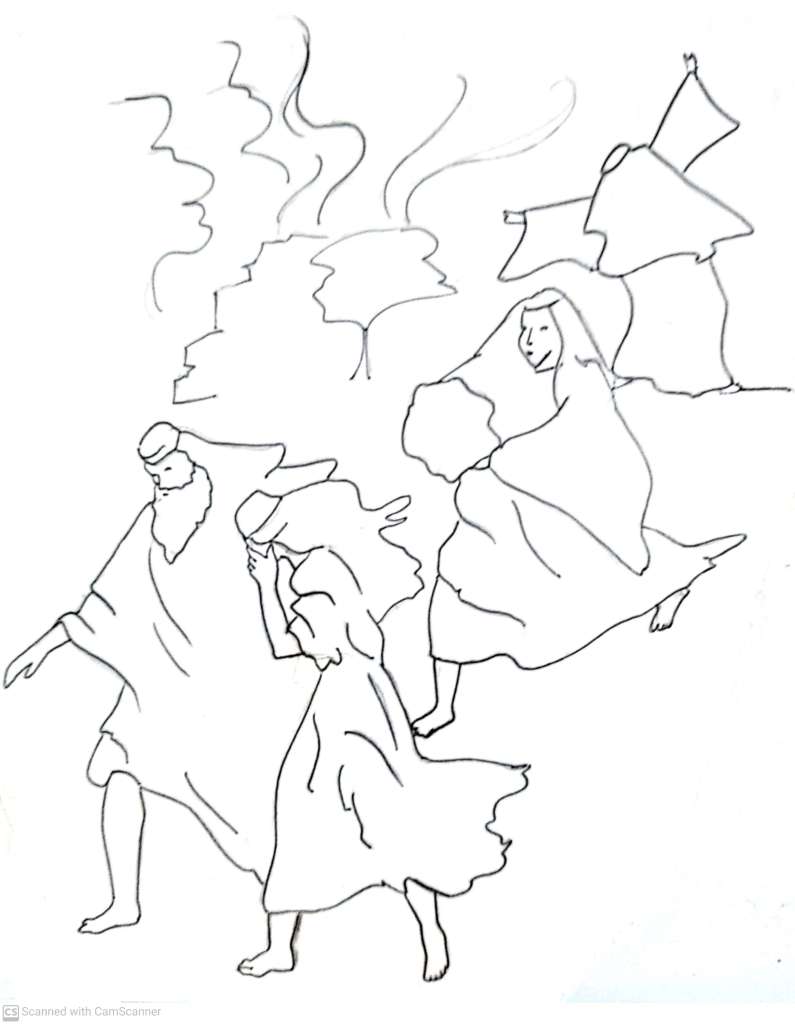
Band I Scene II (on left) is the destruction of Sodom. Lot and his daughters are escaping, but Lot’s wife, who looks back, has turned to stone.
Band I Scene III Abraham banishes Hagar and Ishmael.
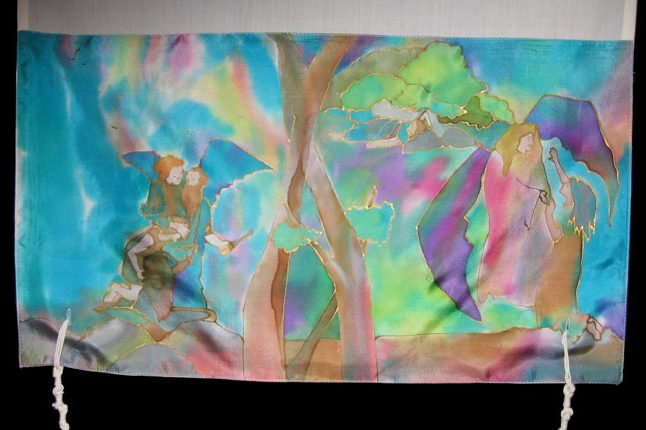
Band II Scene I (on right) is in the desert wilderness of Beersheba where Hagar and Ishmael have gone astray, and are about to die. An angel of God descends, rescues them, and promises her a nation.
Band II Scene II (on left) is the story of God’s test of Abraham and the sacrifice of Isaac. The scene is based on a 1655 etching by Rembrandt.
Weekly Portion Chayei Sara November 15, 2025
Sample of free illustrations for download
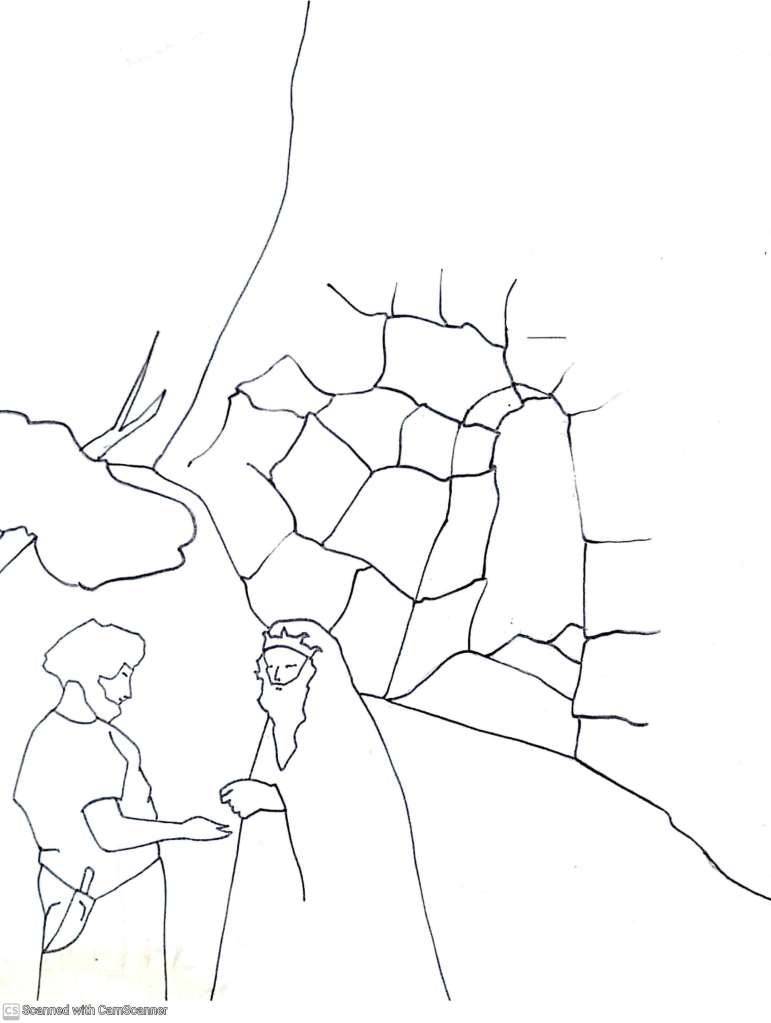
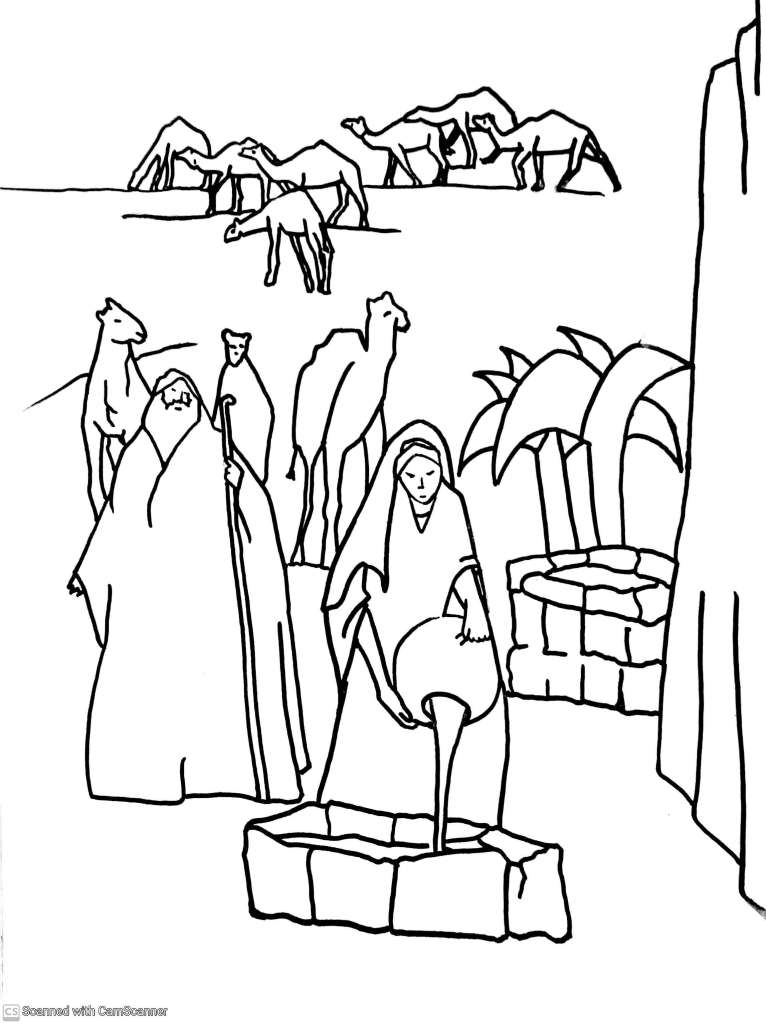
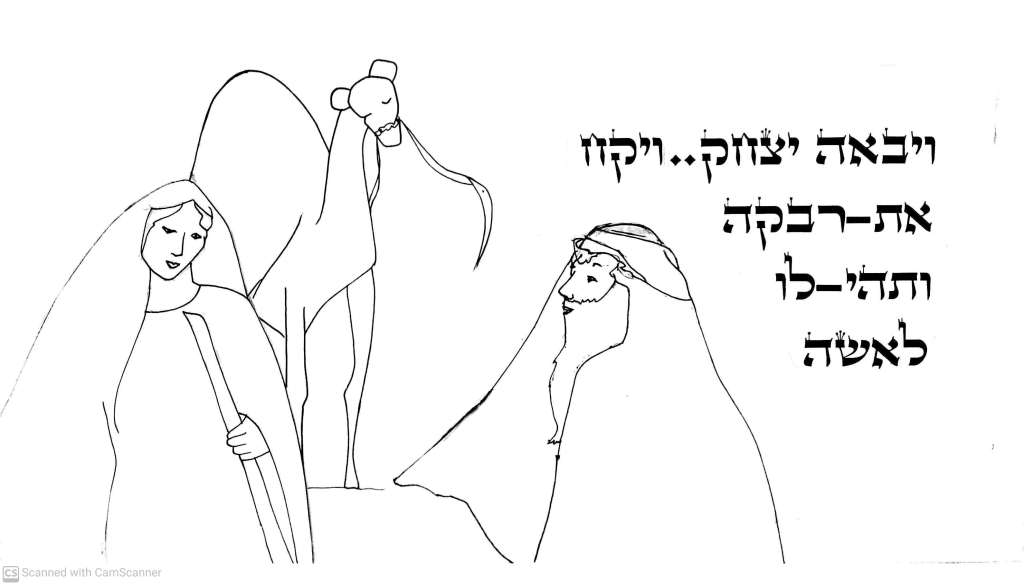
Genesis, Chai Sara, Chapter 24 verse 67:
“and Isaac came… and took Rebecca and she became his wife”.
Chayei Sara “The Life of Sara”) חַיֵּי שָֹרָה Genesis 23:1-25:18, is the 5th weekly Torah portion in the annual Jewish cycle of Torah reading beginning on Rosh Ha Shana, the Jewish New Year.

In Chai Sara Abraham successfully negotiates paying the full price for a burial plot for Abraham's family at the cave of Machpelah where he buries Sara.
Then he turns his attention to finding a suitable wife for his son Isaac among his relatives in Aram Naharaim.
He sends his servant Eliezar to his brother, Nahor. On arrival, Rebecca is at a well where he stops to water his camels and she offers him a place to stay with her family.
After meeting Nahor and some formalities, Eliezar returns to Canaan with Rebecca, who becomes Isaac's wife.
Abraham remarries, has more children, and dies at the age of 175.
Chai Sara Tallit
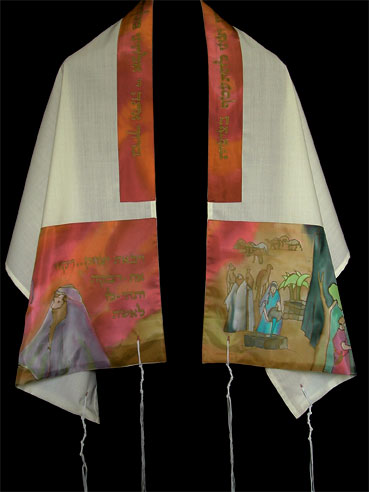
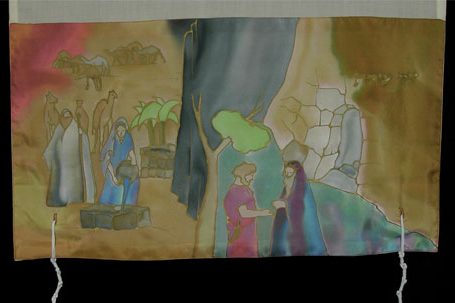
Band I Scene I (on right) shows Abraham buying a burial plot for Sara.
Band I Scene II (on left) Eliazar watching Rebecca water his camels.
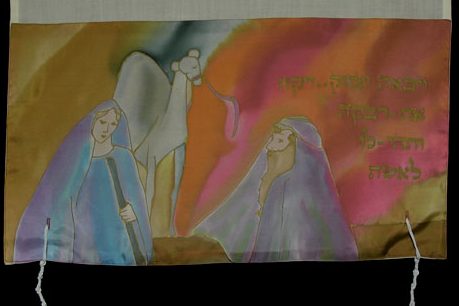
Band II Isaac takes Rebecca as his wife.
Translation of Hebrew Genesis, Chai Sara, Chapter 24 verse 67
“and Isaac came… and took Rebecca and she became his wife”.
Weekly Portion Toldot
November 22, 2025
Sample of free illustrations for download

Parasha Toldot תּוֹלְדוֹת “Generations”
Genesis 25:19-28:9 is the 6th weekly portion in the annual Jewish cycle of Torah reading beginning on Rosh Ha Shana, the Jewish New Year.
Toldot begins with Isaac’s marriage to Rebecca and the birth of their twin sons, Jacob and Esau. There is a famine in the land and they go to Gerar where King Avimelech tries to take Rebecca as his wife, understanding that she is Abraham’s sister. The incident ends with Isaac prospering there and living with Rebecca as his wife.
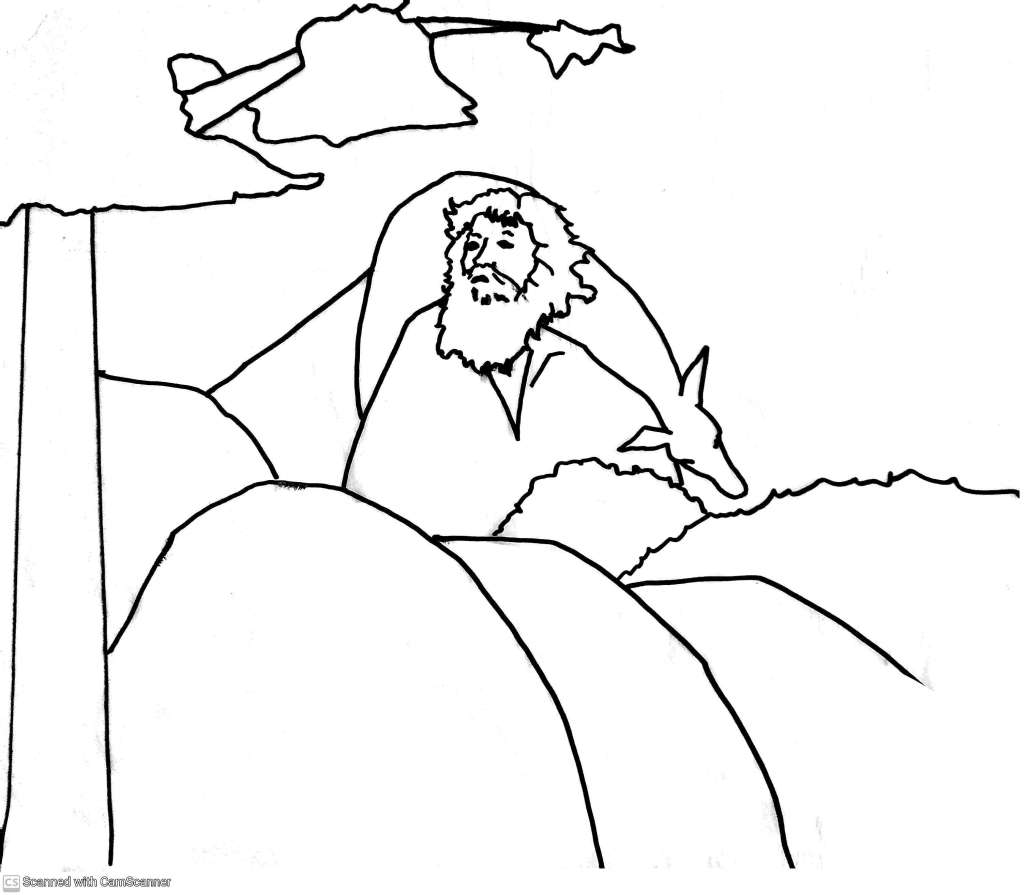
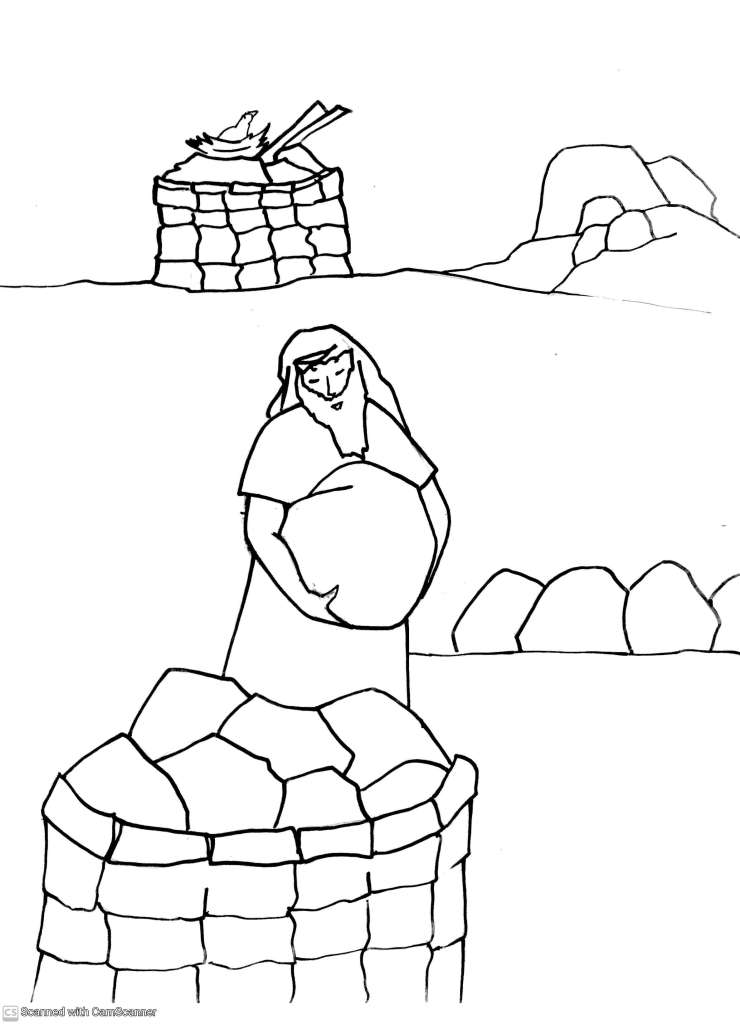
Later Isaac leaves the kingdom of Avimelech to live in the Valley of Gerar where he re-digs the wells dug in his father’s day which had been plugged up by the Philistines after the death of Abraham. Disputes over water rights follow and Isaac settles, in the end, in Shibah (BeerSheva of today) where he gives his blessing to Jacob instead of Esau, and Jacob flees to avoid Esau’s wrath.
Toldot Tallit
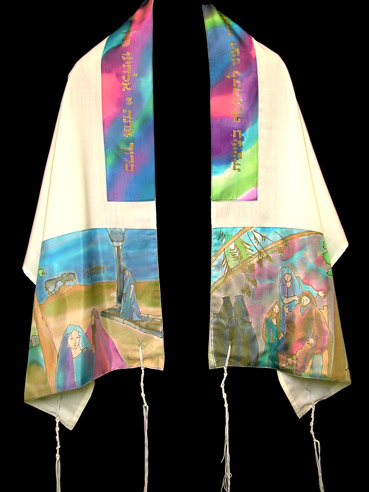
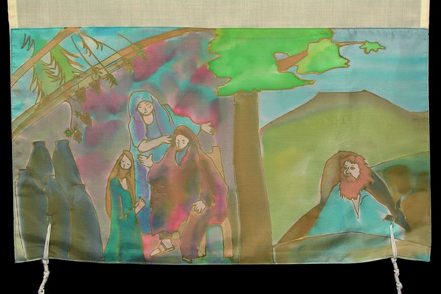
Toldot Tallit Band I
Isaac blessing Jacob, Rebecca looking on; his brother Esau nearby.
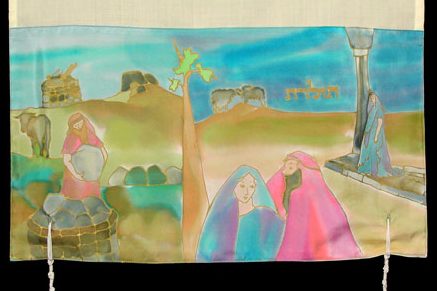
Toldot Band II Scene I (on right) King Avimelech watches Abraham and Rebecca sporting and realizes they are man and wife.
Toldot Band II Scene II (on left) Isaac re-opens the wells that had been dug in the days of Abraham, and plugged up by the Philistines after Abraham’s death.
Weekly Portion Vayetze
November 29, 2025
Sample of free illustrations for download
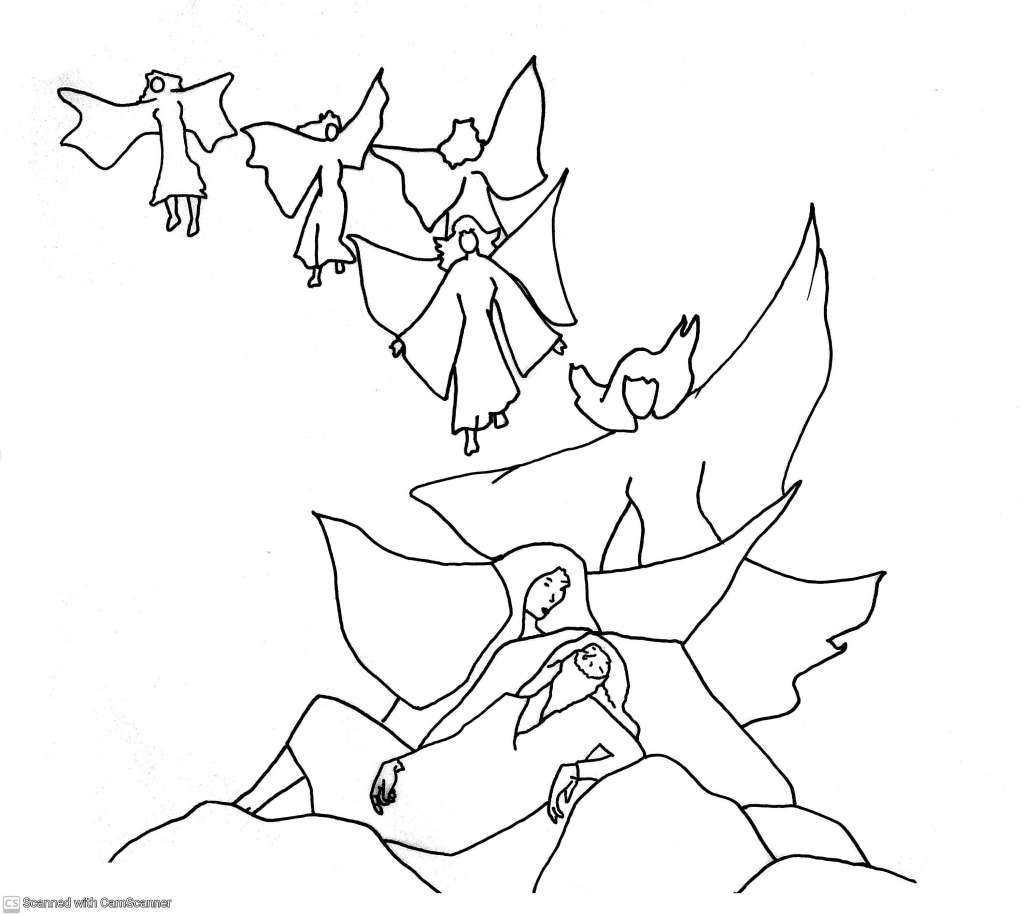
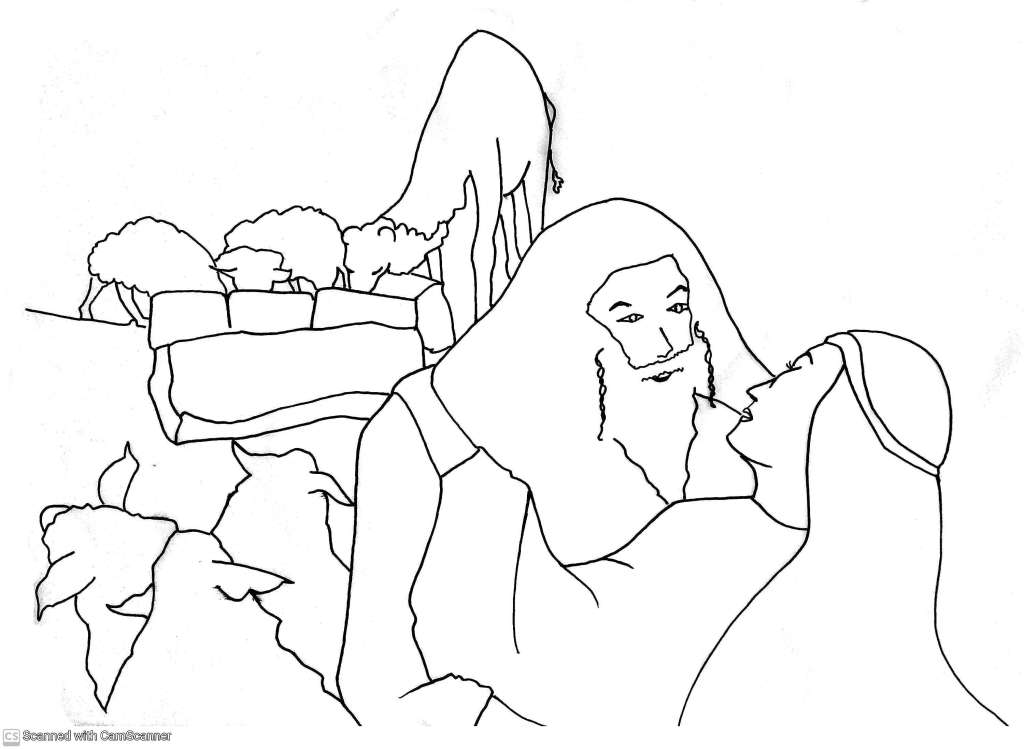
Vayetze “He Went Out” וַיֵּצֵא Genesis 28:10-32:3, is the 7th weekly Torah portion in the annual Jewish cycle of Torah reading beginning on Rosh Ha Shana, the Jewish New Year.

Jacob has left Be’er Sheva in fear of his life, after stealing his brother Esau's birthright. He camps, sleeps, and dreams of angels descending and ascending a ladder. G-d stands by his side and tells him he will give this land to him and his offspring. Jacob builds an alter there and calls it Bet El, the House of G-d. He travels to his Rebecca's brother, Laban, son of Nahor in Paddan-aram. On his arrival, he meets Rachel, Laban's daughter, at the well where she is tending the family sheep herds. Jacob works as a shepherd for Laban for seven years for the right to marry Rachel, only to find himself married to her older sister Leah instead. He works for Laban another seven years for the right to marry Rachel. Leah and Rachel bear Jacob's children, along with their maidservants, Bilhah and Zilpah. After twenty years Jacob returns to Cannan with his new family and the wealth he has accumulated.
Vayetze Tallit
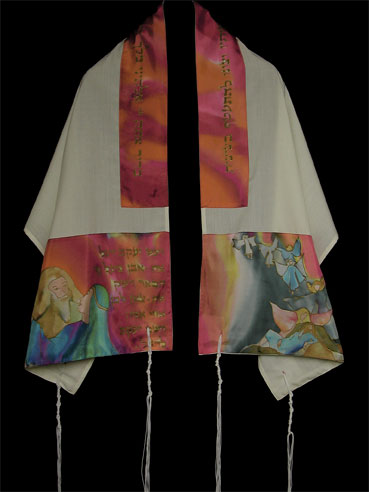
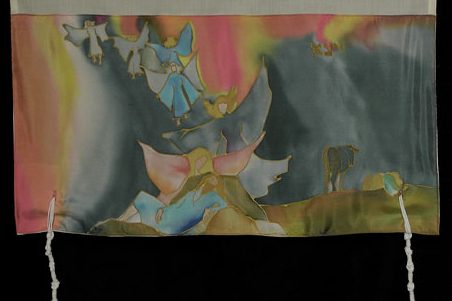
Band I Jacob’s dream
The figure of Jacob sleeping is taken from the painting “Mars and Venus” by early Renaissance Italian painter Sandro Botticelli 1445-1510.
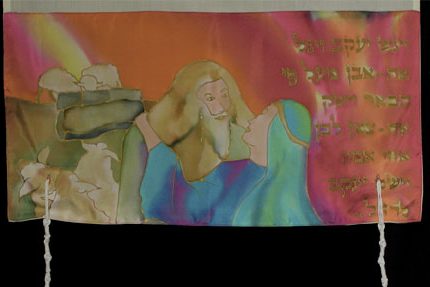
Band II, Jacob meets Rachel for the first time.
Genesis, 29:10-11 Translation “…Jacob went near, and rolled the stone from the well’s mouth, and watered the flock of Laban his mother’s brother. (11) And Jacob kissed Rachel…”
Weekly Portion Vayishlach December 6, 2025
Sample of free illustrations for download
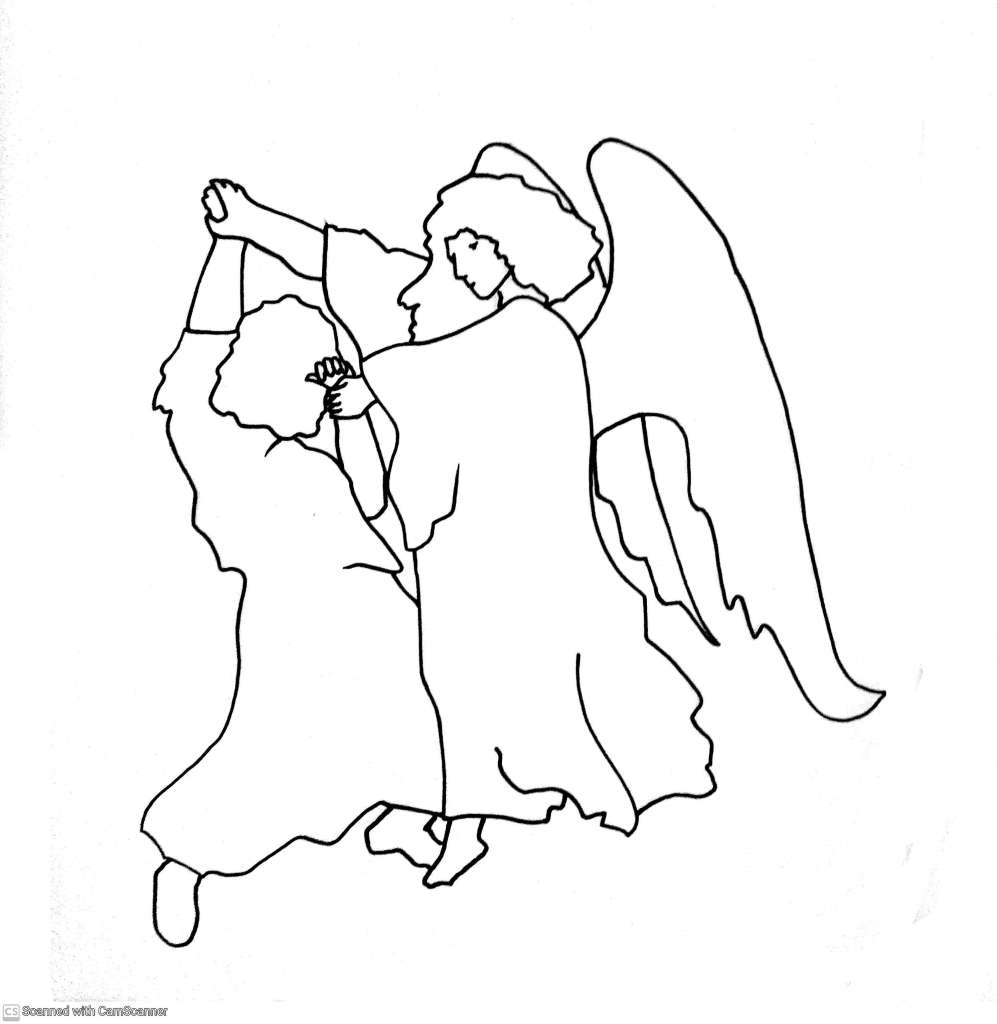
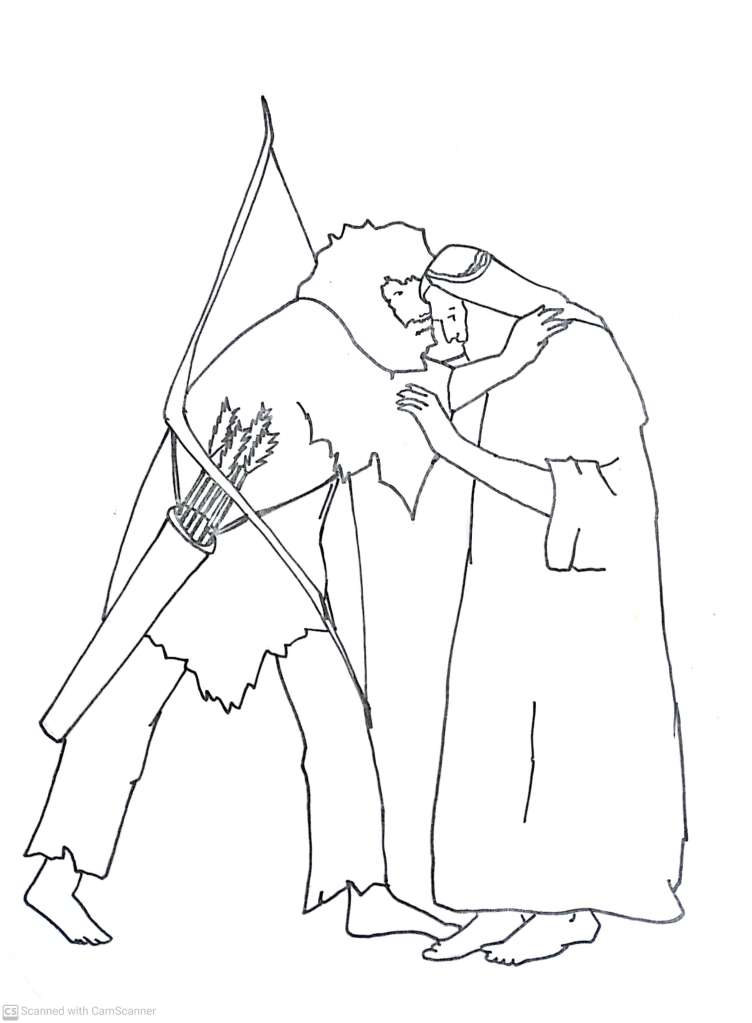
Esau meets Jacob
Vayishlach וַיִּשְׁלַח “He Sent” Genesis 32:4-36:43, is the 8th weekly portion in the annual Jewish cycle of Torah reading beginning on Rosh Ha Shana, the Jewish New Year.

G-d has told Jacob to return to the land of his fathers after twenty years in Paddam-Aram serving his ungrateful Uncle, Laban, father of his wives, Rachel and Leah. He takes them, their maidservants, and his children, livestock and goods, and leaves for Gilead in Canaan.
He fears Esau may kill him and his family for stealing Isaac's blessing from him twenty years before, and prepares him lavish gifts.
Throughout the night before his meeting with Esau, Jacob struggles with an angel. During the battle, Jacob is wounded, but does not let go of the angel until he receives his blessing. As a result of the battle, Jacob is renamed Israel.
He is reconciled successfully with his brother, Esau.

Jacob's daughter, Dinah, is raped by Shechem, a Canaanite Hivite Prince, who wants to marry her, but is also holding her captive.
A pseudo-negotiation takes place; Dina is returned to her family, and then her brothers sack the city.

Rachel dies during the childbirth of Benjamin.
Vayishlach Tallit

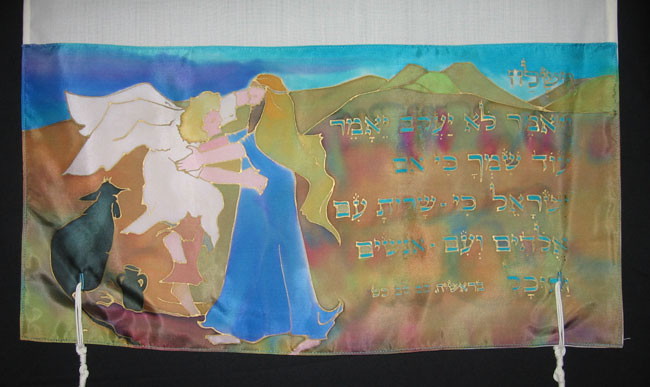
Band I
Jacob wrestles with an angel in the night, prevails, and is given the name Israel.
Translation of Hebrew (Bereshit 32, 29):
“And he (the angel Jacob was wrestling with) said: ‘Thy name shall be called no more Jacob, but Israel; for thou hast striven with God and with men, and hast prevailed.’ “
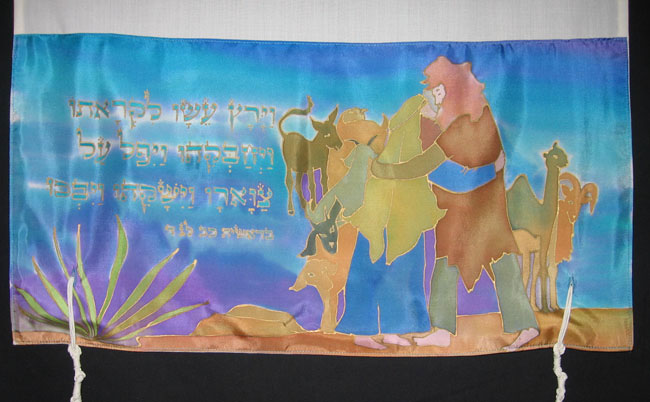
Band II
Jacob and Esau meet.
Translation of Hebrew (Bereshit 33, 4):
“And Esau ran to meet him, and embraced him, and fell on his neck and kissed him and they wept.
Weekly Portion Vayeshev December 12, 2025
Sample of free illustrations for download
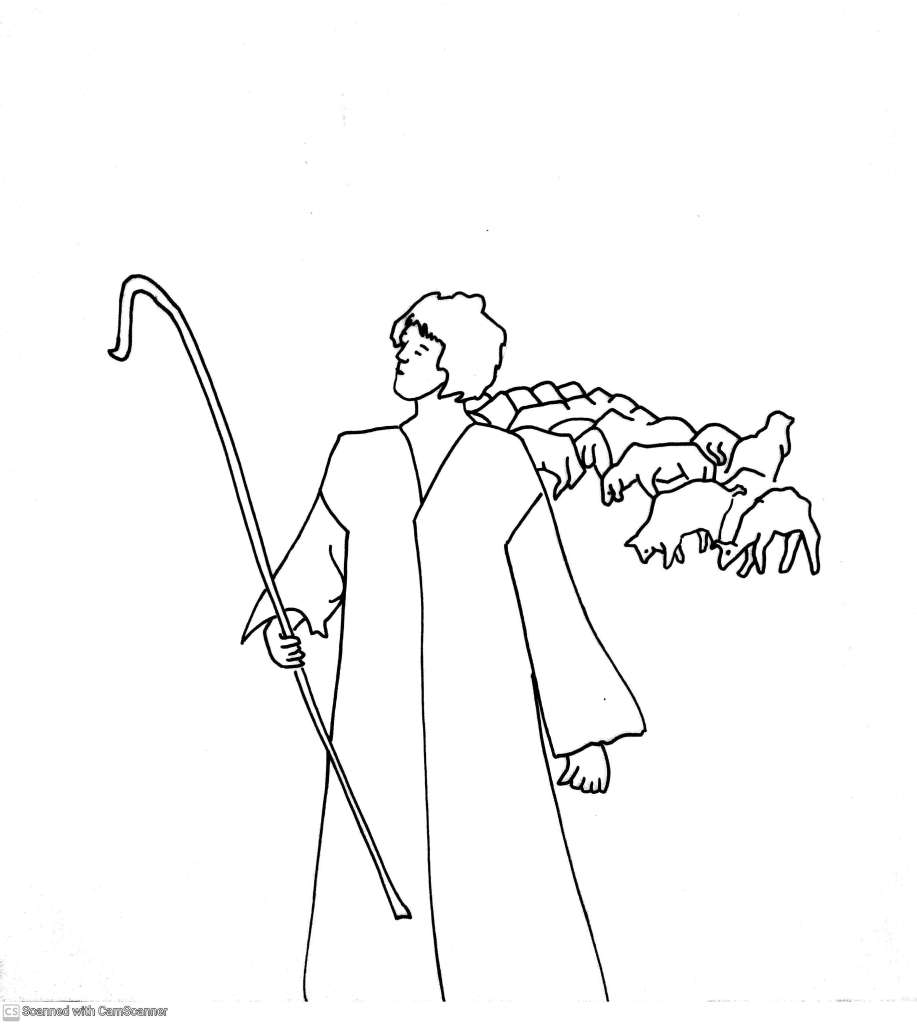
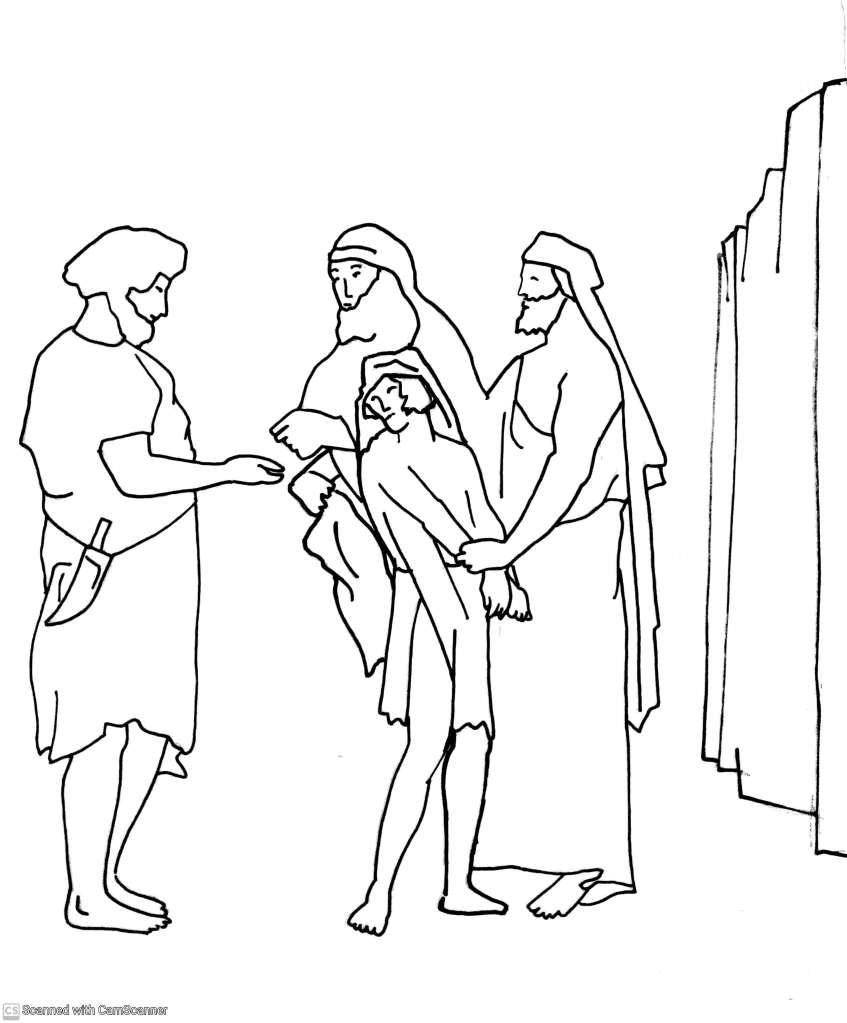
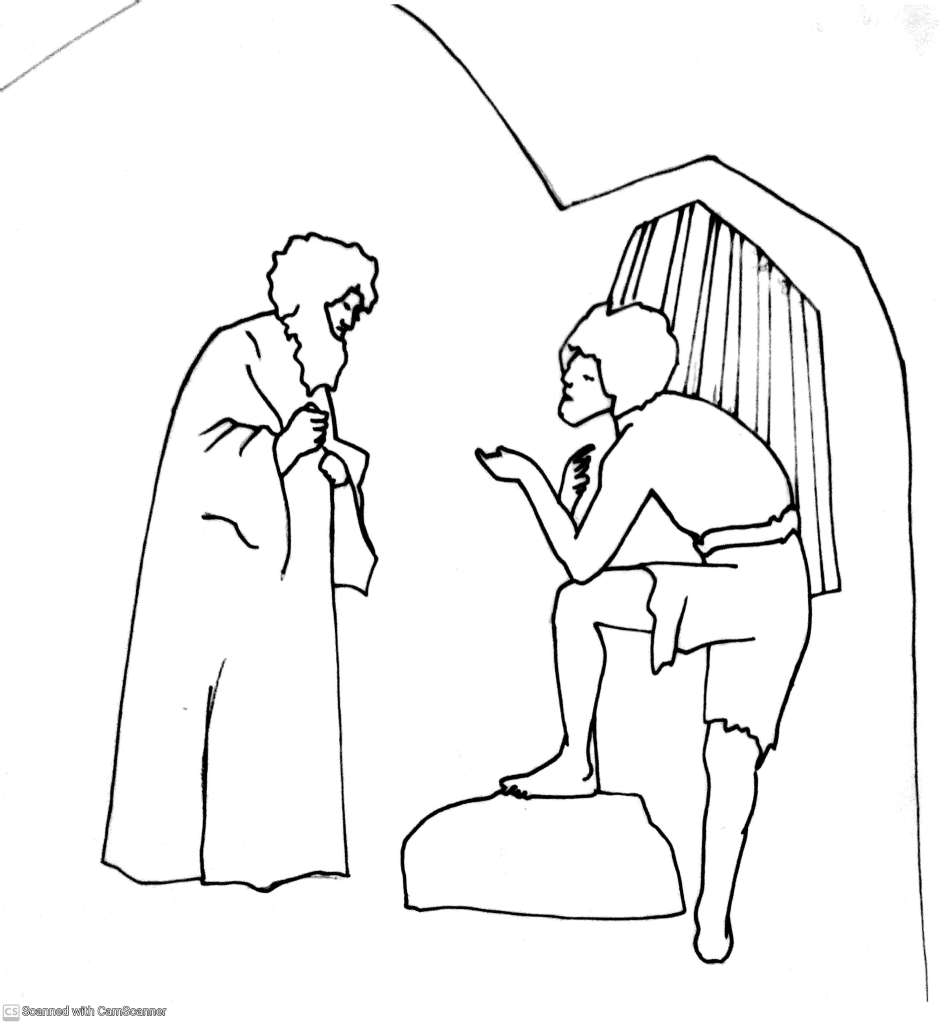
Joseph in Prison

Parasha Vayeshev “He Settled” וַיֵּשֶׁב Genesis 37:1-40:23, is the 9th weekly portion in the annual Jewish cycle of Torah reading beginning on Rosh Ha Shana, the Jewish New Year.
In it Jacob settles in Canaan and has twelve children.
Joseph is his favorite.
When he is seventeen, Jacob gives him a coat of many colors.
His jealous brothers conspire to kill him but leave him in a pit instead.
Joseph is sold into slavery in Egypt and purchased by Potiphar. He is later imprisoned on the strength of accusations of seduction by Potiphar’s wife.
In prison he becomes known for interpreting dreams and interprets the dreams of Pharaoh’s royal wine steward and baker, who are imprisoned there.
Parasha Vayeshev includes the story of Tamar who marries one of Judah’s sons; of her suffering, her resolution to her difficulties, and her offspring.
Vayeshev Tallit
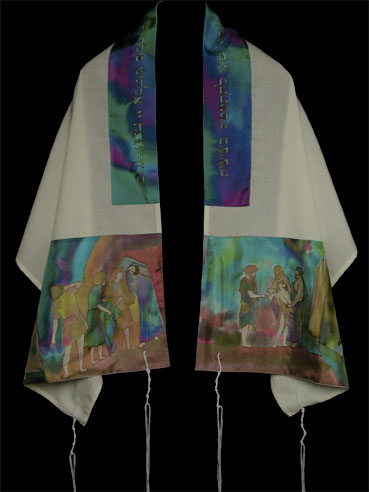
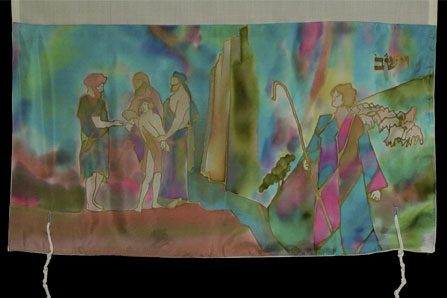
Vayeshev Band I Scene I (on right) shows Joseph as he goes to meet his brothers.
Vayeshev Band I Scene II (on left) shows Joseph sold into slavery by passing Medianites.
This scene is based on “Joseph Sold to the Merchants”, a nineteenth century painting by Hoppolyte Flandrin.
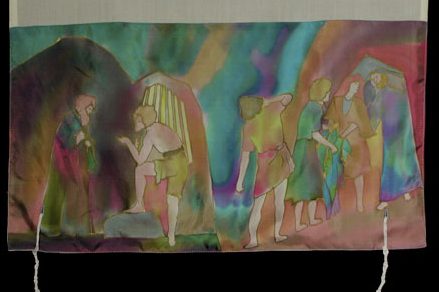
Vayeshev Band I Scene I (on right) shows Joseph’s brothers bringing home to their father Judah, a bloodied coat of many colors.
Vayeshev Band I Scene II (on left) Joseph interpreting dreams in prison.
Weekly Portion Miketz
December 19, 2025
Sample of free illustrations for download
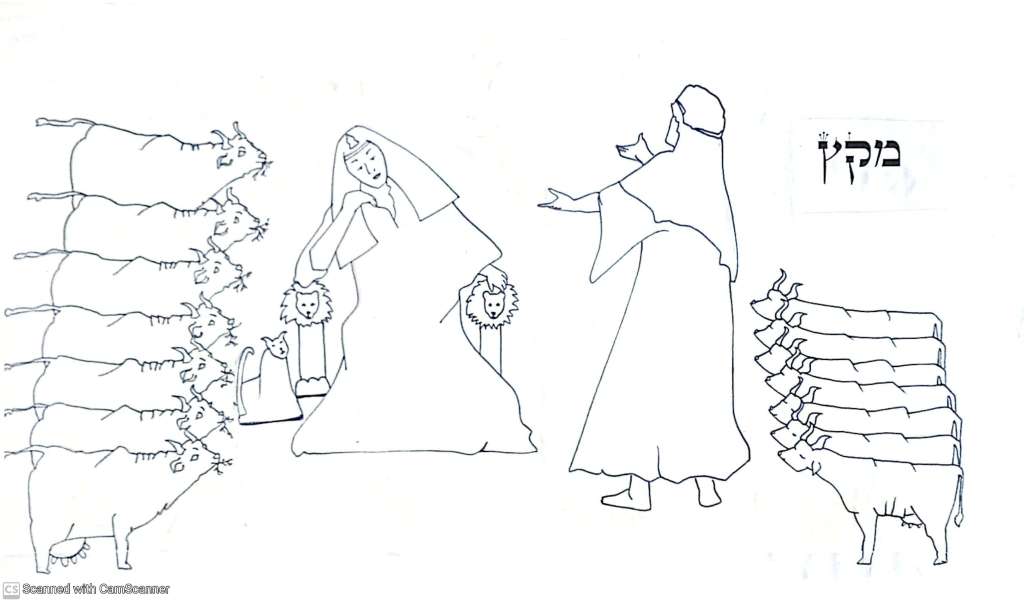
Pharaoh’s dream

Joseph’s Brothers Return to Egypt with Benjamin
Parasha Miketz “After” מִקֵּץ
Genesis 41:1-44:17, is the 10th weekly portion in the annual Jewish cycle of Torah reading beginning on Rosh Ha Shana, the Jewish New Year.
In prison, Joseph interprets Pharaoh’s dream about a coming famine; and rises to chief in command under Pharaoh.
He marries Asenath, the daughter of Potiphar and has two sons, Ephraim and Manasseh.
During the seven years of plenty, Joseph stockpiles grain. When the famine begins, Joseph’s brothers, except for Benjamin, come to Egypt to buy food. They don’t recognize their Joseph, who holds Shimon hostage until they return again with Benjamin.
Miketz Tallit
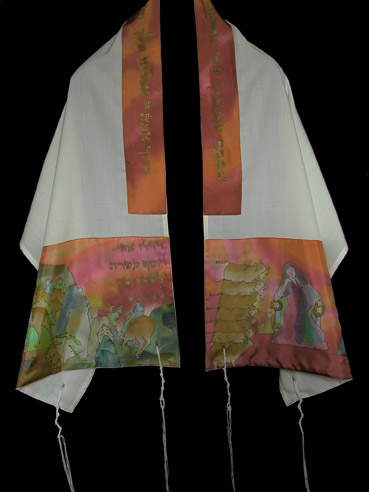
Miketz Band I
Joseph interprets Pharaoh’s dream
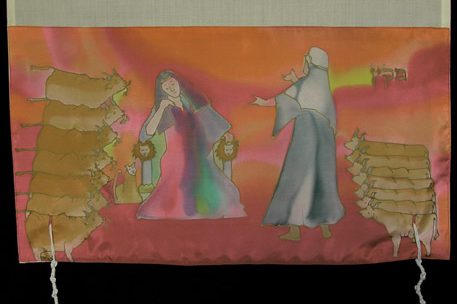
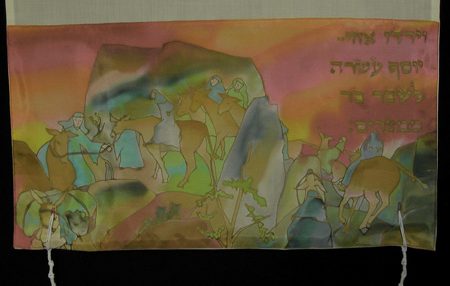
Miketz Band II
Joseph’s brothers travel to Egypt as there is famine in Canaan.
Translation of Hebrew (Genesis 42, 3):
“And Joseph’s ten brethren went down to buy corn from Egypt.”
Weekly Portion Parashat Vayigash
December 27, 2025
Sample of free illustrations for download
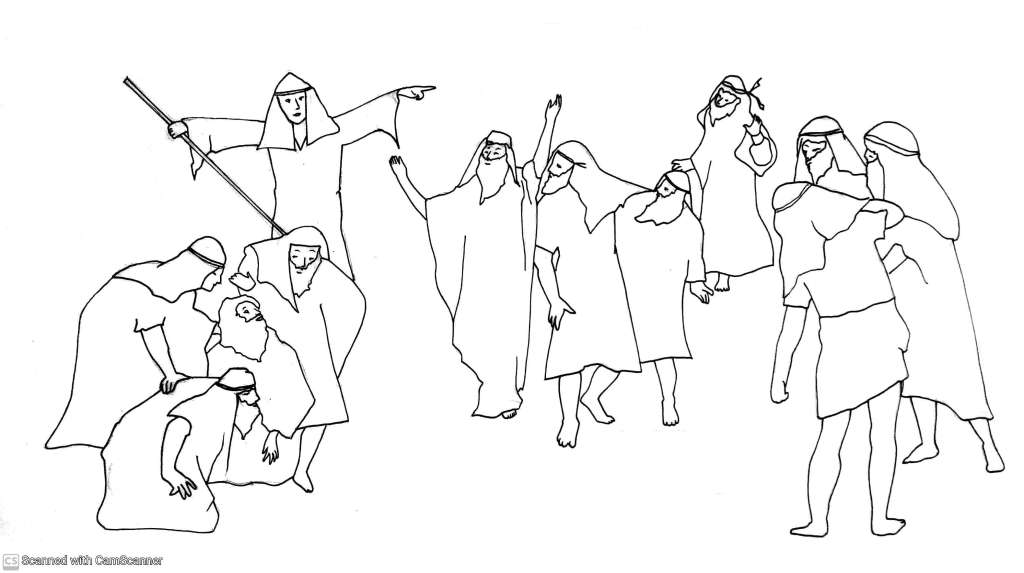
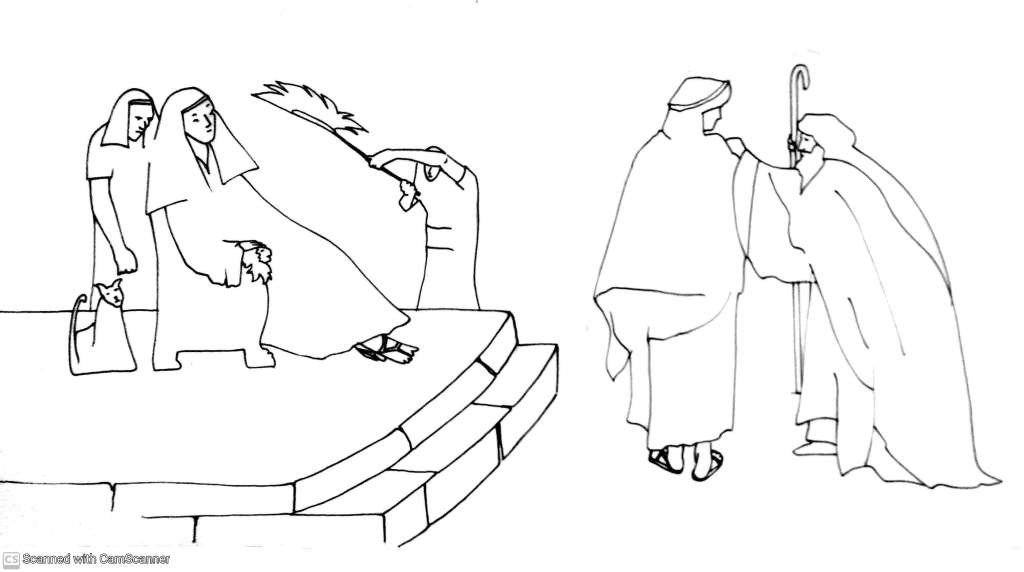
Parashat Vayigash “He Approached” וַיִּגַּשׁ
Genesis 44:18-47:27, is the 11th weekly portion in the annual Jewish cycle of Torah reading beginning on Rosh Ha Shana, the Jewish New Year.
In Parashat Vayigash, Joseph finally reveals his identity to his brothers. Joseph and Jacob reunite after 22 years, and Jacob meets Pharoah.
Jacob and his descendants settle in Goshen in Northern Egypt.
Vayigash Tallit
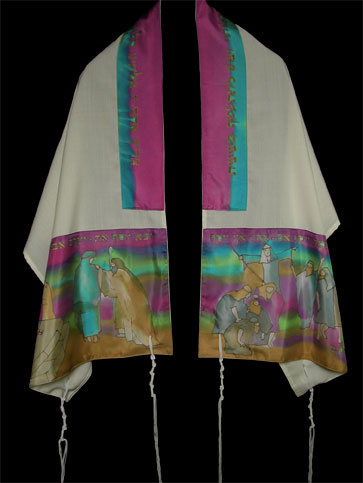
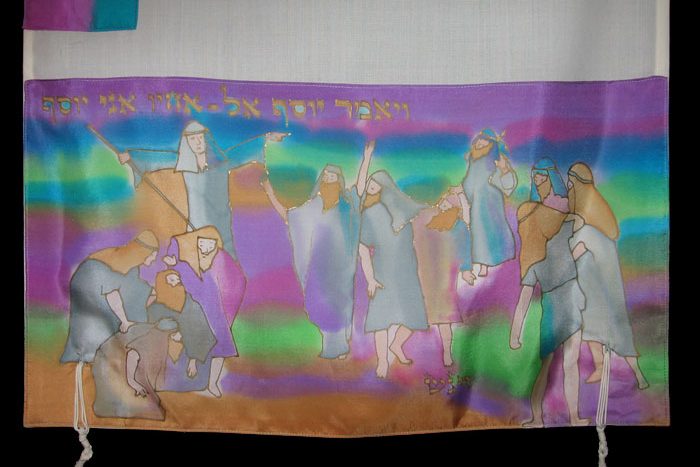
Vayigash Band I
Joseph reveals himself to his brothers.
Translation of Hebrew (Genesis 44, 3):
“And Joseph said unto his brethren: ‘I am Joseph.’ “
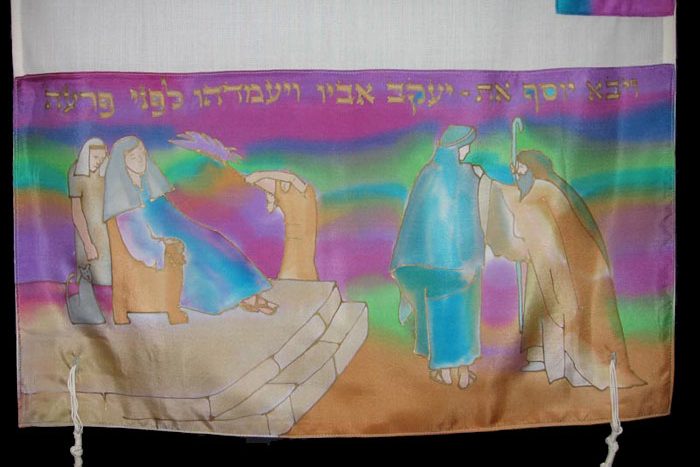
Vayigash Band II
Joseph introduces his father Jacob to Pharaoh.
Translation of Hebrew (Genesis 47, 7):
“And Joseph brought in Jacob his father, and set him before Pharaoh.”
[This scene is taken, in part, from a 19th century painting of Sir Edward John Poynter (1836-1919), “Jacob Introduces Jacob to Pharaoh”.]
Weekly Portion Parasha Vayechi
January 3, 2026
Jacob blesses Ephraim and Manasseh. Jacob’s Blessing, from last week’s Torah portion, Parashat Vayechi (“He Lived”) Genesis 47:28-50:26, the final Torah portion in the Book of Genesis.
Sample of Illustrations available for free download
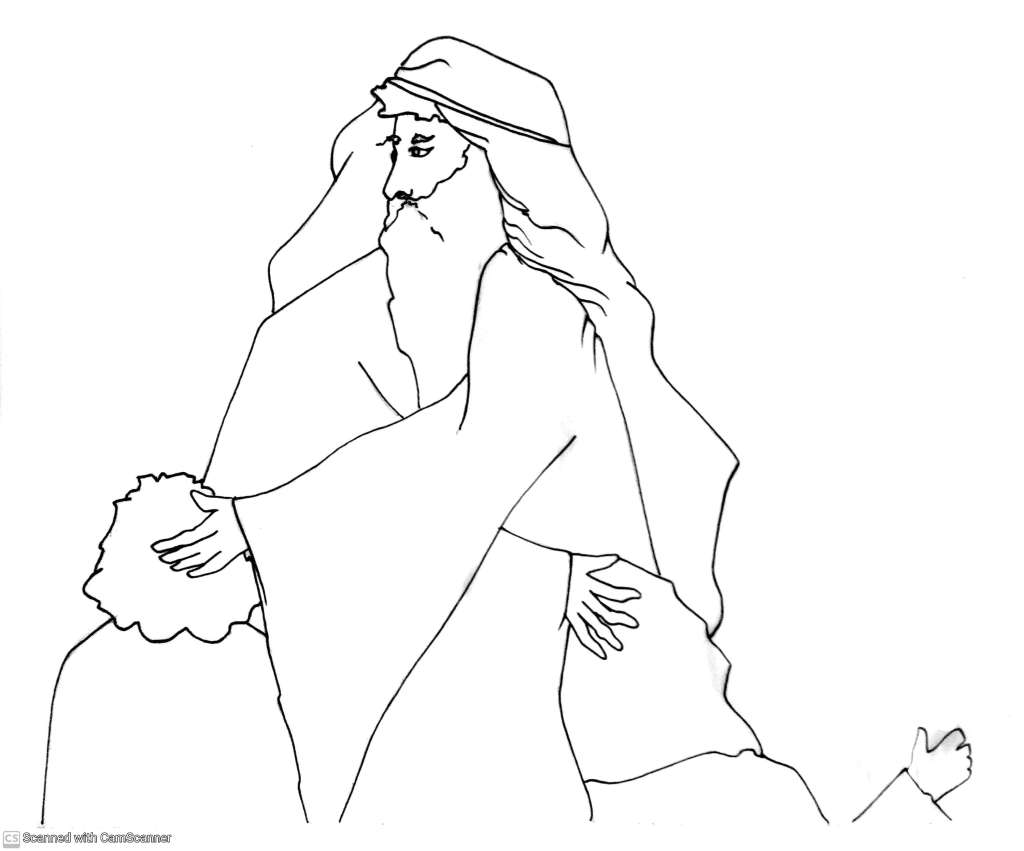
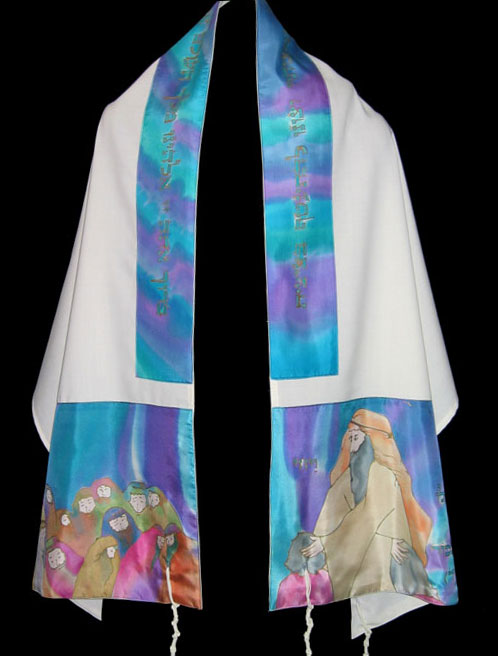
Israelcraft Vayechi Tallit (prayer shawl)

Righthand Band of Vayechi Tallit
Translation of Hebrew (Genesis 48, 14):
“And Israel stretched out his right hand, and laid it upon the head of Ephraim, who was the younger, and his left hand upon Manasseh’s head, guiding his hands wittingly; for Manasseh was the first-born.”
Book of Exodus
Weekly Portion Parashat Shemot
January 10, 2026
Sample of free illustrations for download
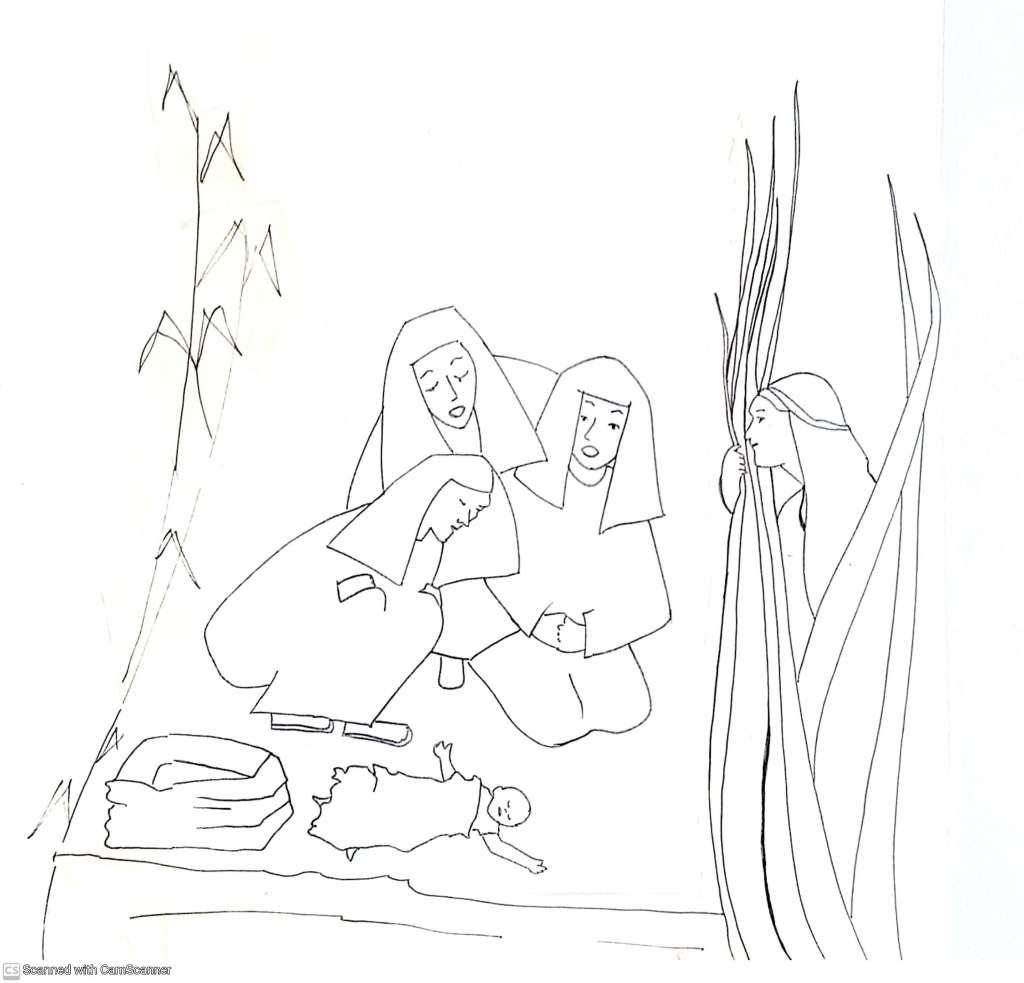
Baby Moses Saved, Miriam Looking On
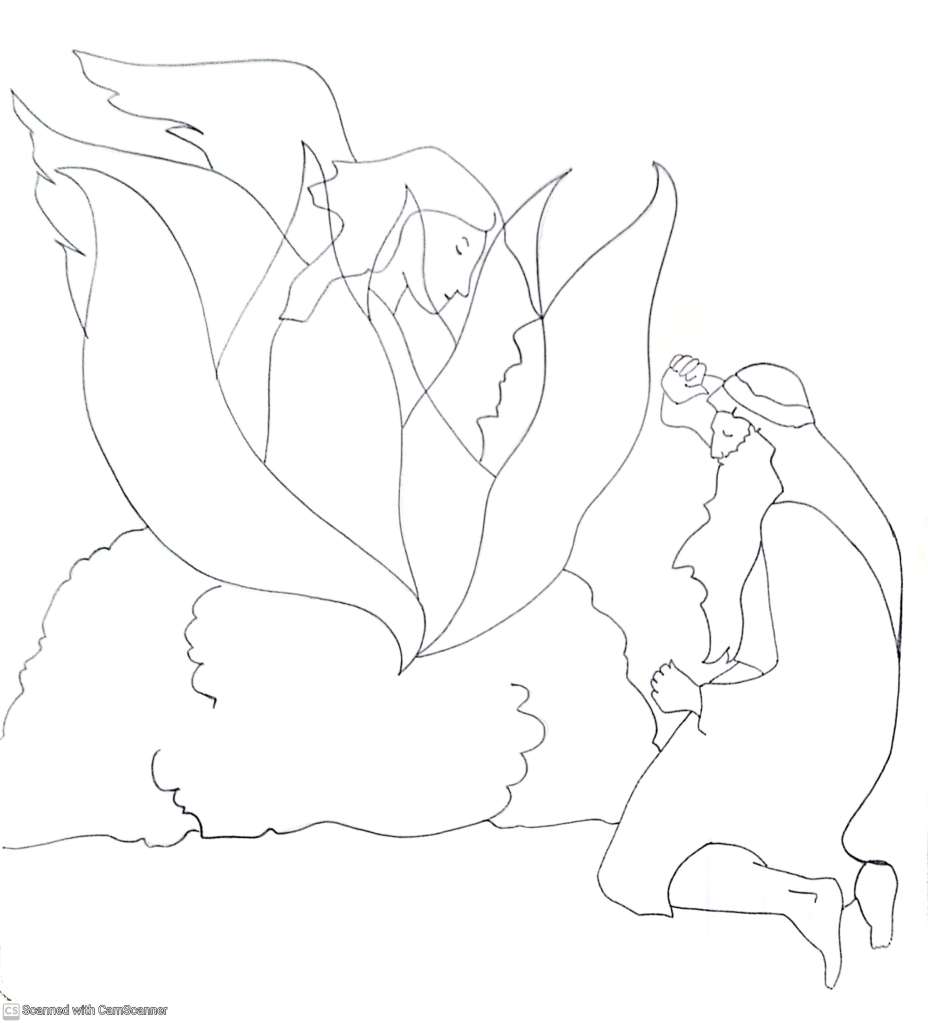
Moses and the Burning Bush
Parashat Shemot “Names” שְׁמוֹת, Exodus 1:1-6:1, is the first Torah portion in the Book of Exodus, the second Book of the Bible, and the 13th weekly portion in the yearly cycle of Torah reading.
Shemot Tallit
Tallit Band I
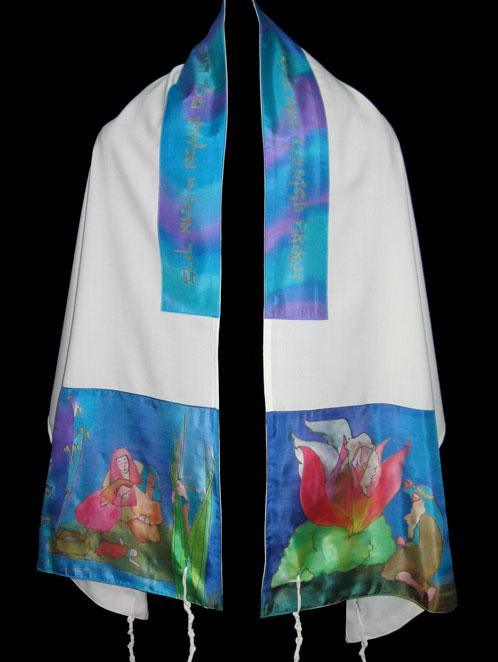
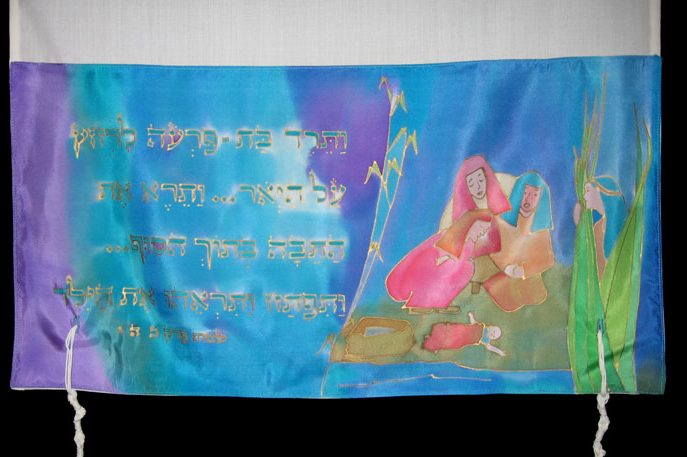
Moses is discovered by Pharaoh’s daughter.
Translation of Hebrew (Shemot 2, 5-6):
“And the daughter of Pharaoh came down to bathe in the river…and she saw the ark among the flags…And she opened it, and saw…a boy…”
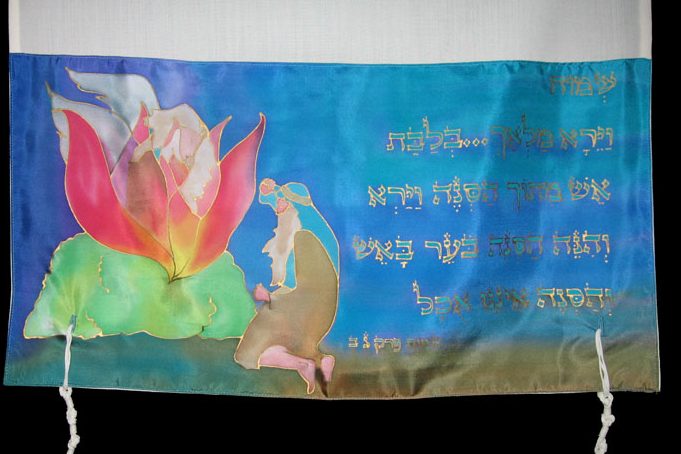
Tallit Band II
An angel in a burning bush appears to Moses, telling him toreturn to Egypt to bring the Israelites out of Egypt and into a land of milk and honey.

Translation of Hebrew (Shemot 3, 2):
"And the angel of the Lord appeared unto him [Moses] in a flame of fire out of the midst of a bush; and he looked, and the bush was not consumed."
Weekly Portion Parasha Veara
January 17, 2026
Sample of free illustrations for download
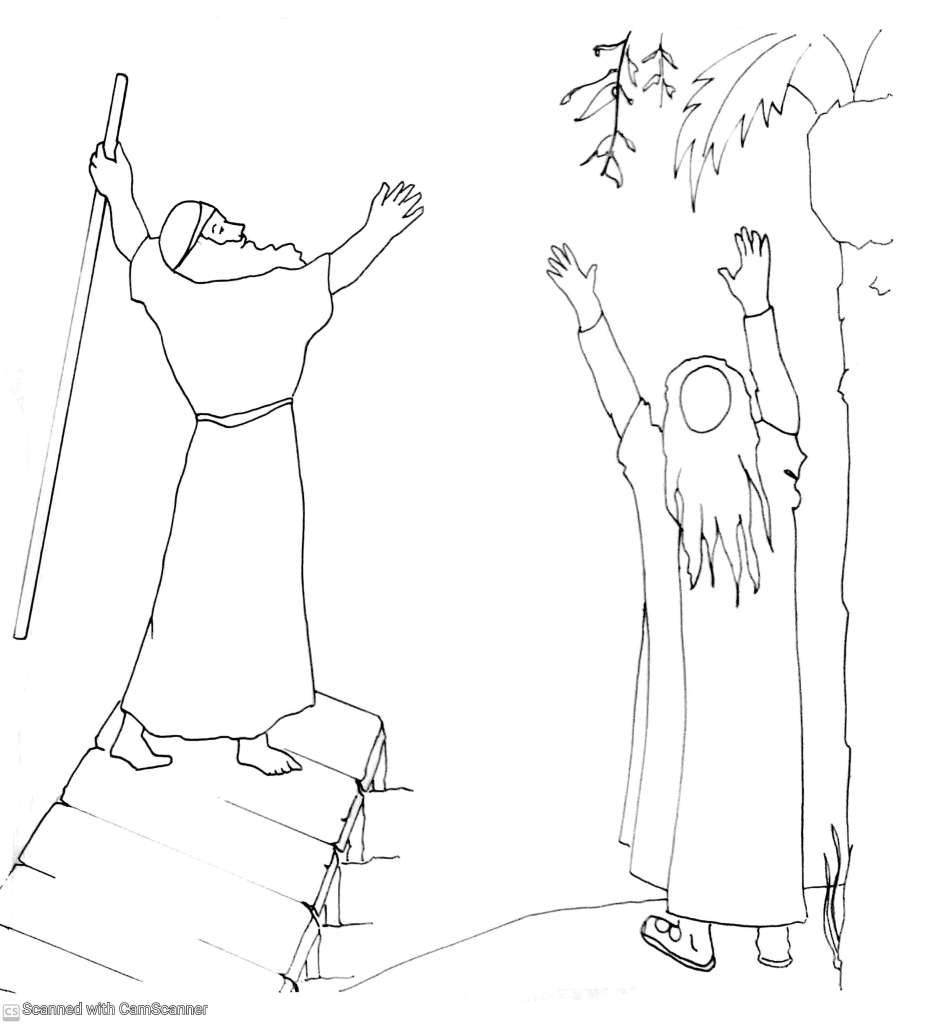
Turning Nile water into blood
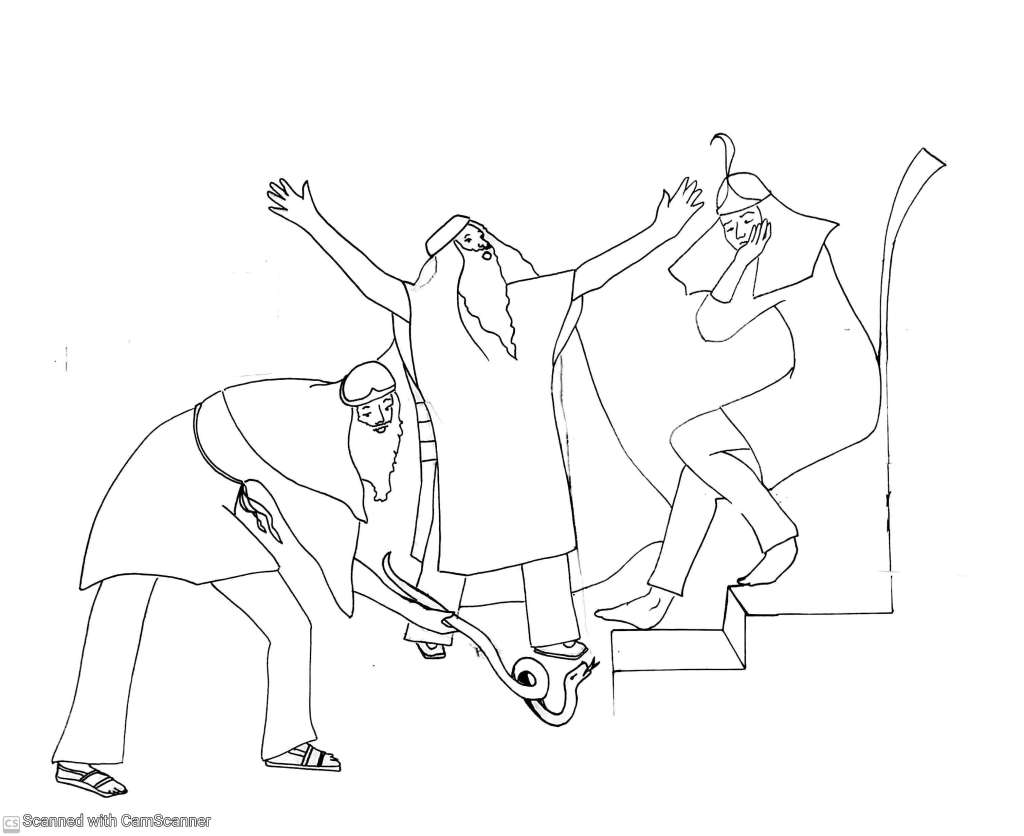
Moses and Aaron turning staff into a serpent
Parasha Vaera Parashat Vaera “I Appeared” וָאֵרָא Exodus 6:2-9:35 is the 14th weekly Torah portion and the second portion of the Book of Exodus, the second Book of the Bible, which is read beginning on Rosh Ha Shana, the Jewish New Year.
In Parasha Vaera, Moses and Aaron unsuccessfully attempt to convince the Pharaoh to free the enslaved Jewish nation. They perform miracles, turning the Nile to blood, bringing on the plague of frogs, lice, and insects.
But Pharaoh will not let them go.
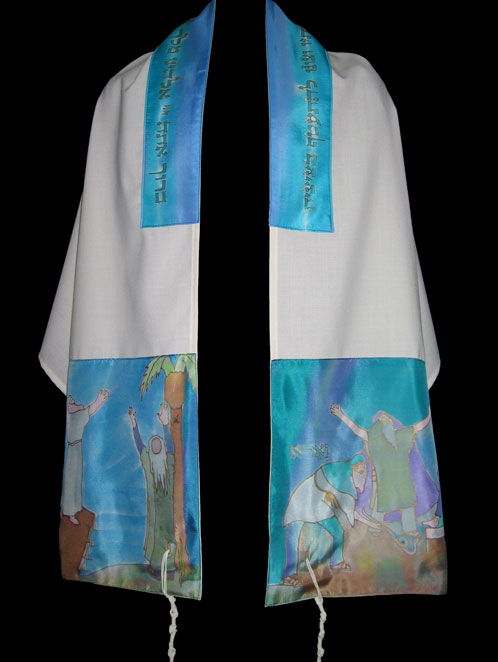
Vaera Tallit
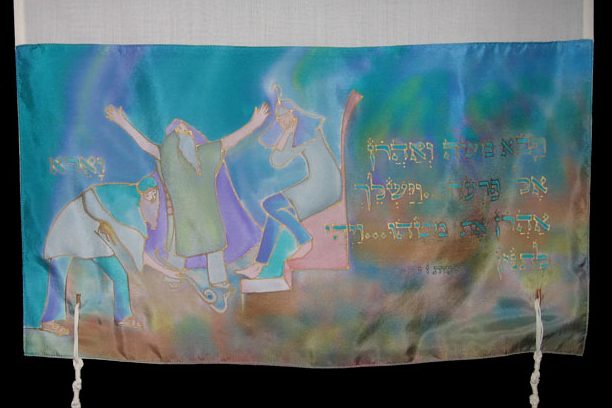
Tallit Band I
Aaron performs his first miracle, turning his rod into a serpent before Pharaoh.
Translation of Hebrew (Exodus 7 10):
“And Moses and Aaron went in unto Pharaoh, and they did so, as the Lord had commanded; and Aaron cast down his rod before Pharaoh… and it became a serpent.”

Tallit Band II
Aaron stands by the Nile, rod lifted, about to smote it and turn it to blood. Moses stands nearby, arms lifted to God in prayer.
Translation of Hebrew (Exodus 7, 20):
"And...Aaron did as the Lord commanded: and he lifted up the rod, and smote the waters that were in the river, in the site of the Pharaoh...and all the waters that were in the river were turned into blood."
Weekly Portion Parashat Bo
January 24, 2026
Sample of free illustrations for download
Israelites protecting themselves from plague of the first born
Translation:
“And Moses said unto the people: ‘Remember this day, in which ye came out from Egypt, out of the house of bondage…”
Parashat Bo “Come” בֹּא Exodus 10:1-13:16 is the Third Portion in the Book of Exodus, the second Book of the Five books of the Bible; which are read annually, beginning on Rosh ha Shana, the Jewish New Year.
Parashat Bo recounts the last three plagues that God inflicts on the Egyptians: locusts, darkness, and death of firstborns. G-d commands the Israelites to offer a Passover lamb sacrifice. After the last plague, Pharaoh and the Egyptians demand that the Israelites leave.
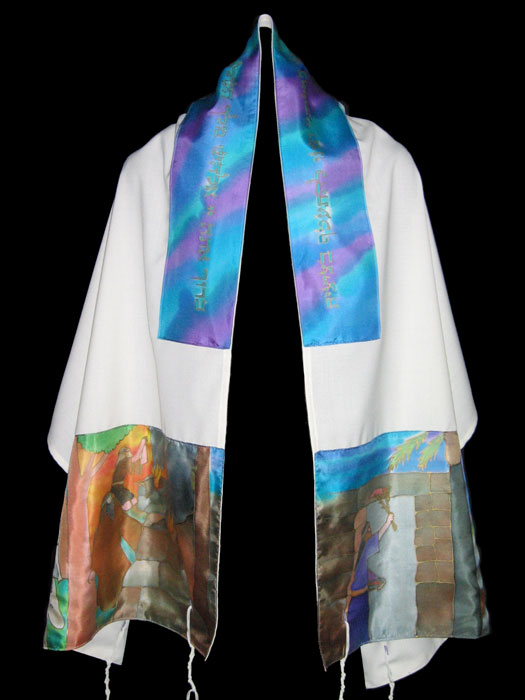
Bo Tallit
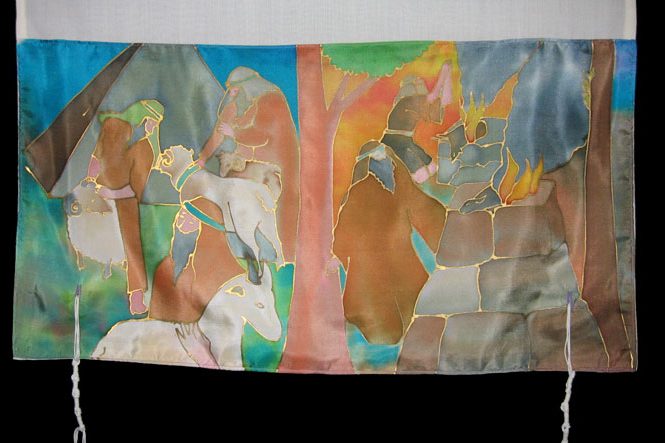
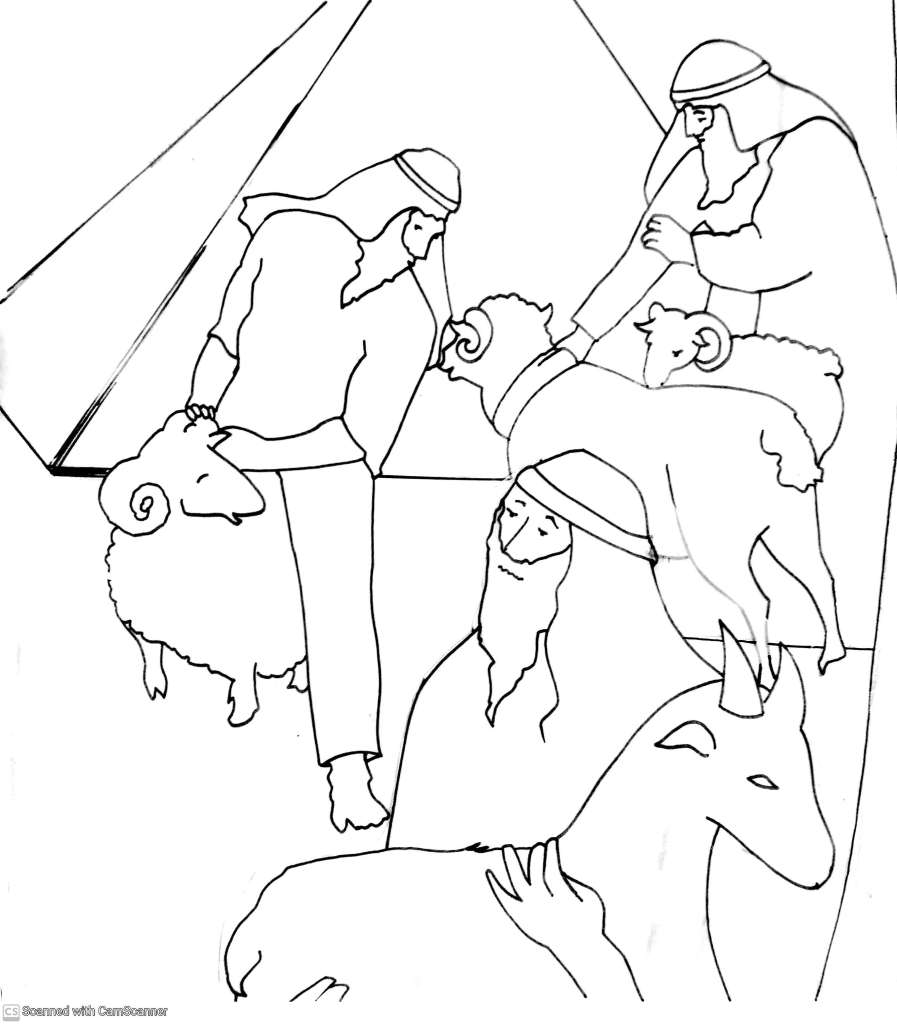
Band I Scene I
Lambs are brought, one per household.
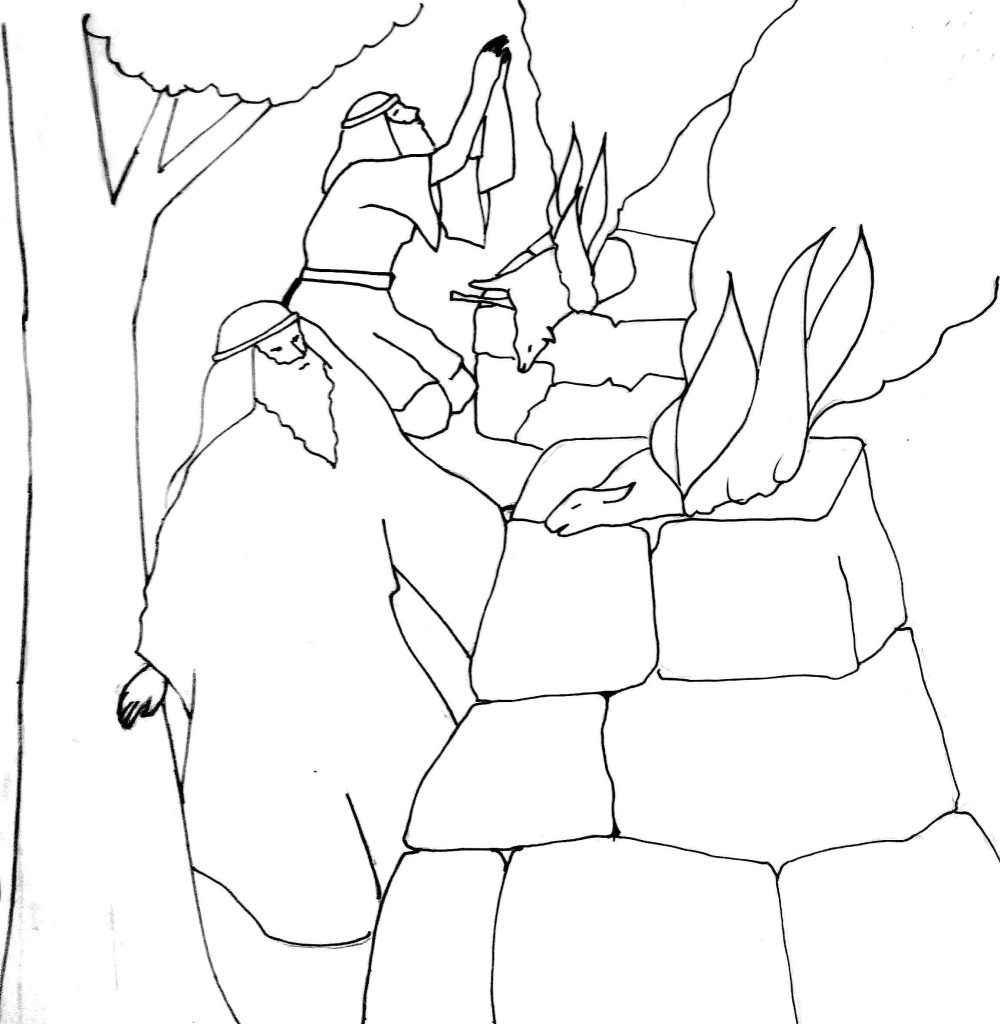
Band I Scene II
At dusk the lambs are being offered on alters.
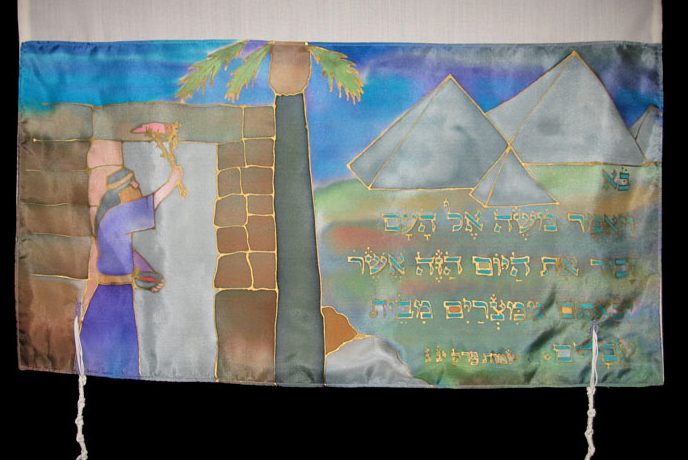
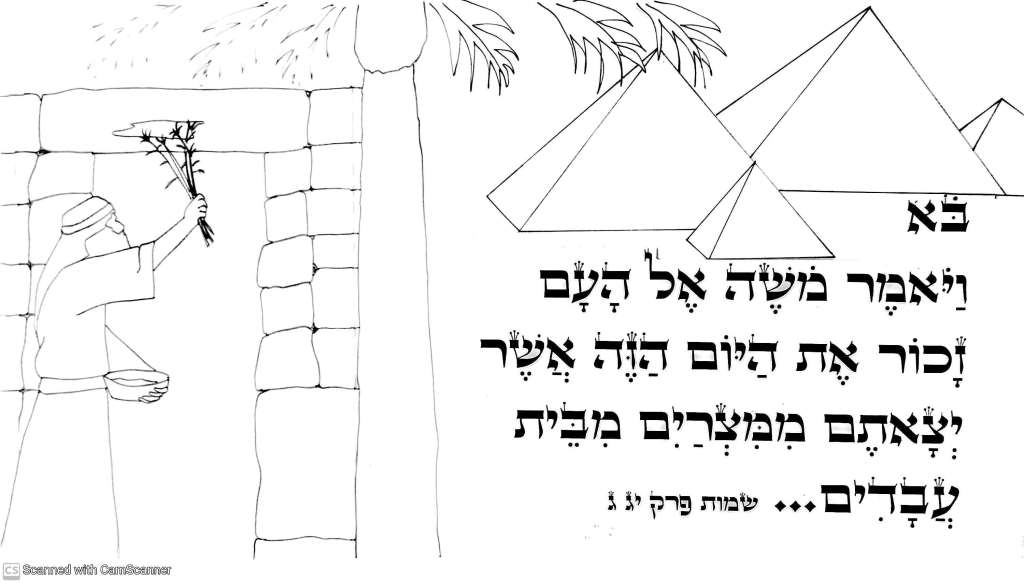
Band II
The entrance of an Israelite dwelling is marked, using a hyssop branch, to keep it safe from the plague of the first born.
Translation of Hebrew (Exodus 13, 3):
“And Moses said unto the people: ‘Remember this day, in which ye came out from Egypt, out of the house of bondage…”
Weekly Portion Parasha Beshalach
Jannuary 31, 2026
Sample of free illustrations for download
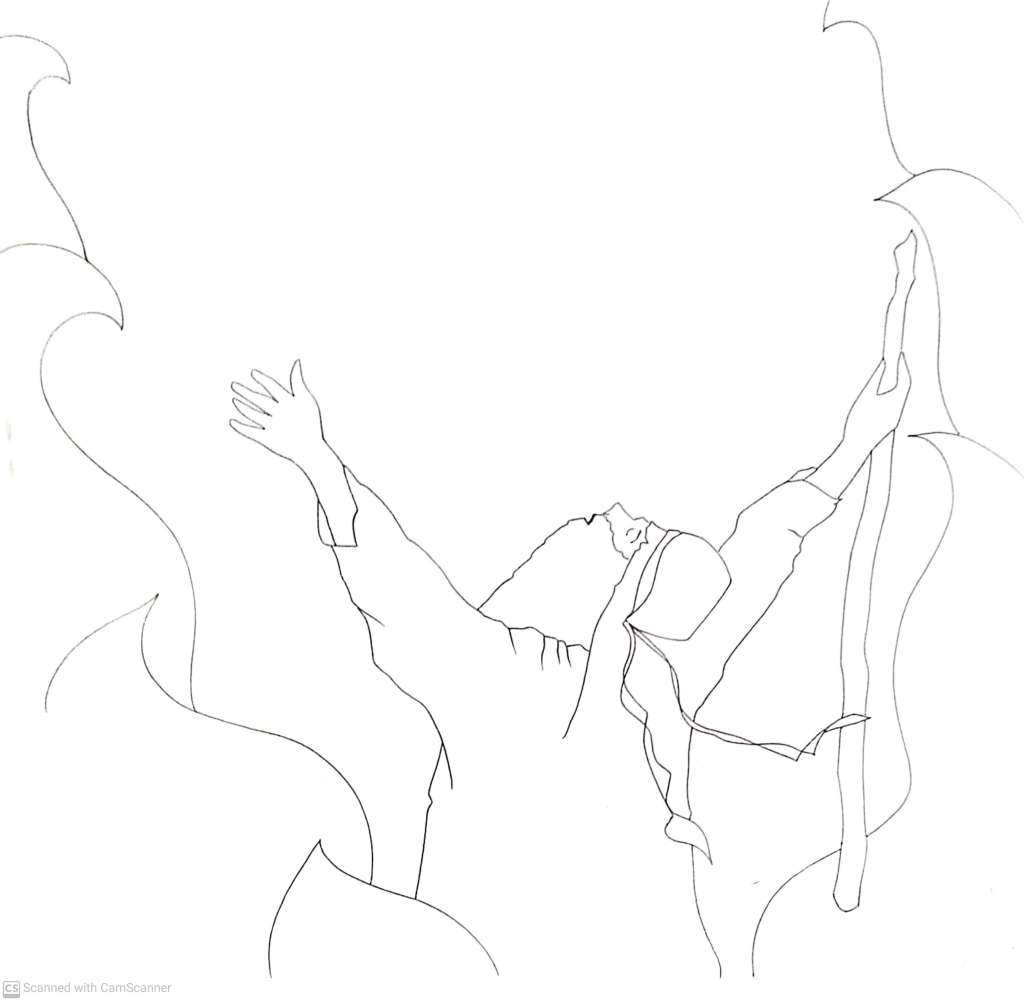
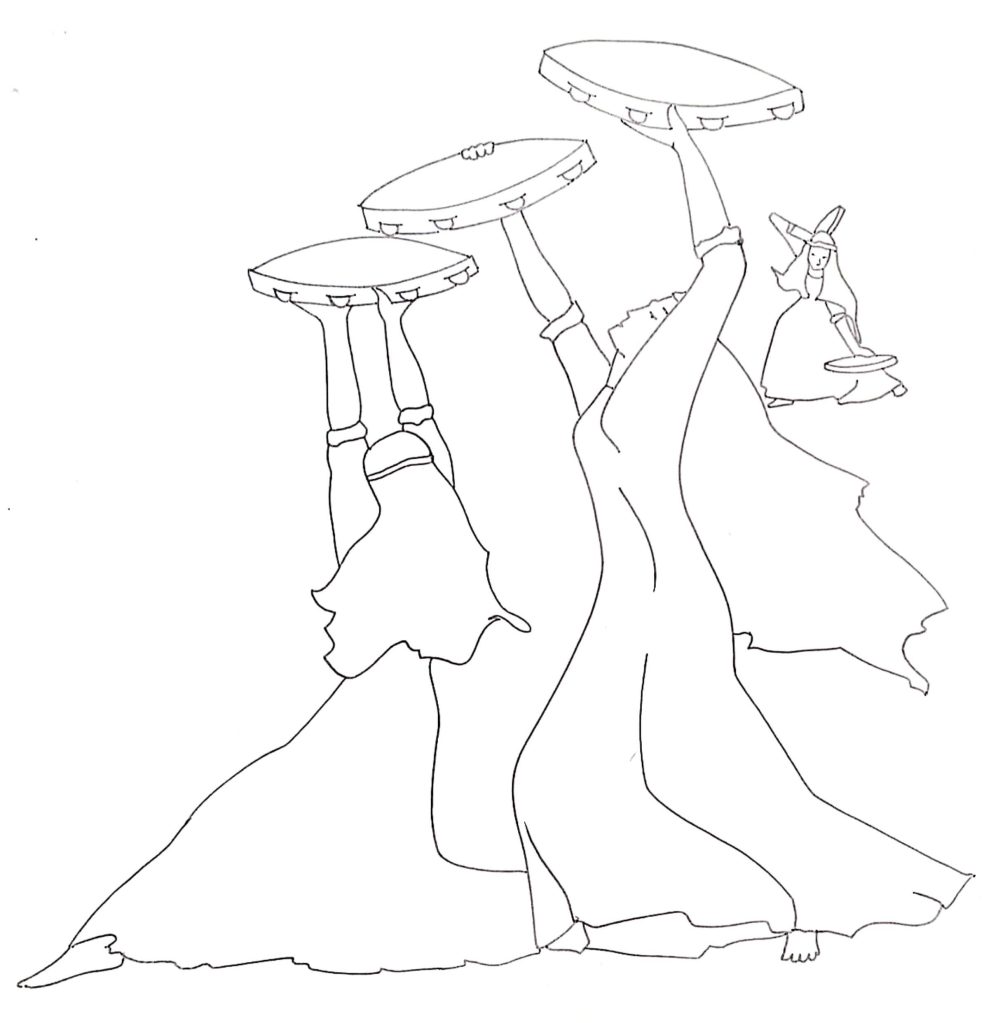
Parashat Beshalach “When He Let Go”  פָּרָשַׁת בְּשַׁלַּח Exodus 13:17-17:1 is the Fourth Portion in the Book of Exodus, the second Book of the Five books of the Bible; which are read annually, beginning on Rosh ha Shana, the Jewish New Year.

Parasha Beshalach tells of the escape of the Israelites from Egypt which they celebrate with Moses' Song at the Sea and Miriam's Song.
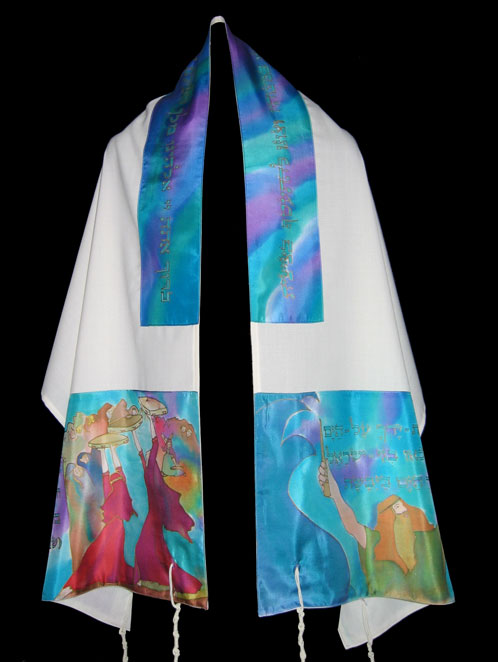
Beshalach Tallit
Tallit Band I
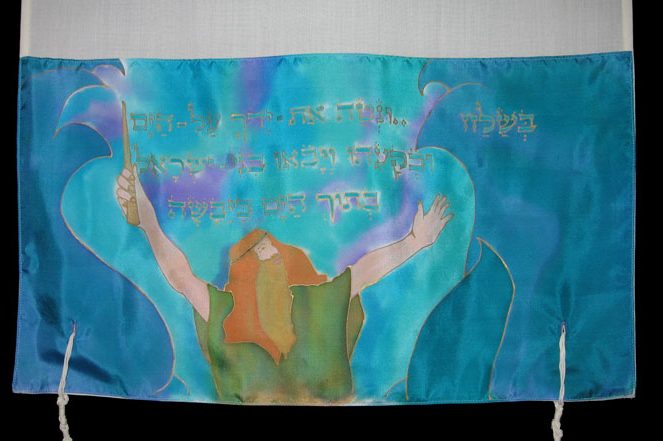
Moses divides the waters of the Red Sea.
Translation of Hebrew (Exodus 14, 16):
“Raise your staff and extend your hand over the sea. You will split the sea, and the Israelites will be able to cross over on dry land.”
The prophetess Miriam, sister of Moses and Aaron, leads the dancing in celebration of the Red Sea crossing.
Tallit Band II
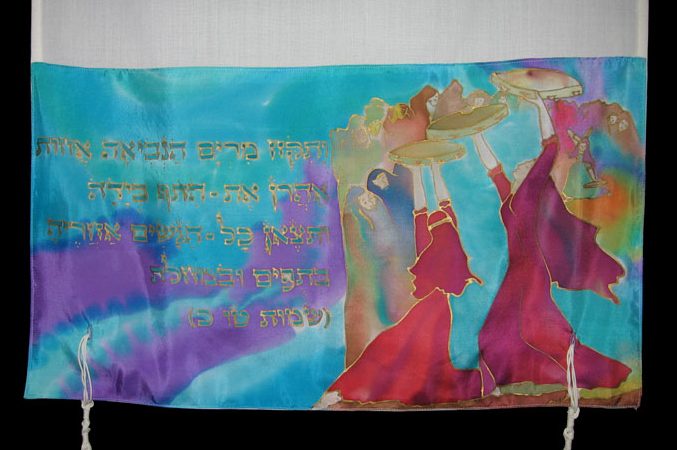
The prophetess Miriam, sister of Moses and Aaron, leads the dancing in celebration of the Red Sea crossing.
Translation of Hebrew (Exodus 15, 20):
“And Miriam the prophetess, the sister of Aaron, took a timbrel in her hand;and all the women went out after her with timbrels and with dances.”
Weekly Portion Parashat Yitro
February 7, 2026
Sample of free illustrations for download

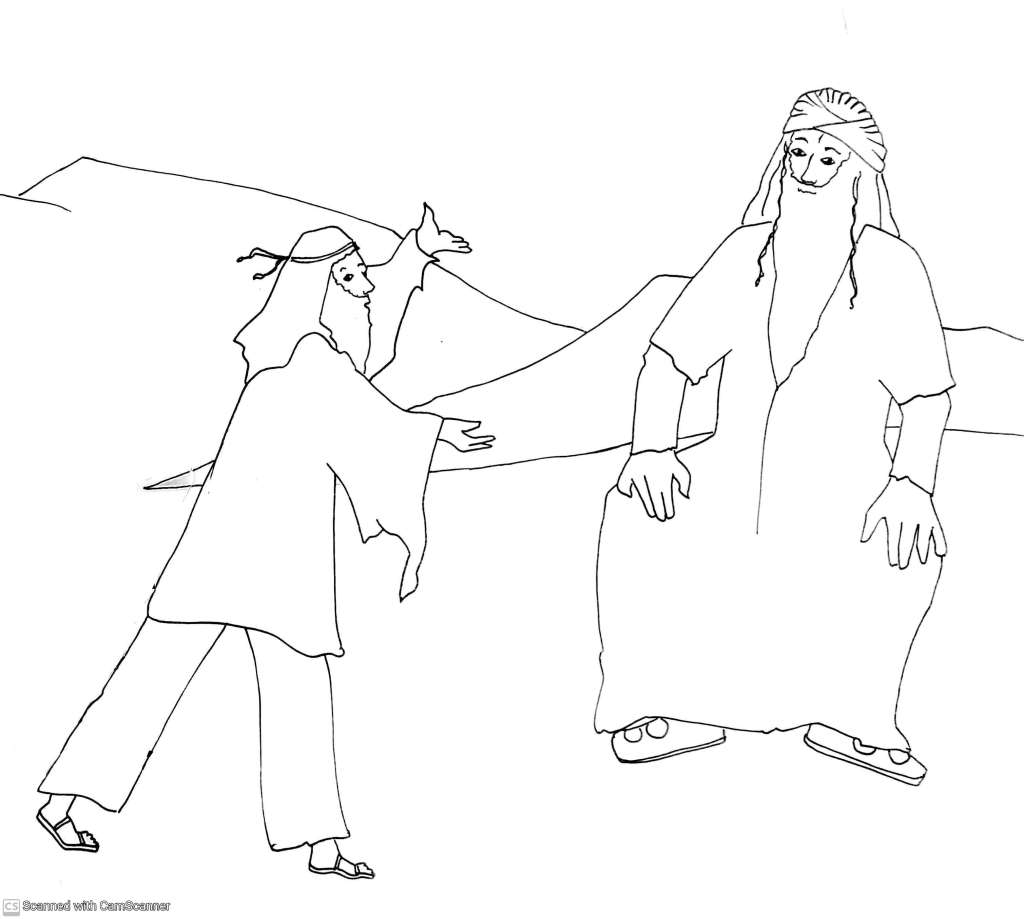
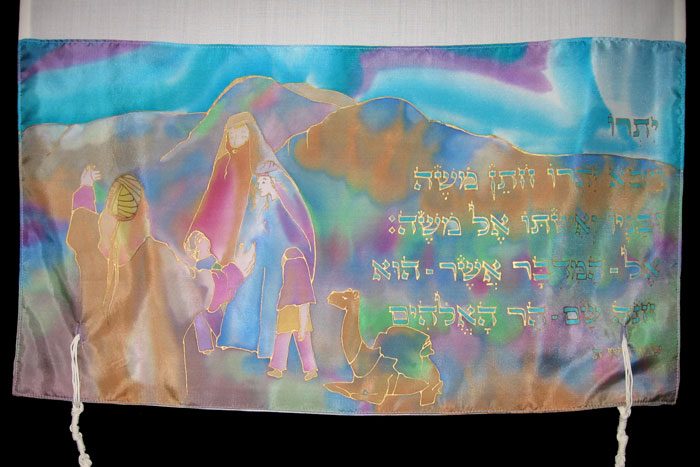
Moses welcomes his wife Zipporah, his father-in-law, Yitro, and his sons, Gershon and Eleazar.
Moses listens to a judicial complaint
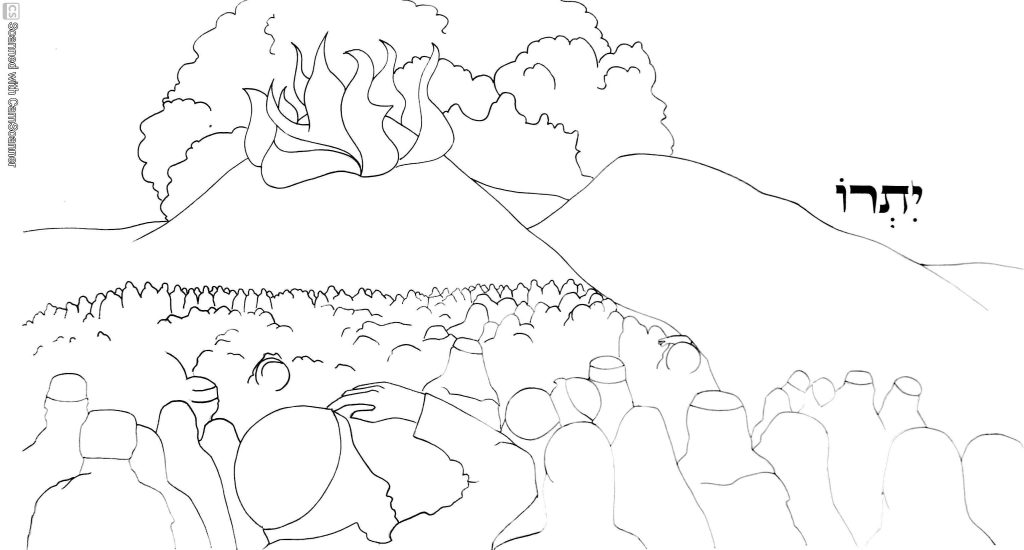
The Israelites congregate at the bottom of Mount Sinai, to hear the Ten Commandments being spoken by G-d.
Parashat Yitro “Jethro” יִתְרוֹ Exodus 18:1-20:2 is the fifth Portion in the Book of Exodus, the second Book of the Five books of the Bible; which are read annually beginning on Rosh Ha Shana, the Jewish New Year.
In it, Moses’ wife Zipporah, her children, and her father Jethro, a Medianite priest, come to the Israelite’s camp at Mount Sinai where they gather to hear the Ten Commandments spoken by God. Jethro suggests that Moses get help in the solving of judicial disputes.
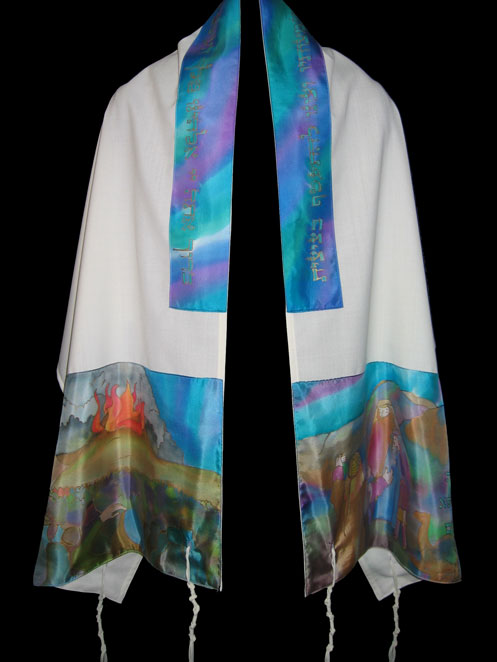
Yitro Tallit
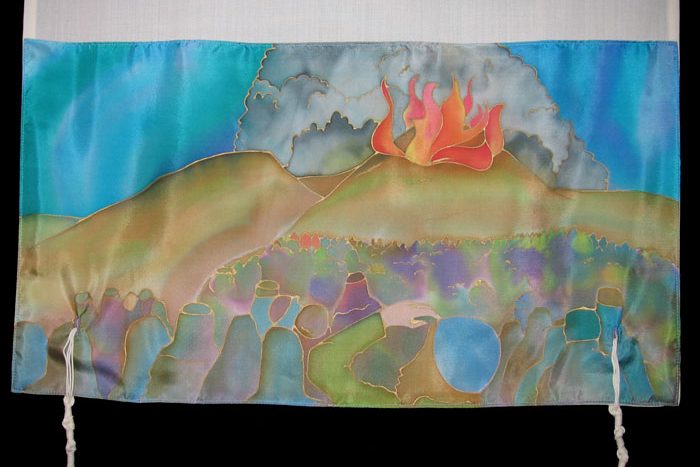
Yitro Tallit Band I
The Israelites congregate at the bottom of Mount Sinai, to hear the Ten Commandments being spoken by God.
Yitro Tallit Band II
Moses reunites with his wife, Zipporah, his father-in-law Yitro, and his children.
Translation of Hebrew (Exodus 17, 5):
“And Yitro, Moses’ father-in-law, came with his sons and his wife unto Moses into the wilderness where he was encamped, at the Mount of G-d.”
Weekly Portion Parashat Mishpatim
February 14, 2026
Sample of free illustrations for download
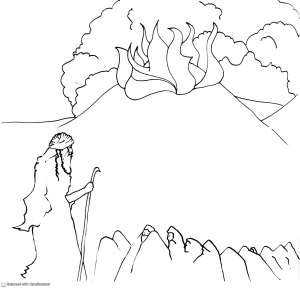
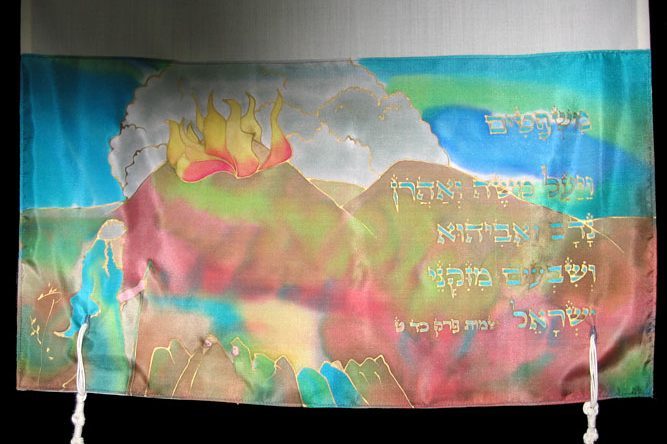
Moses ascends Mount Sinai with the elders of Israel watching from afar.

Parashat Mishpatim  “Laws”  מִּשְׁפָּטִים Exodus 13:17-17:16 is the sixth portion in the Book of Exodus, the second Book of the Five books of the Bible; which are read annually, beginning on Rosh Ha Shana, the Jewish New Year.
In Parashat “Mishpatim”, the Hebrew word for “laws”, the congregation of Israel continues to hear the oral law spoken by God on Mount Sinai including the rights of bondsmen, laws concerning personal injury, murder, and property offenses. Also mentioned are the offering of the first fruits of the harvest and of young ox and sheep.
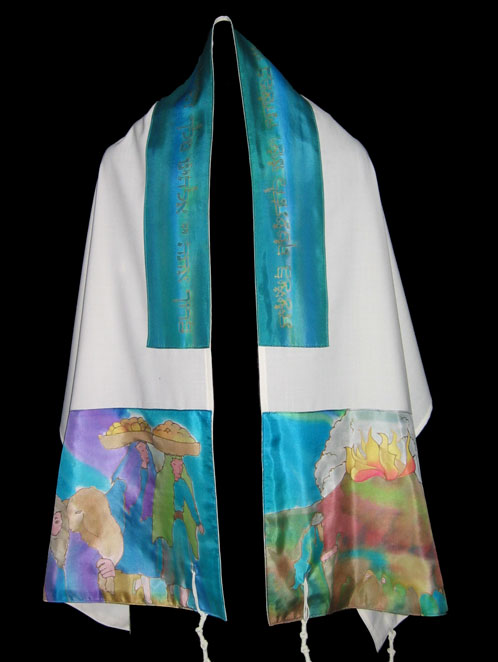
Parashat Mishpatim Tallit
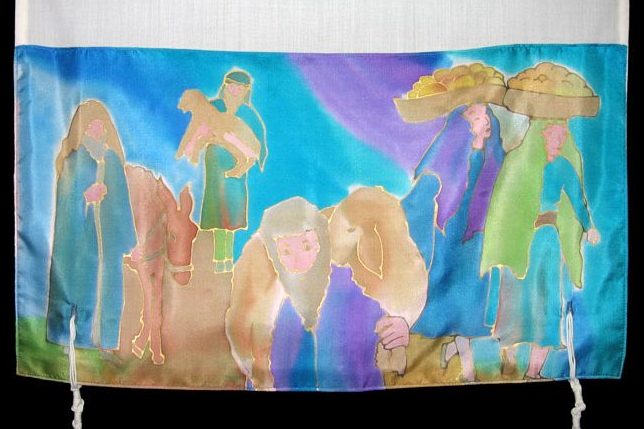
Tallit Band I
Women are bringing their offerings of the first fruits of the harvest, while men are bringing young sheep as offerings to be sacrificed to God.
Tallit Band II
Moses ascends Mount Sinai with Aaron, Nabad, Abihu, and seventy of the elders of Israel who watch from afar.
Translation of Hebrew (Exodus 24, 9):
“Then went up Moses, and Aaron, Nadab, and Abihu, and seventy of the elders of Israel (watch from afar)”
Weekly Portion Parasha Terumah
February 21, 2026
Sample of free illustrations for download

The Tabernacle


Parasha Terumah “Offering” פָּרָשַׁת תְּרוּמָה Exodus 25:1-27:19 is the Seventh Portion in the Book of Exodus, the second Book of the Five books of the Bible, and the 19th weekly portion in the yearly cycle of Torah reading.
The subject of Parasha “Terumah”, the Hebrew word for “offering”, is the contributions that are to be made for the building of the Tabernacle and directions for erecting it.
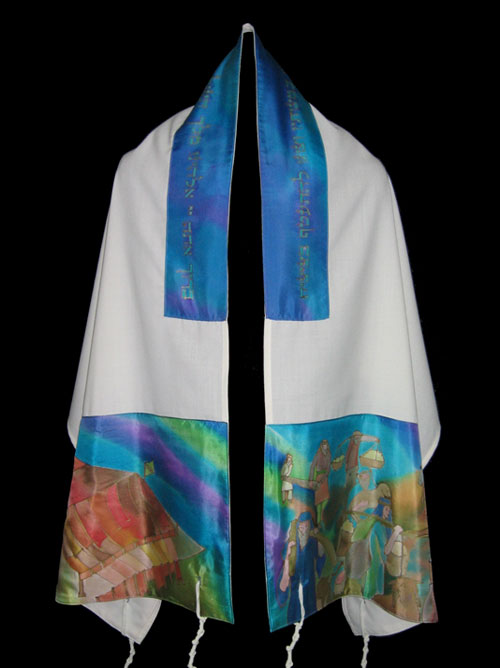
Parasha Terumah Tallit
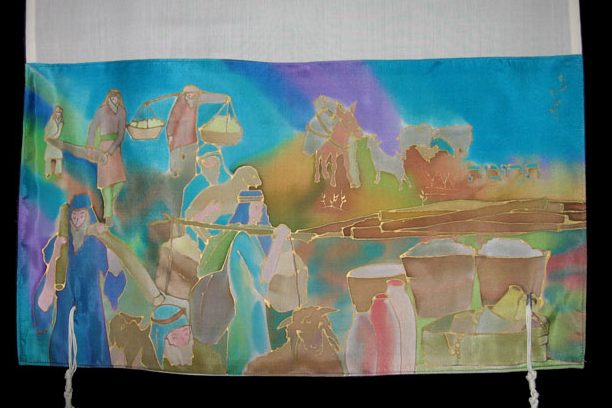
Terumah Tallit Band I
Offerings being made for the Tabernacle

Terumah Tallit Band II
The Tabernacle erected
Weekly Portion Parasha Tetzaveh
February 28, 2026
Sample of free illustrations for download
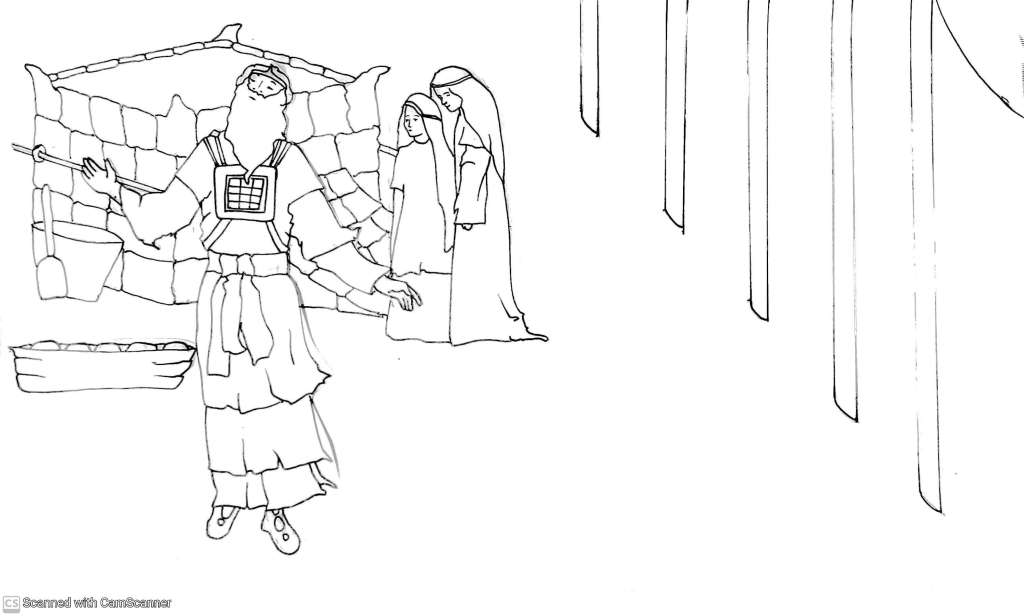
Parasha Tetzaveh "You Shall Command" פָּרָשַׁת תְּצַוֶּה Exodus 27:20-30:11
is the Eighth Portion in the Book of Exodus, the second Book of the Five books of the Bible, and the 20th weekly portion in the yearly cycle of Torah readings
which are read annually beginning on Rosh ha Shana, the Jewish New Year.
In Parasha Tetzaveh, G-d tells Moses in detail how to dress and anoint Aaron, the high priest, and his sons.
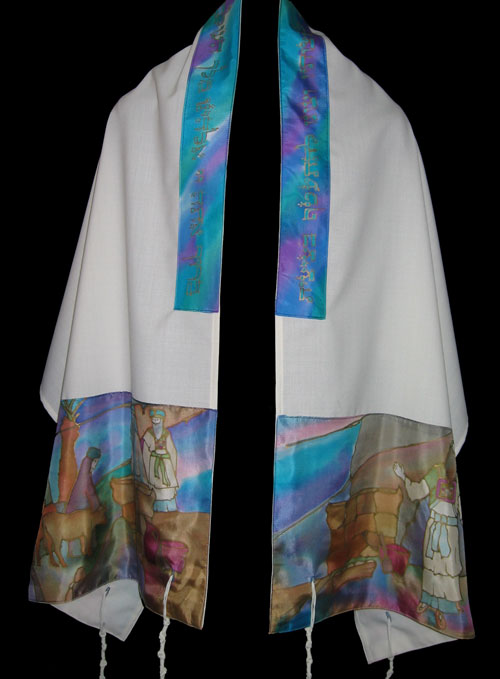
Parasha Tetzaveh Tallit
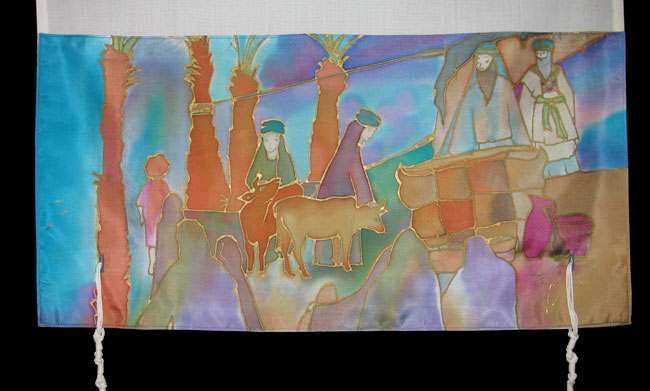
Tallit Band I
Aaron's sons are laying their hands on bullocks being brought for a sin. Aaron, the high priest, is seen just inside, as is Moses, who is standing behind the alter of offering.
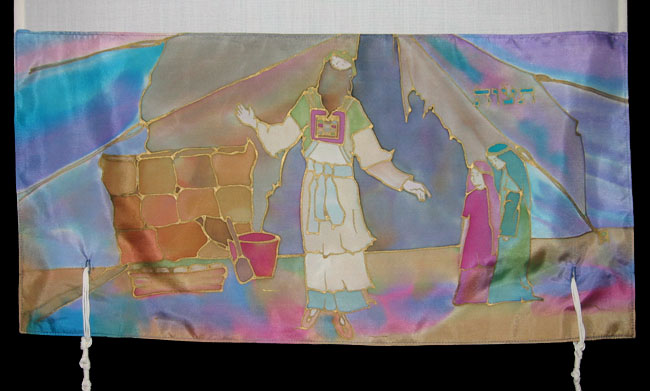
Tallit Band II
Aaron stands in front of the meeting tent in his newly made priestly garments.
Weekly Portion Parasha Ki Tisa, March 7, 2026
Sample of free illustrations for download

Moses receives the stone Tablets on Mount Sinai
Parasha Ki Tisa “When you rise above” פָּרָשַׁת  כִּי תִשָּׂא Exodus 30:11-34:35
is the Ninth Portion in the Book of Exodus, the second Book of the Five books of the Bible, and the 21st weekly portion in the yearly cycle of Torah reading.
Ki Tisa is, in part, a continuation of the laws of the Sanctuary as given to Moses on reception of the tablets on Mount Sinai. But the people are anxious on his delayed return and make themselves a golden calf. Moses breaks the tablets, 3000 are slain over the incident, Moses goes back to Mount Sinai, speaks on behalf of the people, fasts for forty more days, and receives a second set of tablets.
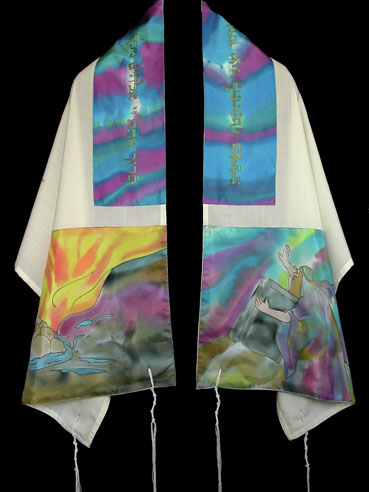
Parasha Ki Tisa Tallit
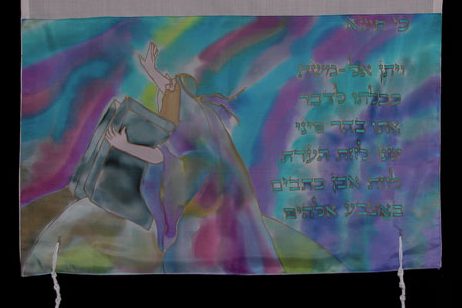
Ki Tisa Tallit Band I
Moses receives the stone tablets on Mount Sinai

Translation of Hebrew (Exodus 31, 18):
"And He gave unto Moses, when He had made an end of speaking with him upon Mount Sinai, the two tables of the testimony, tables of stone, written with the finger of G-d."
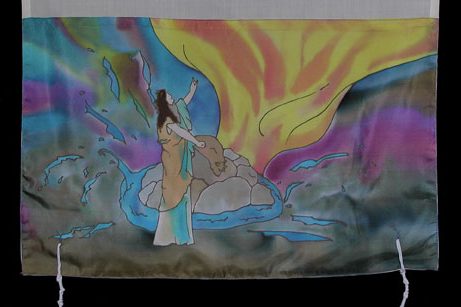
Ki Tisa Tallit Band II
Haftorah Ki Tisa: Elijah and the false prophets are having a contest over which deity to worship, Baal or G-d. G-d sends fire to consume the elevation offering which burns, in spite of the water that Elijah has poured on it to drench the wood. We see fire descending from heaven and water splashing everywhere. It is based on the painting “Balaam Blesses Israel” by 19th century painter Hippolyte Flandrin.
Weekly Portion Parashat Vayakhel and Parashat Pekudei March 14, 2026
Sample of free illustrations for download
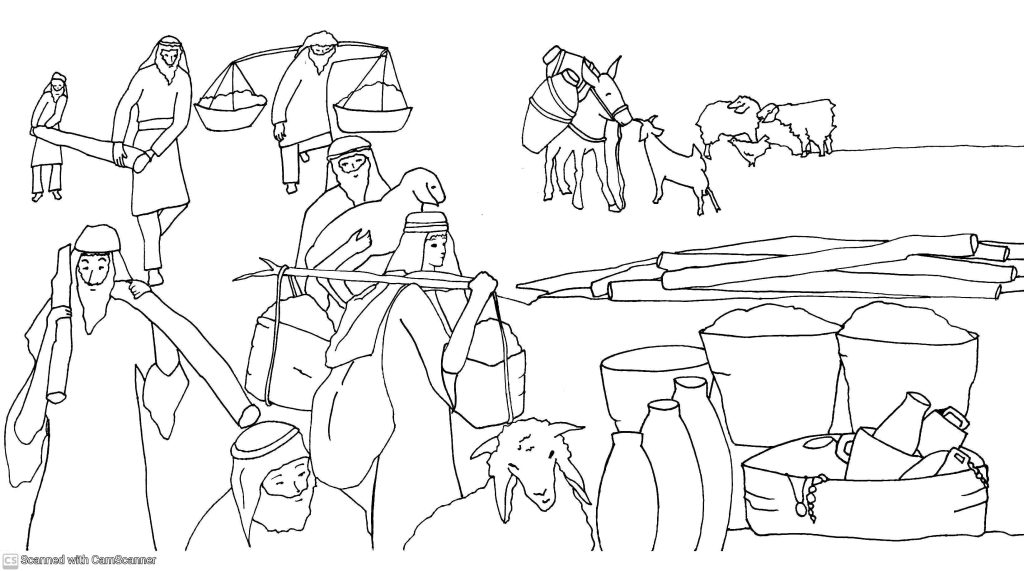
Offerings are being made for the building of the Tabernacle
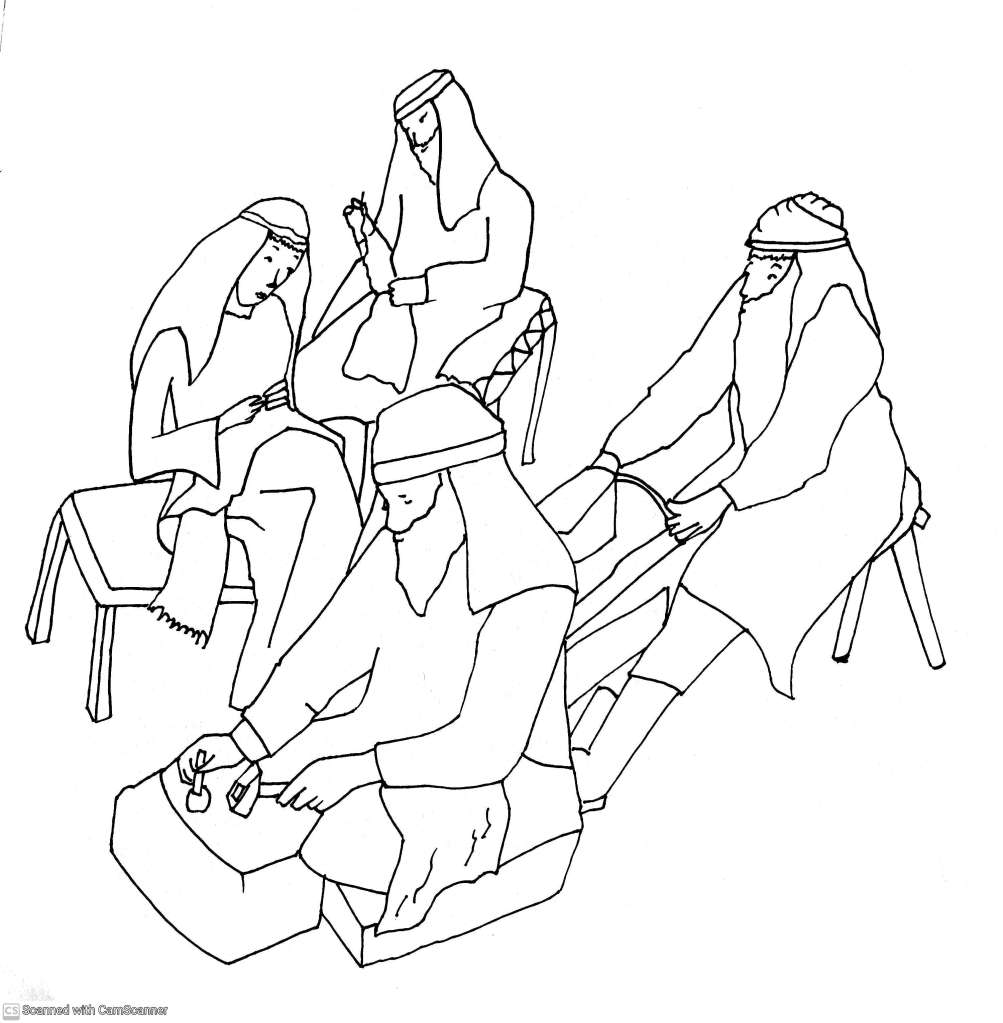
Artists and craftsmen work on the sacred objects associated with the Tabernacle.
Parashat Vayakhel “He Assembled” פָּרָשַׁת וַיַּקְהֵל
Exodus 35:1–Exodus 38:20 is the tenth Torah portion in the Book of Exodus, the second Book of the Bible, and the 22nd weekly portion in the yearly cycle of Torah reading, beginning on Rosh Ha Shana, the Jewish New Year.
Parashat Vayakhel describes the giving of offerings for the building of the Tabernacle and the making of its sacred objects.
Vayakhel Tallit
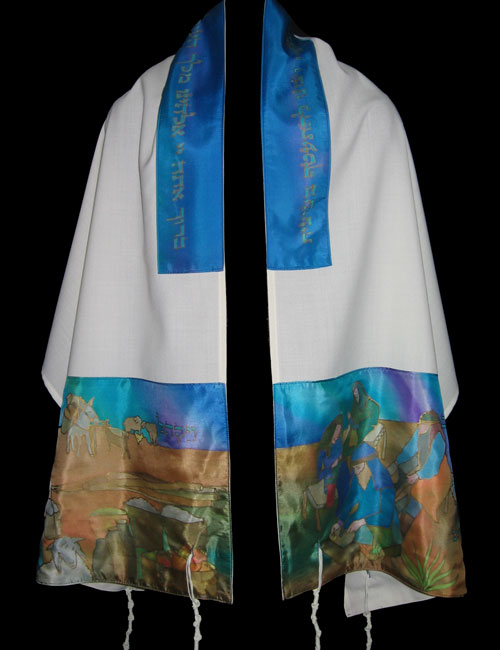
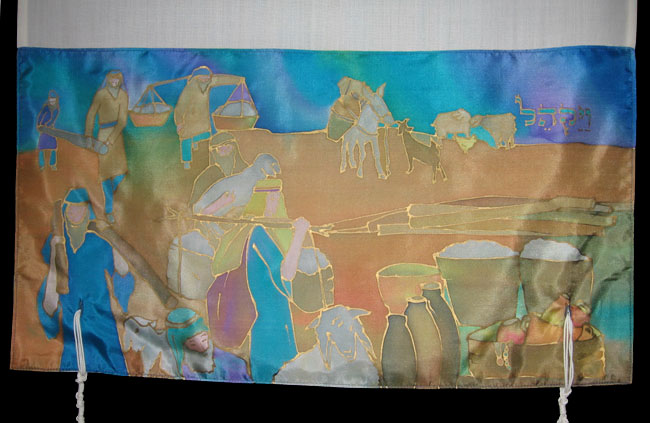
Tallit Band I
Offerings are being made for the building of the Tabernacle.
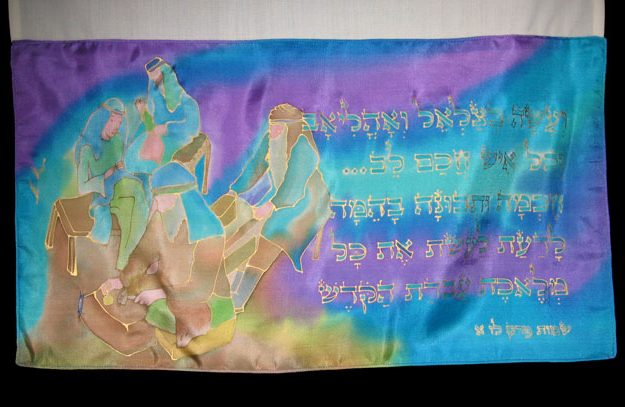
Tallit Band II
Artists and craftsmen work on the Tabernacle and the sacred objects associated with it.
Translation of Hebrew (Exodus 36, 1):
“And Bezalel and Oholiab shall work, and every wise-hearted man, for the service of the sanctuary, according to all that the Lord hath commanded.”
Parashat Pekudei
Sample of free illustrations for download
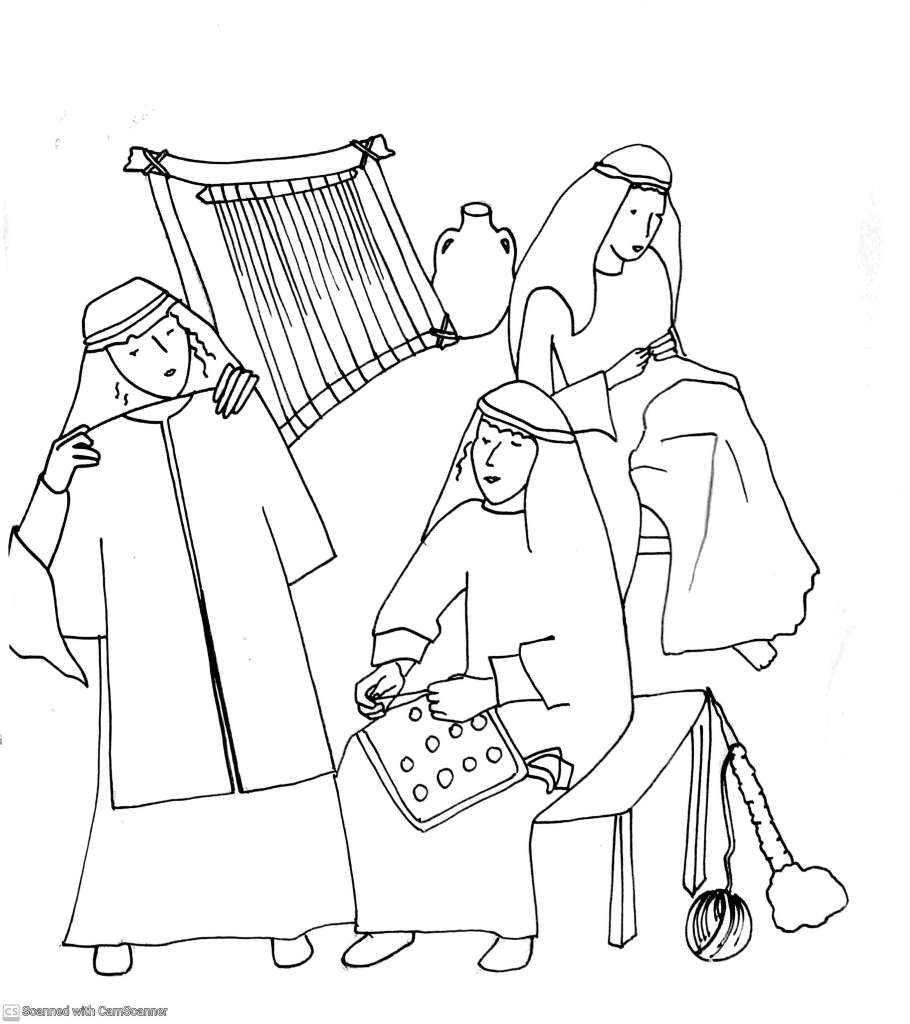
Creating the sacred objects associated with the Tabernacle
Parashat Pekudei “Accountings Of” פָּרָשַׁת פְקוּדֵי Exodus 38:21-40:38, is the last Torah portion in Exodus, the 2nd Book of the five Books of the Bible, and the 23rd weekly portion in the annual Jewish cycle of Torah reading which begins on Rosh Ha Shana.
Parashat Pekudei describes the making of priestly garments worn in the Tabernacle and the completion of its construction.
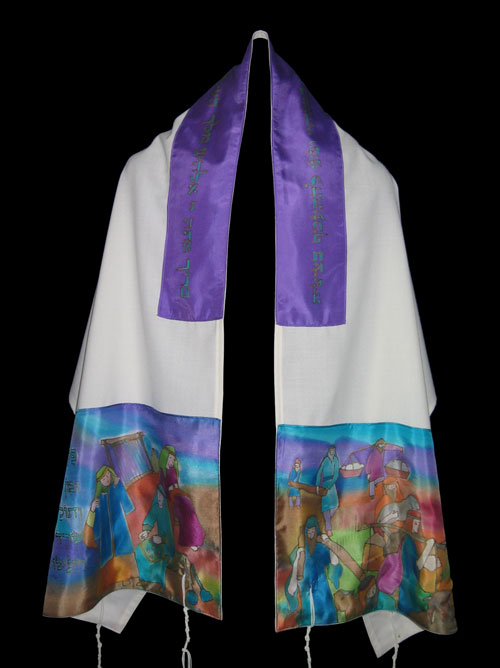
Parasha Pekudei Tallit
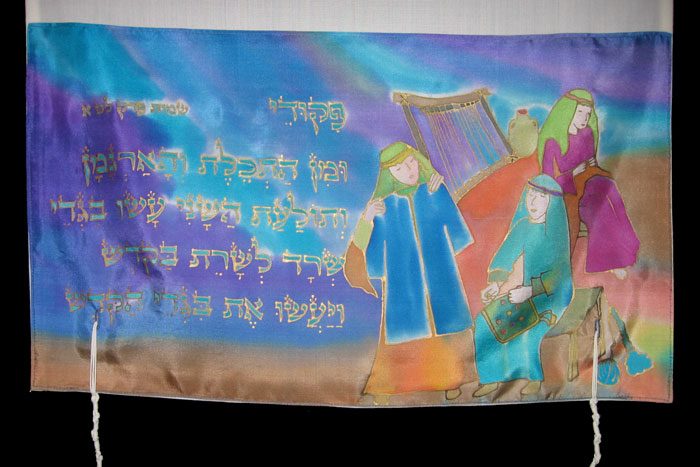
Pekudei Tallit Band I
The ephod and priestly garments are being made.Offerings are being made for the building of the Tabernacle.
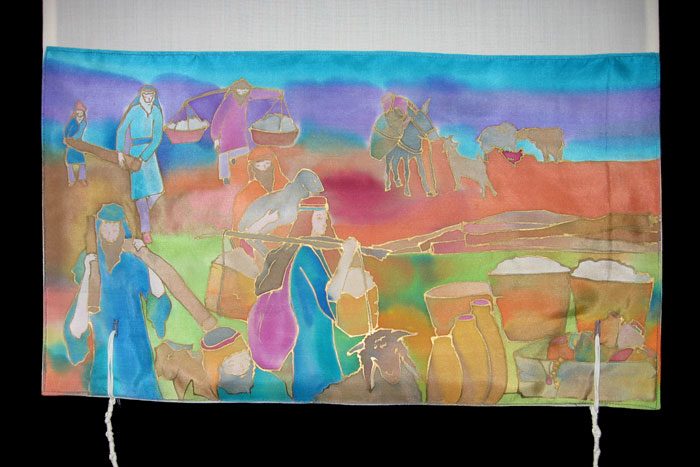
Pekudei Tallit Band II
Offerings are being made for the building of the Tabernacle.
Book of Leviticus
Weekly Portion Parasha Vayikra
March 21, 2026
Sample of free illustrations for download
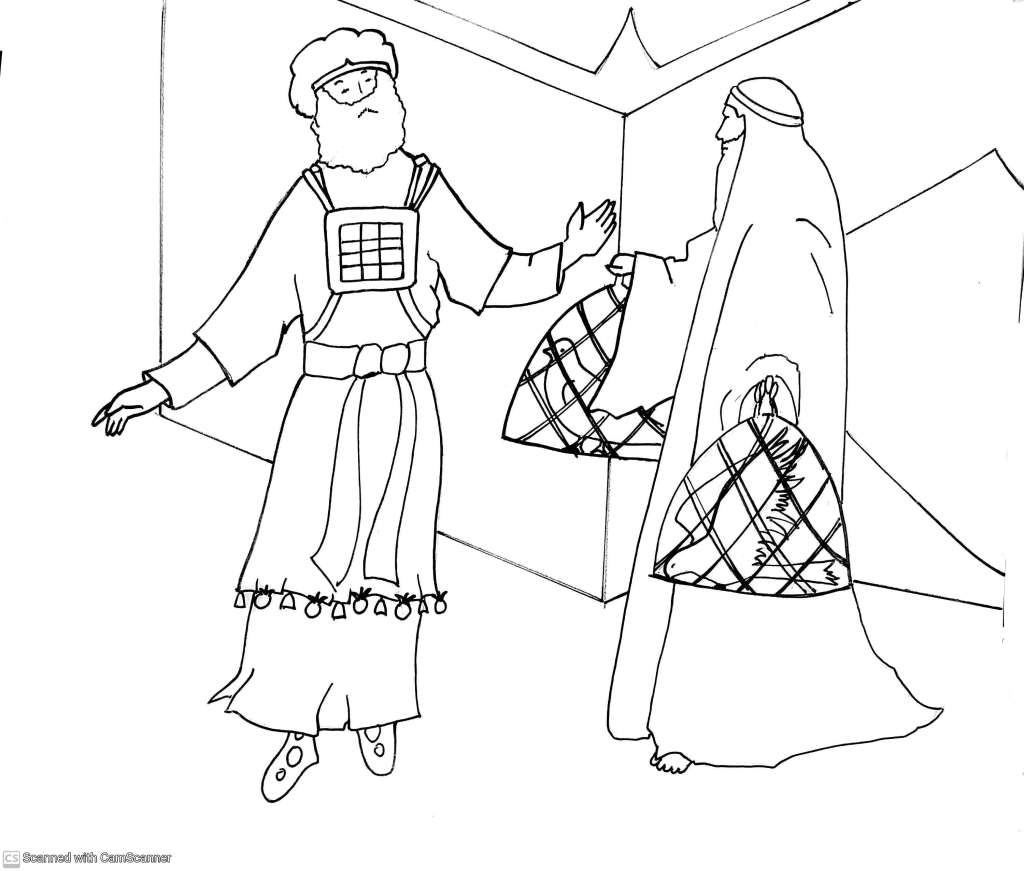

A man of modest means brings two turtle-doves as an offering.
A bull is brought and blessed as a burnt offering.
Parasha Vayikra “He Called”  פָּרָשַׁת וַיִּקְרָא Leviticus 1:1-5:26 is the first portion in the Book of  Leviticus, the third Book of the five books of the Bible. It is the 24th weekly Torah portion in the annual Jewish cycle of Torah reading which is read annually, beginning on Rosh Ha Shana, the Jewish New Year.

Parasha Vayikra presents detailed instructions of service in the Tabernacle and the giving of offerings.
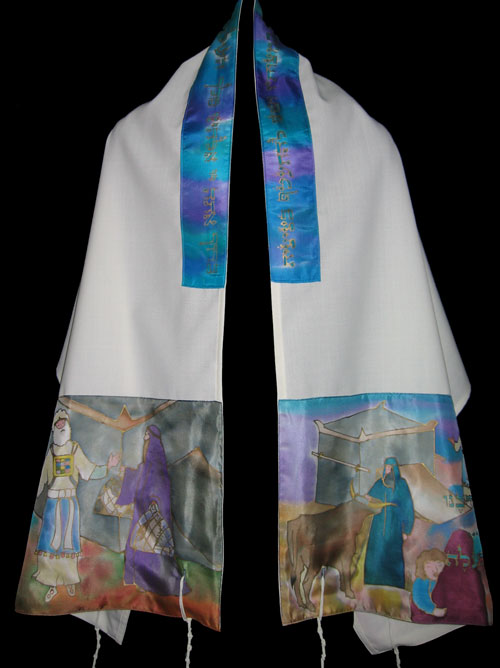
Parasha Vayikra Tallit
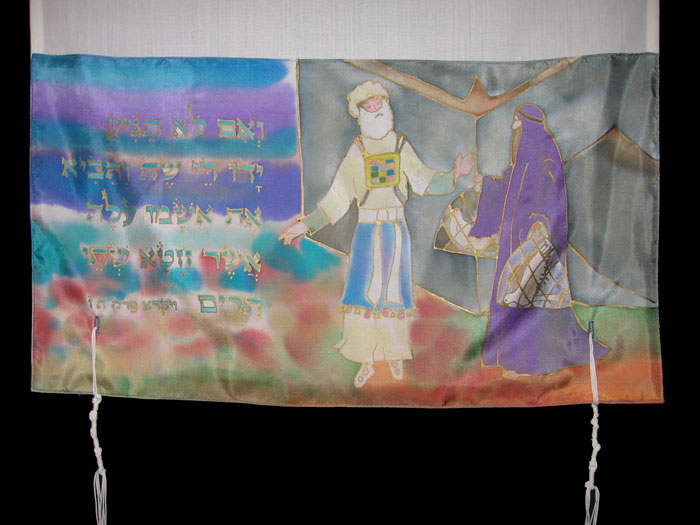
Band I
A man of modest means brings two turtle-doves as an offering.

Translation of Hebrew (Leviticus 5:7)
"And if his means suffice not for a lamb, then he shall bring his forfeit for that wherein he hath sinned, two turtle-doves…"

Tallit Band II
A bull is brought and blessed as a burnt offering
Translation of Hebrew (Leviticus 1:3-4)
"When any man of you bringeth an offering…If his offering be a burnt-offering of the herd…he shall bring it to the door of the tent of meeting…4 And he shall lay his hand upon the head of the burnt-offering…"
Weekly Portion Parashat Tzav
March 28, 2026
Sample of free illustrations for download

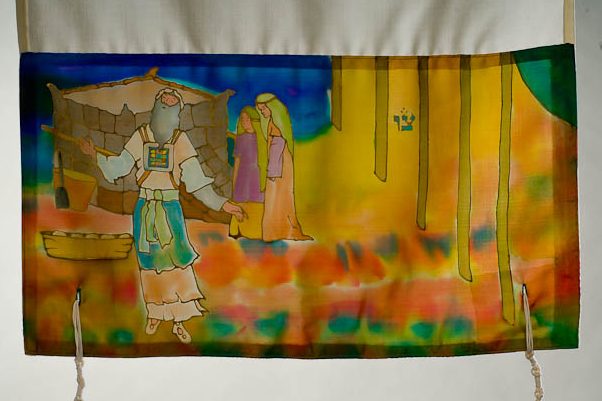
Aaron is seen near the altar of offering with his sons, dressed in his priestly garments for the first time. The basket of unleavened bread mentioned in the biblical text can be seen in front of the altar and next to it the shovel used after the ceremony to collect the ashes
Parashat Tzav “Command” פָּרָשַׁת צַו Leviticus 6:1-8:36, is the second Torah portion in Leviticus, the 3rd Book of the five Books of the Bible. It is the 25th weekly portion in the annual Jewish cycle of Torah reading which begins on
Rosh Ha Shana.
In Parashat Tzav, G-d tells Moses in detail how
to dress and anoint Aaron, the high priest, and his sons.
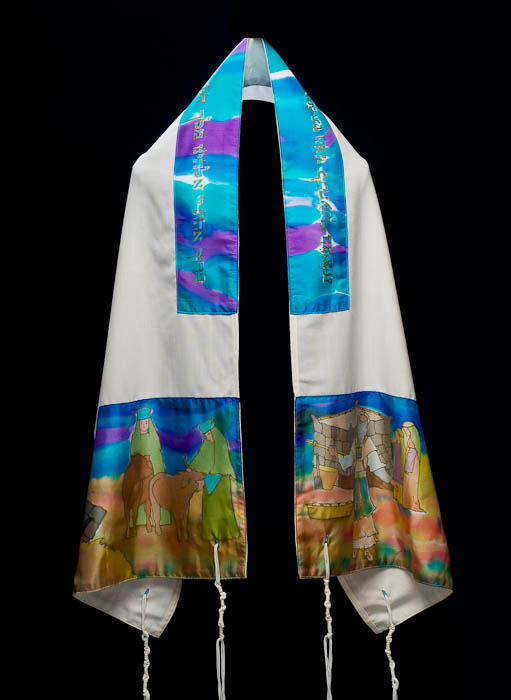
Parashat Tzav Tallit
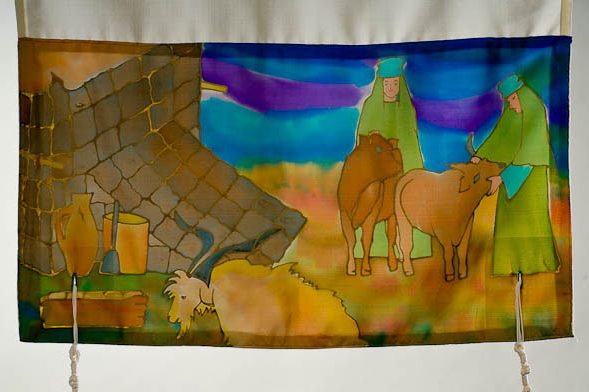
Tallit Band I
Aaron’s sons who are laying their hands on bullocks who are being brought for a sin offering.
Tallit Band II
Aaron is seen near the altar of offering, in front of the meeting tent, dressed in his priestly garments for the first time. The basket of unleavened bread mentioned in the biblical text can be seen in front of the alter and next to it the shovel used after the ceremony to collect the ashes.
Weekly Portion Passover Parasha Shemot
Exodus 33:12-34:26, Numbers 27:19-25
April 4, 2026
Sample of free illustrations for download
Parasha Beshalach
Parashat Beshalach “When He Let Go”  פָּרָשַׁת בְּשַׁלַּח
Exodus 13:17-17:16
  is the Fourth Portion in the Book of Exodus, the second Book
of the Five books of the Bible; and was read on February 18, 2025.
On April 19, 2025 it is read in part,
13:17-15:26,
along with
Numbers 28:19-25; and the Song of Songs 1:1-8:14.
Parasha Beshalach tells of the escape
of the Israelites from Egypt
which they celebrate with Moses’ Song at
the Sea and Miriam’s Song.
Beshalach Tallit
Beshalach Tallit Band I
Tallit Band I
The prophetess Miriam, sister of Moses and Aaron, leads the dancing in celebration of the Red Sea crossing.

Translation of Hebrew (Exodus 15, 20):
"And Miriam the prophetess, the sister of Aaron, took a timbrel in her hand;and all the women went out after her with timbrels and with dances."
Beshalach Tallit Band II
Tallit Band II
Moses divides the waters of the Red Sea.
Translation of Hebrew (Exodus 14, 16):
“Raise your staff and extend your hand over the sea. You will split the sea, and the Israelites will be able to cross over on dry land.”
The prophetess Miriam, sister of Moses and Aaron, leads the dancing in celebration of the Red Sea crossing.
Weekly Portion Parasha Shmini
April 11, 2026
Sample of free illustrations for download
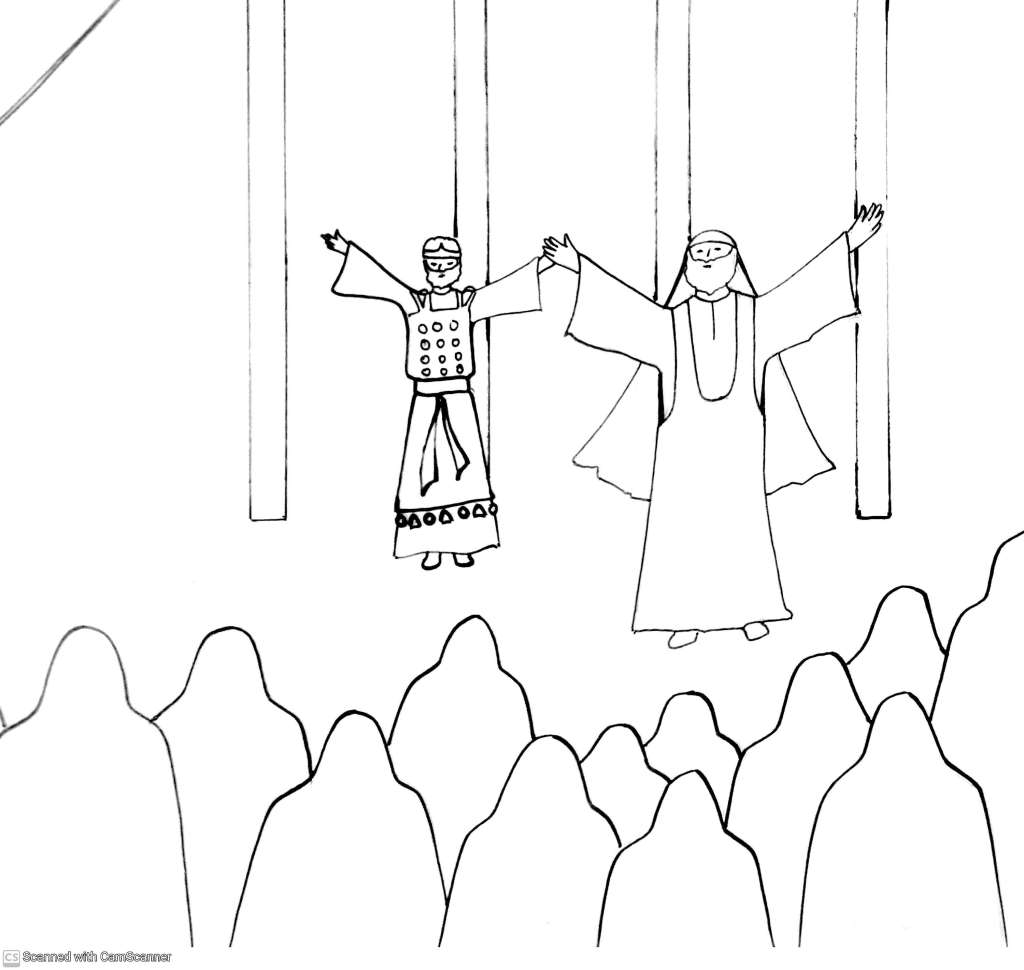
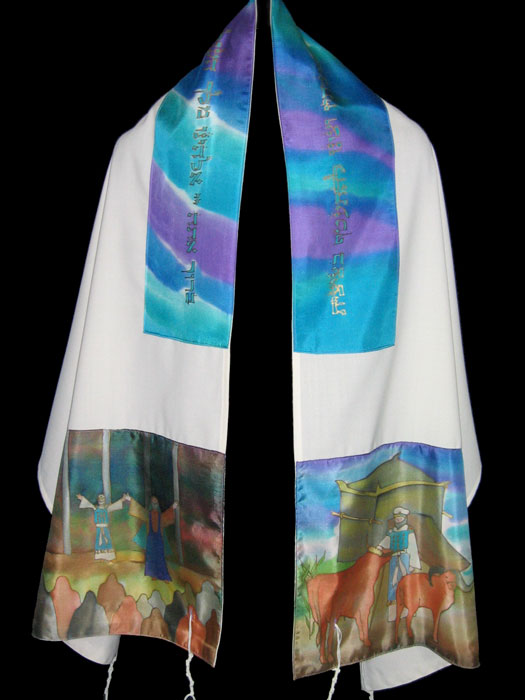
Moses and Aaron bless the Israelites in front of the sanctuary.

Aaron brings a bull and a ram as offerings.
Parasha Shmini “Eighth” פָּרָשַׁת שְּׁמִינִי Leviticus 9:1-11:47
is the third Torah portion in Leviticus, the 3rd Book of the five Books of the Bible, and the 26th weekly portion
in the annual Jewish cycle of Torah reading which begins on
Rosh Ha Shana, the Jewish New Year.
Parasha Shmini deals in detail with priests entering into office.
Parasha Shmini Tallit
Tallit Band I
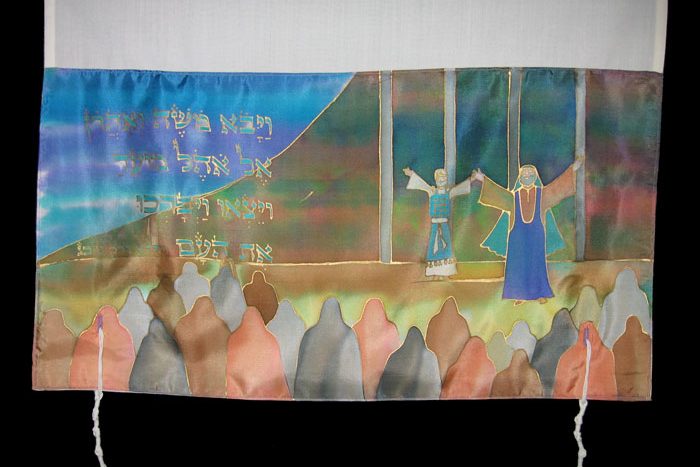
Moses and Aaron bless the Israelites in front of the sanctuary.
Translation of Hebrew (Leviticus 9, 23):
“And Moses and Aaron went into the tent of meeting, and came out, and blessed the people…”
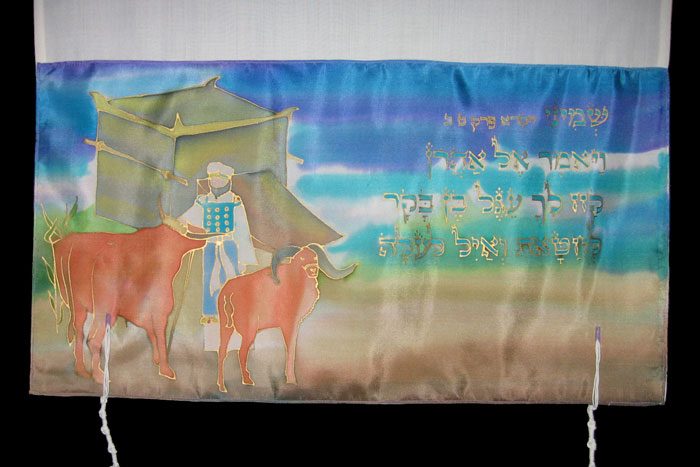
Tallit Band II
Aaron brings a bull and a ram as offerings.

Translation of Hebrew (Leviticus 9, 2):
"And he [Moses] said unto Aaron: "Take thee a bull-calf for a sin-offering, and a ram for a burnt-offering …"
Weekly Portion Parasha Tazria-Metzora
April 18, 2026
Sample of free illustrations for download

A mother with new-born brings a lamb and a turtle-dove as offerings to the high priest.
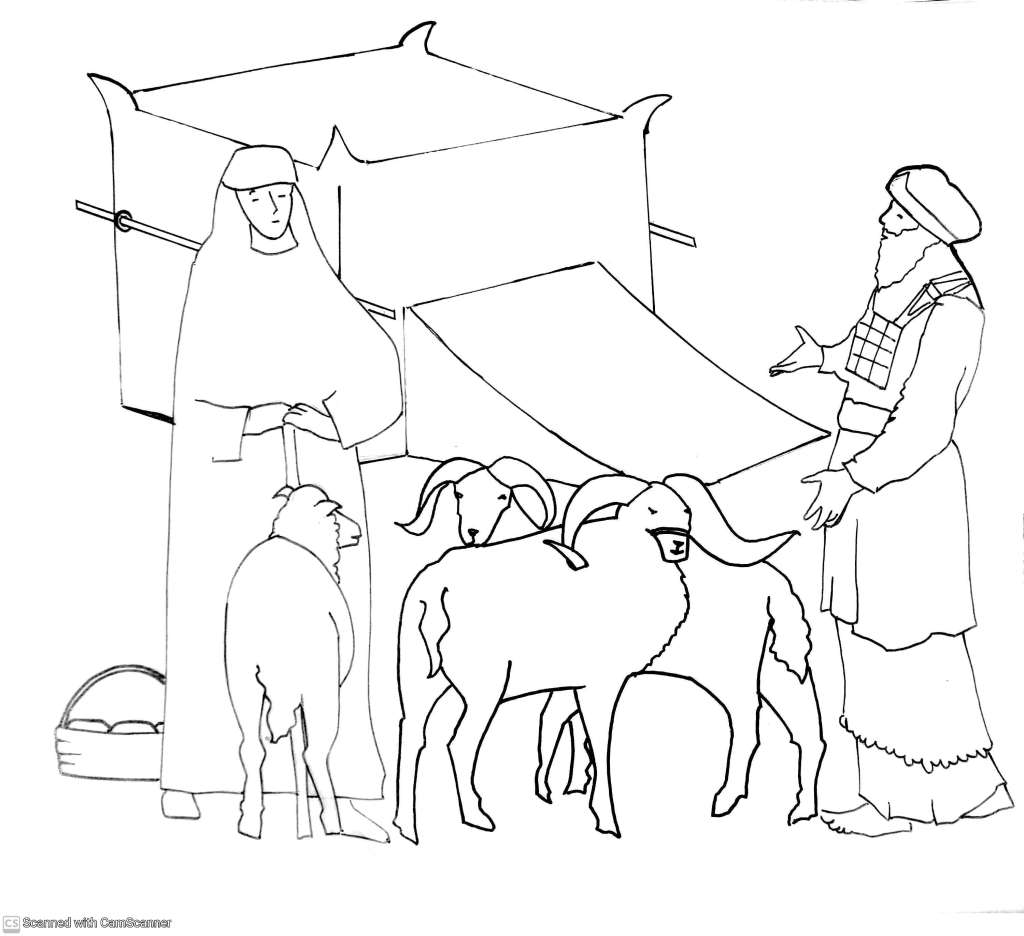
A cured leper, with a newly shaven head, brings lambs to the high priest for sacrifice.
Parasha Tazria-Metzora “She Bears Seed”-“Leper” פָּרָשַׁת תַזְרִיעַ־מְּצֹרָע Leviticus 12:1-15:33, is the forth and fifth Torah portion in Leviticus, the 3rd Book of the five Books of the Bible, and is the 27th and 28th weekly Torah portion in the annual Jewish cycle of Torah reading which begins on Rosh Ha Shana, the Jewish New Year.
Parasha Tazria and Parasha Metzora are read together on regular years and read separately on leap year.
Parasha Tazria begins by describing the purification process for a woman after childbirth. Parasha Metzora deals with purification of persons and their homes from diseases of the skin
Parasha Tazria-Metzora Tallit
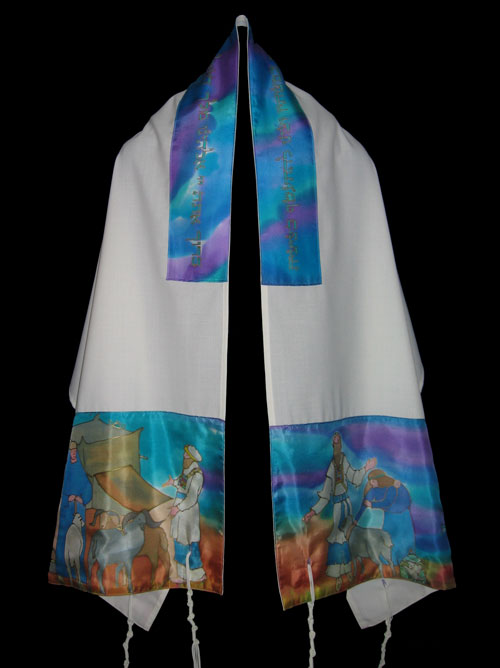

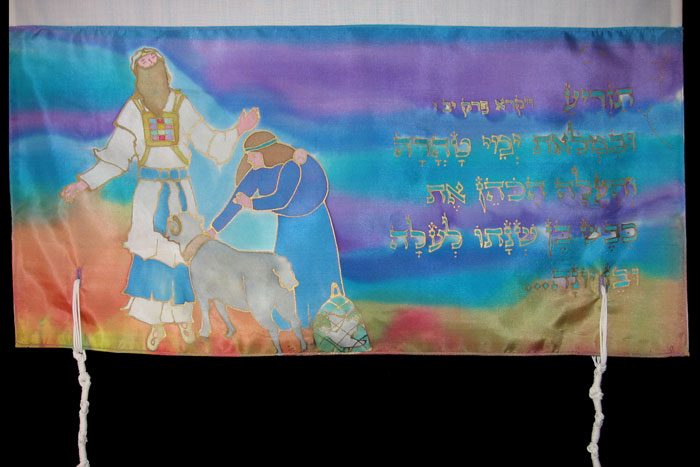
Band I Metzora
A cured leper, with a newly shaven head, brings lambs to the high priest for sacrifice.

Translation of Hebrew (Leviticus chapter 13, verse 10):
"…he shall take two he-lambs without blemish, and one ewe-lamb of the first year without blemish, and three tenth parts of an ephah of fine flour for a meal-offering, mingled with oil…"
Band II Tazria
A mother with new-born brings a lamb and a turtle-dove as offerings to the high priest.
Translation of Hebrew (Leviticus chapter 12, verse 6):
“And when the days of her purification are fulfilled, for a son, or for a daughter, she shall bring a lamb of the first year for a burnt-offering, and a young pigeon, or a turtle-dove…”
Parasha Ahrei Mot–Kedoshim
April 26, 2026
Sample of free illustrations for download

The high priest, Aaron, brings a young bull and rams to the Tabernacle. Leviticus 16:3 “And he [Moses] said unto Aaron: “Take thee a bull-calf for a sin-offering, and a ram for a burnt-offering …”
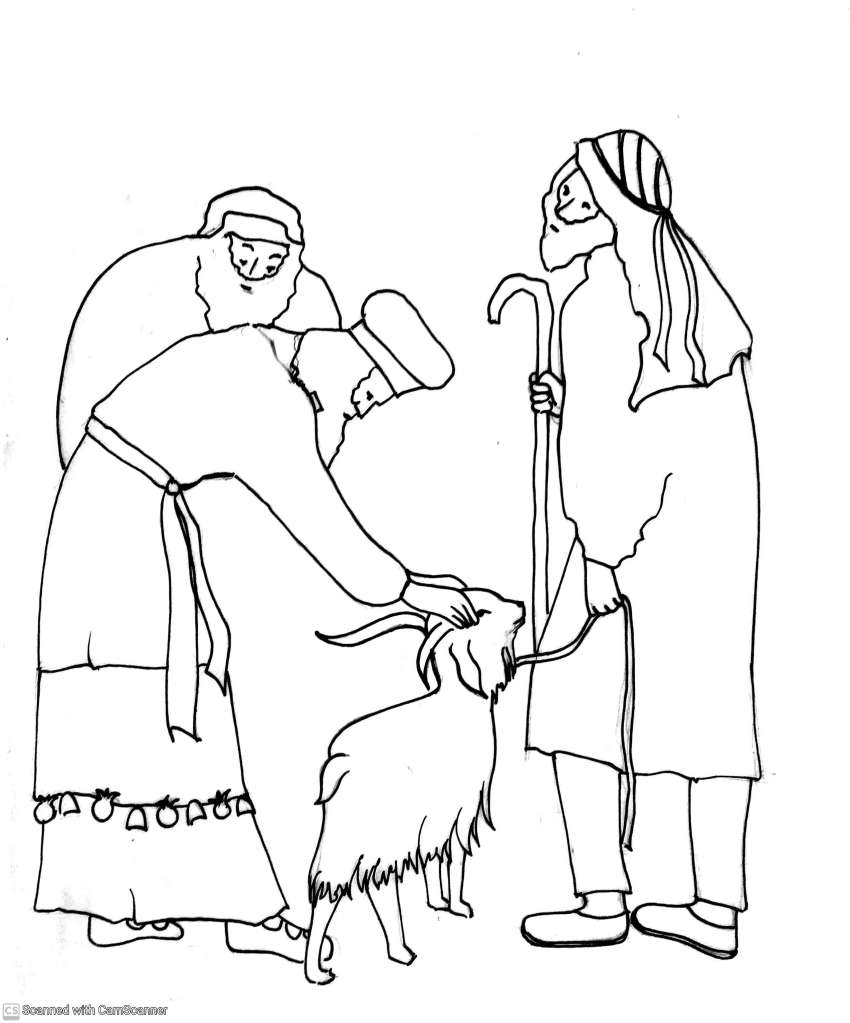
A goat is sent into the wilderness by Aaron to atone for the sins of the people. Leviticus 16:8
Parashat Achrei Mot “After The Death” פָּרָשַׁת אַחֲרֵי מוֹת Leviticus 16:1-18:30, is the 6th Torah portion in Leviticus, the 3rd Book of the five Books of the Bible, and the 29th weekly portion in the annual Jewish cycle of Torah reading which begins on Rosh Ha Shana, the Jewish New Year.
Parashat Achrei Mot deals with ritual ceremonies of the sanctuary including the high priest, Aaron’s, attire and offerings.
Parasha Achrei Mot Tallit
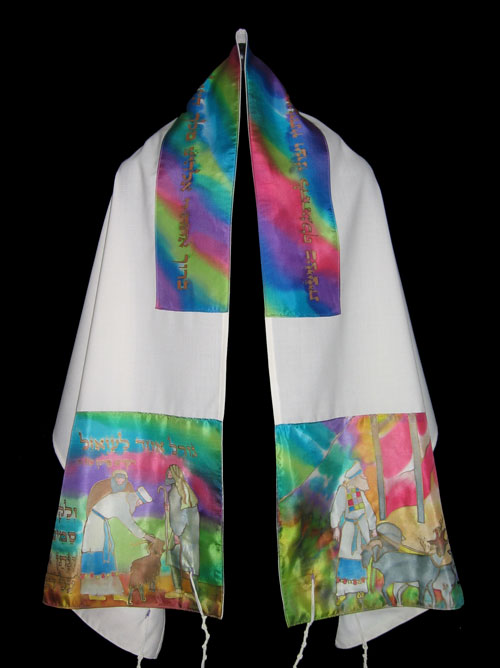
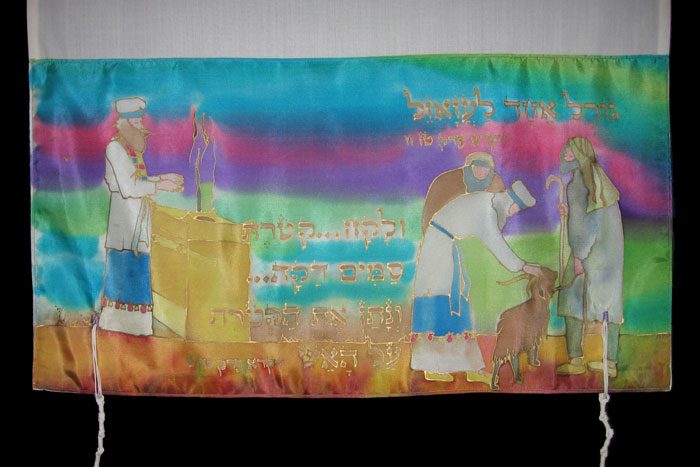
Tallit Band I
Moses and Aaron bless the Israelites in front of the sanctuary.
Translation of Hebrew Leviticus 16:3:
“And Moses and Aaron went into the tent of meeting, and came out, and blessed the people…”
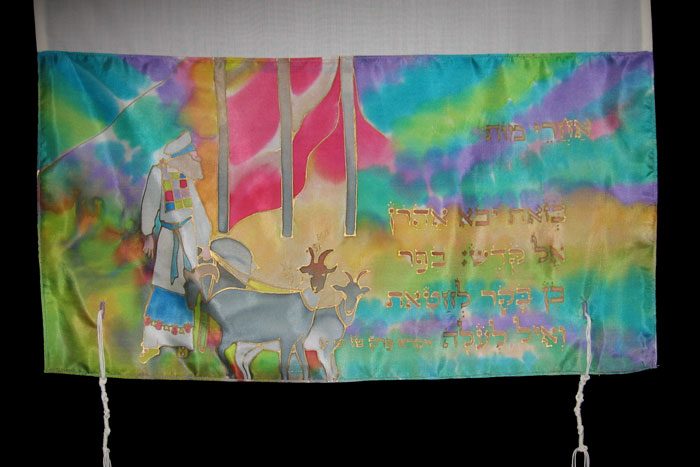
Tallit Band II
Aaron brings a bull and a ram as offerings.

Translation of Hebrew (Leviticus 9, 2):
"And he [Moses] said unto Aaron: "Take thee a bull-calf for a sin-offering, and a ram for a burnt-offering …"
Weekly Portion Parasha Kedoshim
April 26, 2026
Sample of free illustrations for download
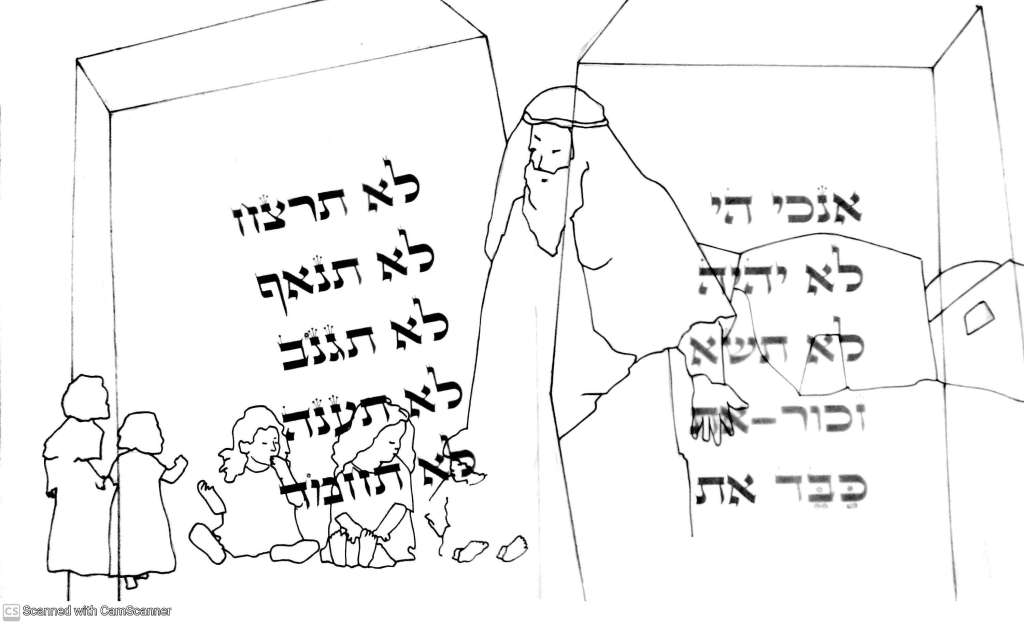
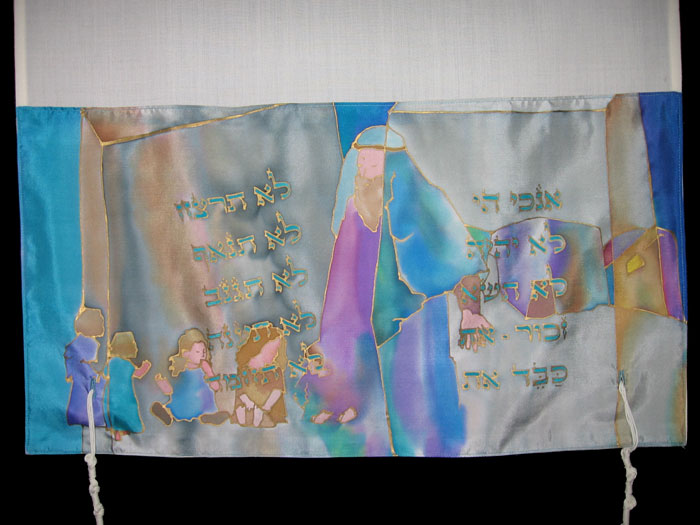
Moses teaches young children torah on a background of the Tablets of the Law.
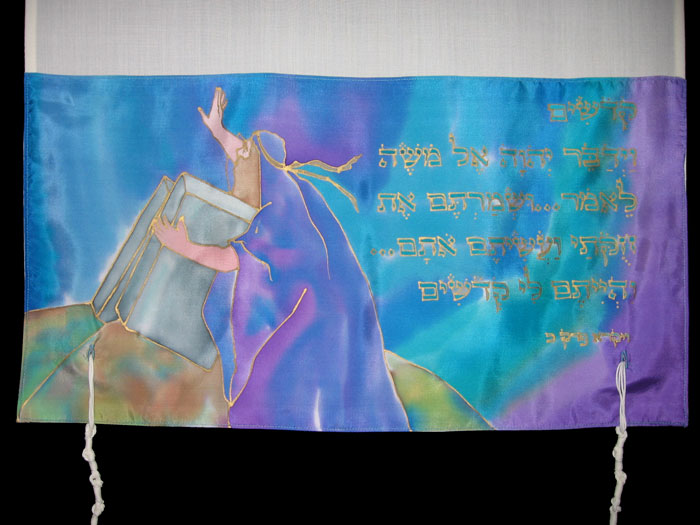
Moses receives the Tablets of the Law at Mount Sinai. Leviticus, 20
Parashat Kedoshim “Holy” פָּרָשַׁת קְדשִׁים Leviticus 19:1-20:27, is the 7th Torah portion in Leviticus, the 3rd Book of the five Books of the Bible, and the 30th weekly portion in the annual Jewish cycle of Torah reading which begins on Rosh Ha Shana, the Jewish New Year.
Parahat Kedoshim deals with the laws pertaining to the Israelites.
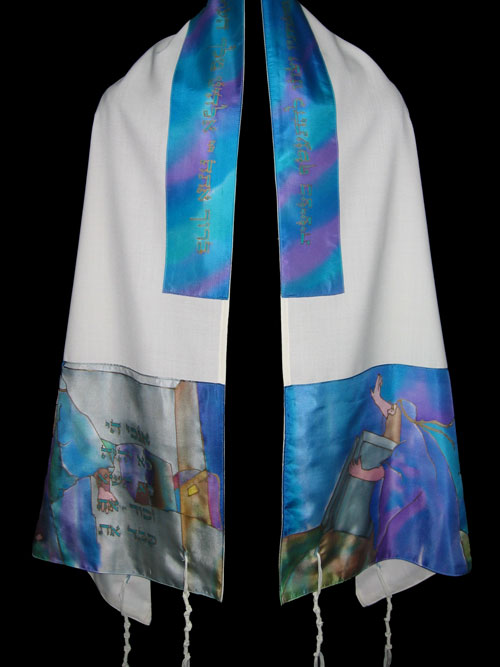
Parasha Kedoshim Tallit
Tallit Band I
Moses teaches young children torah on a background of the Tablets of the Law
Tallit Band II
Moses receives the Tablets of the Law at Mount Sinai.
Translation of Hebrew (Leviticus, 20):
"And the Lord spoke unto Moses, saying: I am the Lord your God, Ye shall observe all My statutes... and do them: I am the Lord who sanctifies you..."
Weekly Portion Parashat Emor
May 2, 2026
Sample of free illustrations for download
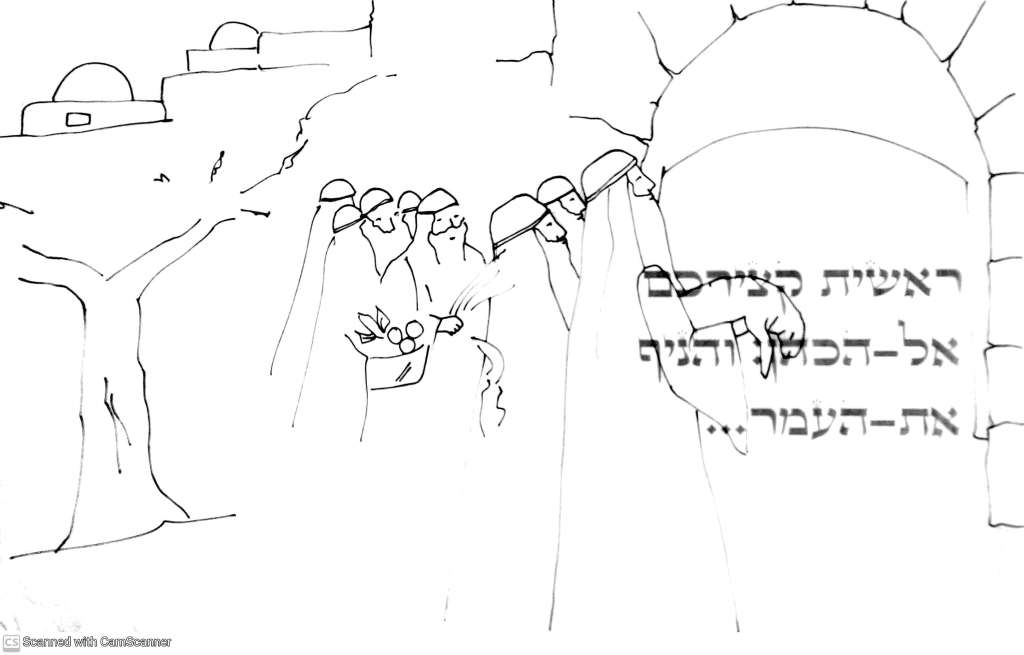
A lamb being brought for the ceremony of the waving of the Omer
Translation of Hebrew (Leviticus 23:12):
“And in the day when ye wave the sheaf, ye shall offer a yearling without blemish for a burnt offering…”

The first fruits of the harvest being brought to the Tabernacle
Translation of Hebrew (Leviticus 23:9):
“You shall reap the harvest thereof, then you shall bring the first fruits of your harvest.”
Parashat Emor “Say” פָּרָשַׁת אֱמוֹר Leviticus 21:1-24:23, is the 8th Torah portion in Leviticus, the 3rd Book of the five Books of the Bible, and the 31st weekly portion in the annual Jewish cycle of Torah reading which begins on Rosh Ha Shana, the Jewish New Year.
Parashat Emor discusses the laws regarding the priests, the sanctuary and the festivals. In spring festival included bringing the first
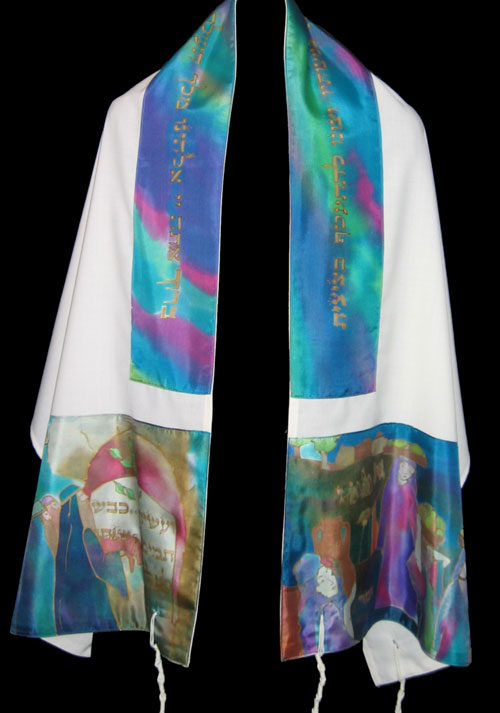
Parashat Emor Tallit
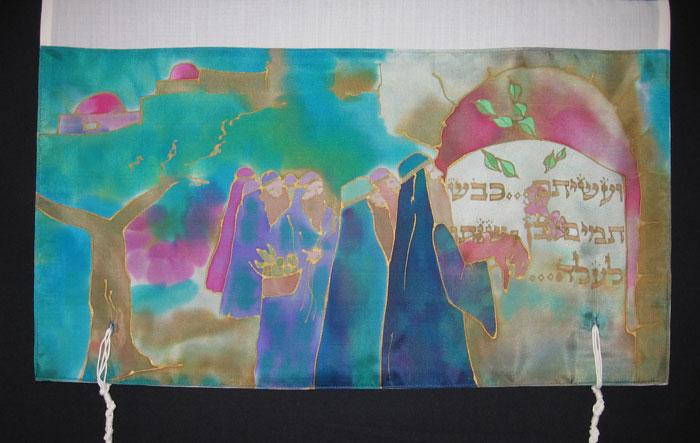
Tallit Band I
A lamb is being brought for the ceremony of the waving of the Omer.
Translation of Hebrew (Leviticus 23:12):
“And in the day when ye wave the sheaf, ye shall offer a yearling without blemish for a burnt offering…”

Tallit Band II
The first fruits of the harvest are being brought to the Tabernacle.

Translation of Hebrew (Leviticus 23:9):
"You shall reap the harvest thereof, then you shall bring the first fruits of your harvest."
Weekly Portion Parasha Behar-Bechukotai
May 9, 2026
Sample of free illustrations for download
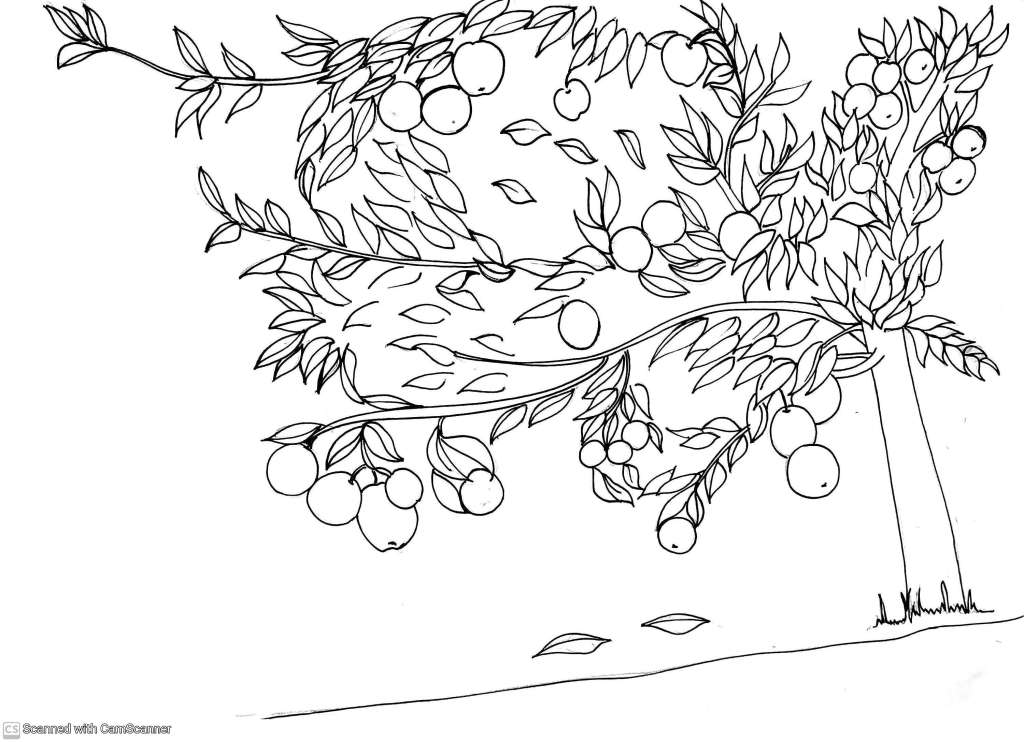
This apple tree symbolizes plenty in the land.
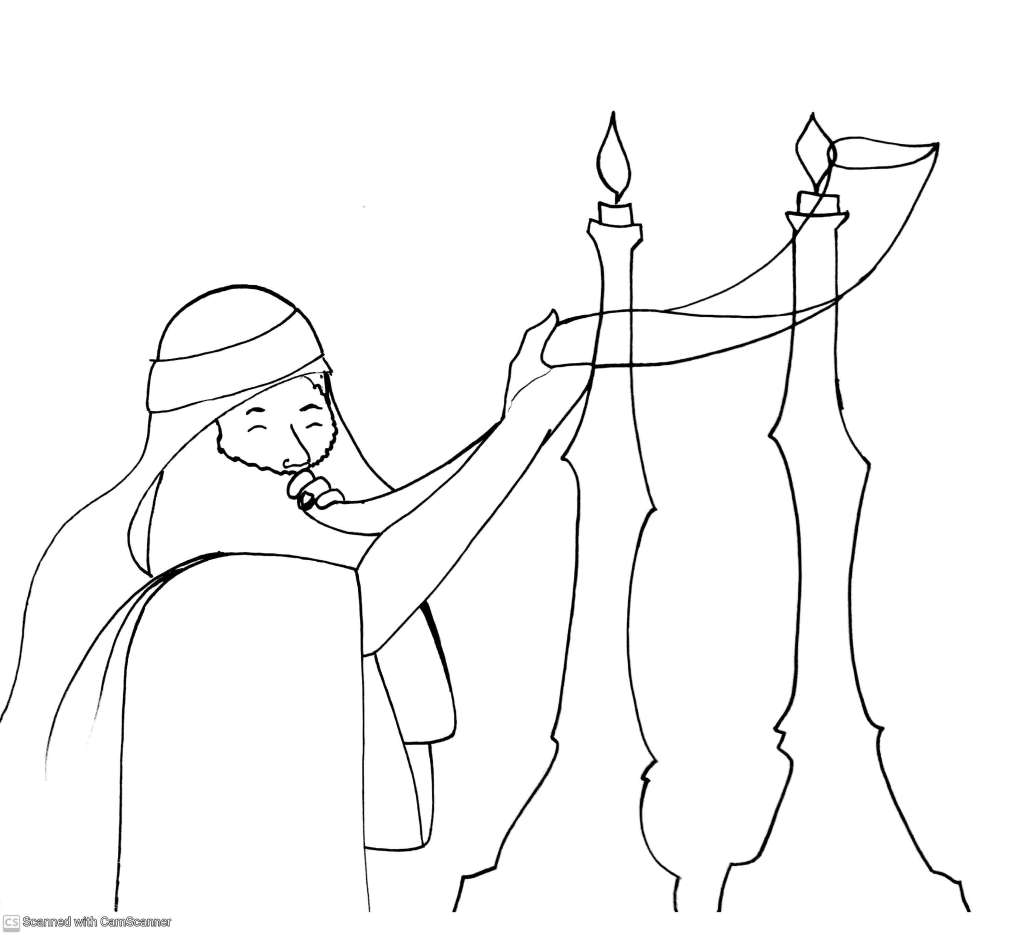
A shofar is being blown on a backdrop of Shabbat candles symbolizing the statutes and commandments given at Mount Sinai.
Parasha Behar and Parasha Bechukotai are read together on regular years and separately on leap year.
Parashat Behar-Bechukotai “On The Mountain”-“In My Laws” פָּרָשַׁת בְּהַר־בְּחֻקֹּתַי Leviticus 25:1-27:34, are the last two Torah portions in Leviticus, the 3rd Book of the five Books of the Bible, and the 32nd and 33rd weekly portions in the annual Jewish cycle of Torah reading which begins on Rosh Ha Shana, the Jewish New Year.
Parasha Behar, “On The Mountain”, explains the laws Moses received on Mount Sinai relating to the land the Israelites are to receive; giving the land a rest every seventh year; and the fiftieth year, Jubilee year, when debts are erased and slaves set free.
Parasha Bechukotai, “In My Laws”, discusses the statutes and laws received at Mount Sinai, and the blessings to be expected by those upholding them.
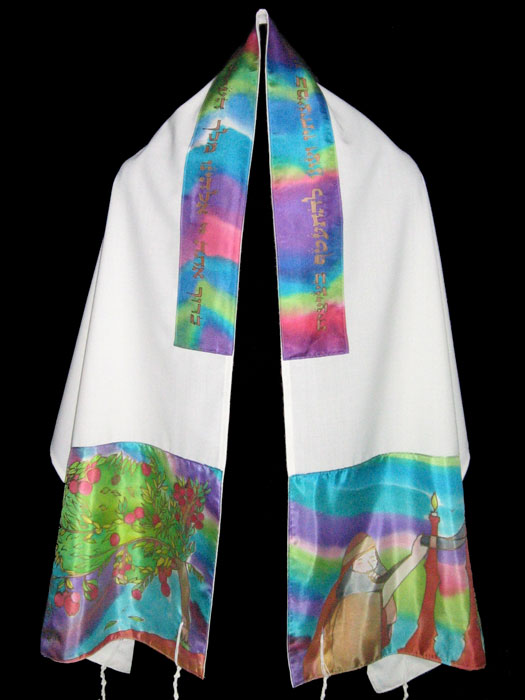
Parashat Behar-Bechukotai Tallit
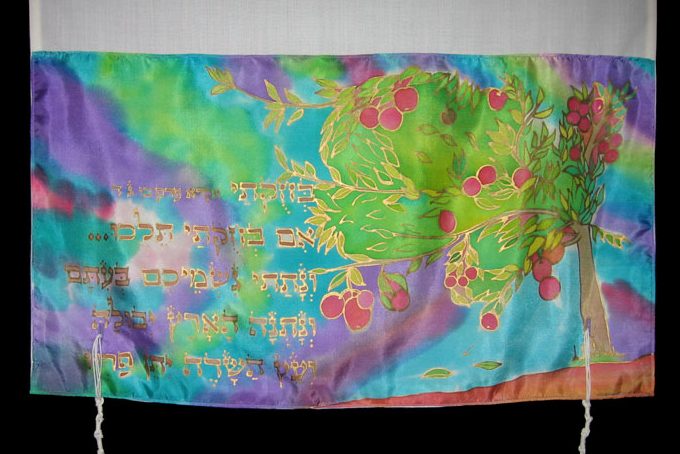
Band I Parasha Bechukotai
This apple tree symbolizes plenty in the land.
Translation of Hebrew (Leviticus 26:3-4):
“If ye walk in My statutes, and keep My commandments, and do them; (4) then I will give you rains in their season, and the land shall yield her produce, and the trees of the field shall yield their fruit.”
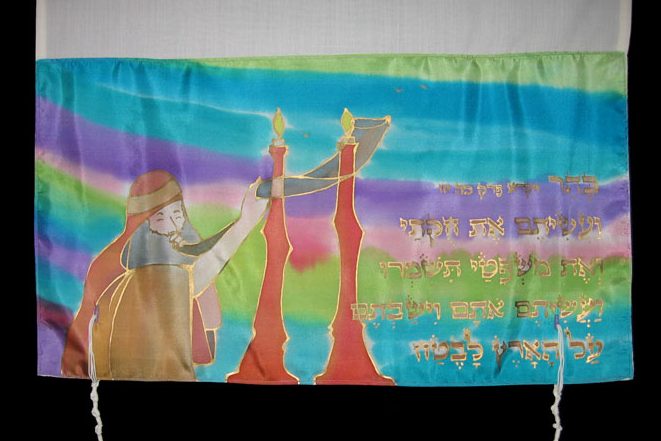
Band I Parasha Behar
A shofar is being blown on a backdrop of Shabbat candles symbolizing the statutes and commandments given at Mount Sinai.

Translation of Hebrew (Leviticus 25:19):
"Wherefore ye shall do My statutes, and keep Mine ordinances and do them; and ye shall dwell in the land in safety."
Book of Numbers
Weekly Portion Parashat Bamidbar
May 31, 2025
Sample of free illustrations for download
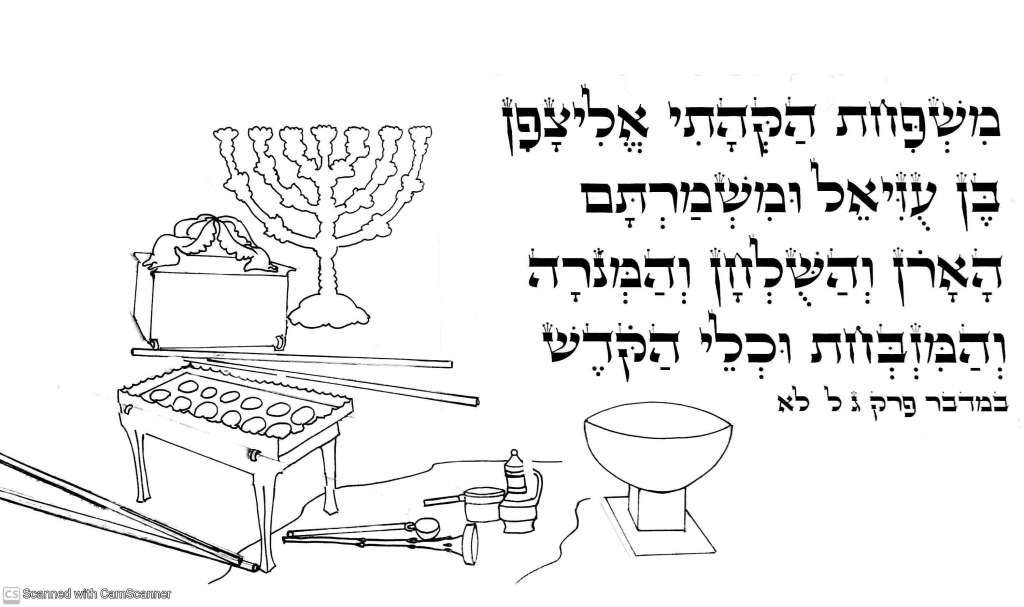
The sacred objects of the Tabernacle are being organized for travel. Translation of Hebrew (Numbers 3, Verses 30, 31) The chieftain of the Kohathite clan, Elizaphan son of Uzziel, his duties are the ark, the table, the lampstand, the altars, and the sacred utensils.
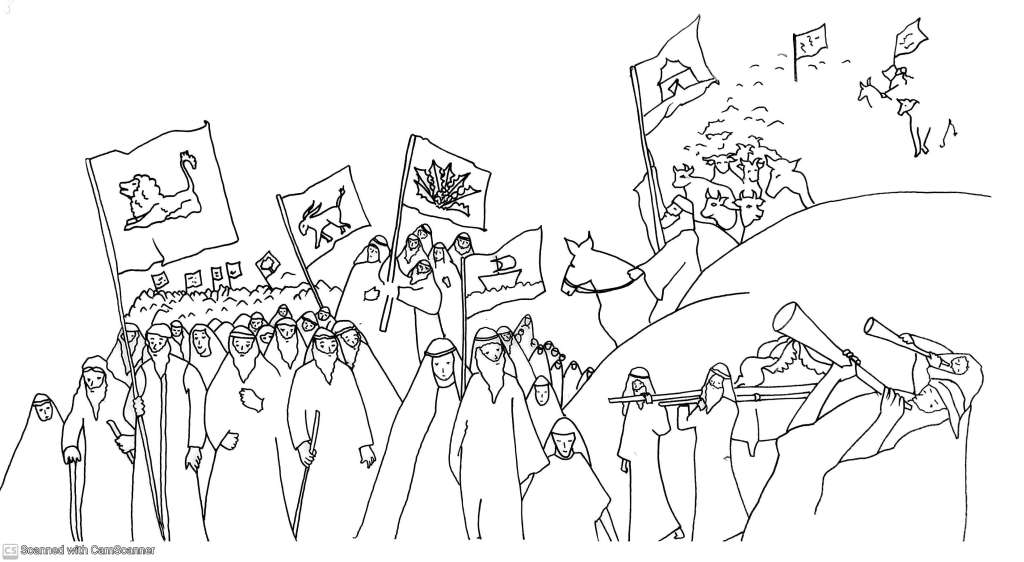
The tribes move out to march in order; the camp of Judah first followed by the camp of Ruben and Ephraim.
Parashat Bamidbar “In The Desert” פָּרָשַׁת בְּמִדְבַּר Numbers 1:1-4:20 is the first Torah portion in Numbers, the the 4th Book of the five Books of the Bible and the 34th weekly Torah portion in the annual Jewish cycle of Torah reading which begins on Rosh Ha Shana, the Jewish New Year.
Parasha Bamidbar deals with the census, the arrangement of the camp around the Tabernacle in the wilderness, the order of the march, and the duties regarding maintenance and transport of the sacred objects of the Tabernacle and the giving of offerings.

Parasha Bamidbar Tallit
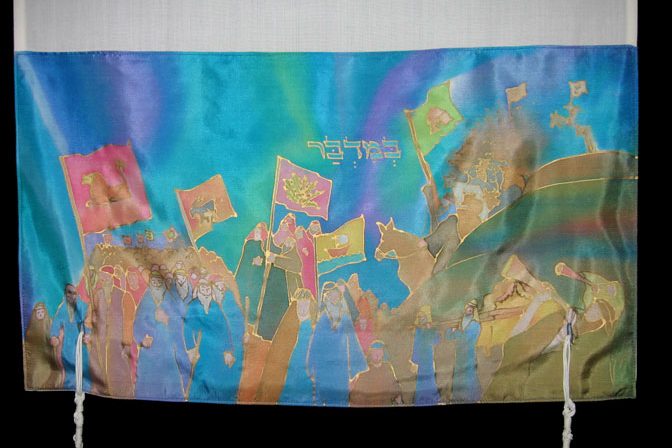
Tallit Band I
The tribes move out to march in order; the camp of Judah first followed by the camp of Ruben and Ephraim.
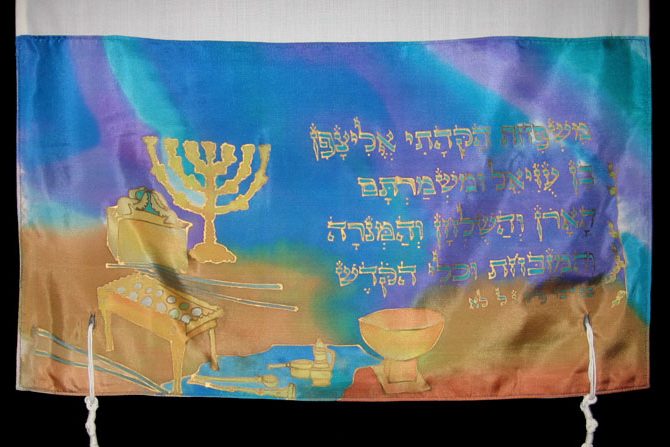
Tallit Band II
The sacred objects of the Tabernacle are being organized for travel.
Translation of Hebrew
Numbers 3, Verses 30, 31
The chieftain of the Kohathite clan, Elizaphan son of Uzziel, his duties are the ark, the table, the lampstand, the altars, and the sacred utensils.
Book of Numbers
Weekly Portion
Parashat Bamidbar
May 16, 2026
Sample of free illustrations for download
The sacred objects of the Tabernacle are being organized for travel. Translation of Hebrew (Numbers 3, Verses 30, 31) The chieftain of the Kohathite clan, Elizaphan son of Uzziel, his duties are the ark, the table, the lampstand, the altars, and the sacred utensils.
The tribes move out to march in order; the camp of Judah first followed by the camp of Ruben and Ephraim.
Parashat Bamidbar “In The Desert” פָּרָשַׁת בְּמִדְבַּר Numbers 1:1-4:20 is the first Torah portion in Numbers, the the 4th Book of the five Books of the Bible and the 34th weekly Torah portion in the annual Jewish cycle of Torah reading which begins on Rosh Ha Shana, the Jewish New Year.
Parasha Bamidbar deals with the census, the arrangement of the camp around the Tabernacle in the wilderness, the order of the march, and the duties regarding maintenance and transport of the sacred objects of the Tabernacle and the giving of offerings.
Parasha Bamidbar Tallit
Tallit Band I
The tribes move out to march in order; the camp of Judah first followed by the camp of Ruben and Ephraim.
Tallit Band II
The sacred objects of the Tabernacle are being organized for travel.
Translation of Hebrew
Numbers 3, Verses 30, 31
The chieftain of the Kohathite clan, Elizaphan son of Uzziel, his duties are the ark, the table, the lampstand, the altars, and the sacred utensils.
Weekly Portion Parashat Nasso
May 23, 2026
Sample of free illustrations for download
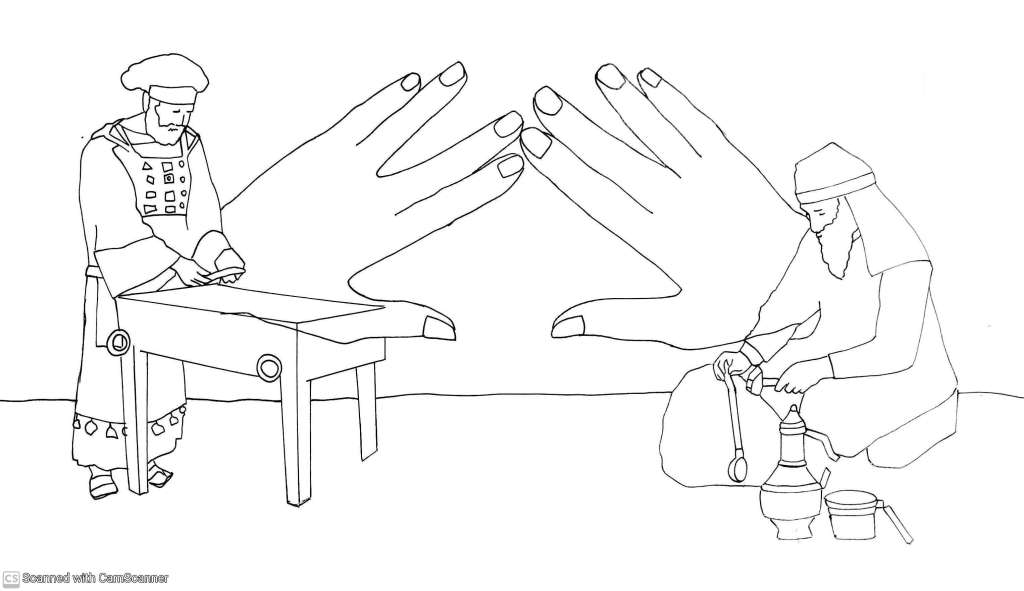
The priestly blessing being recited
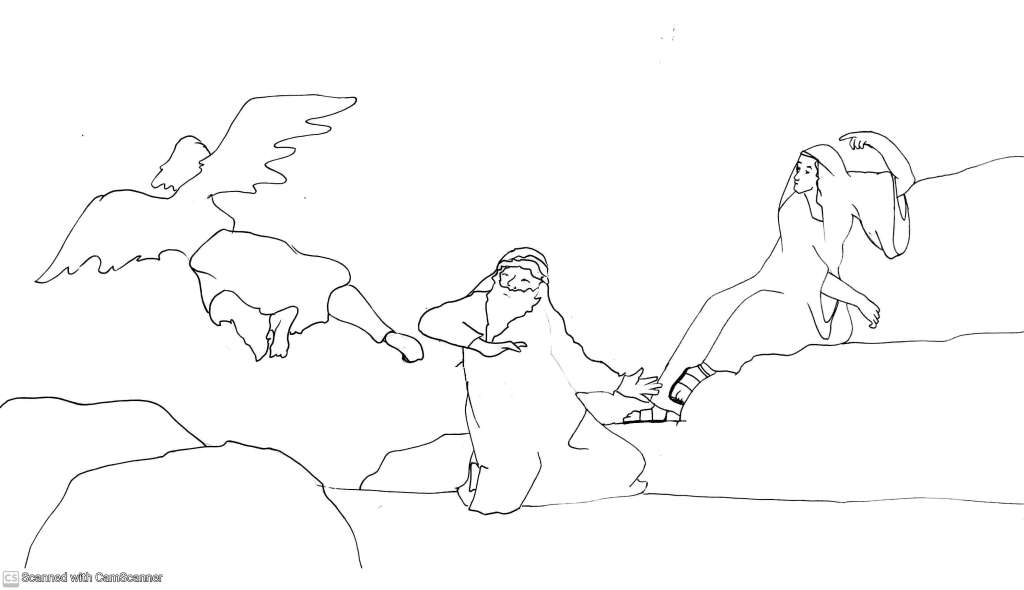
Haftorah (short reading read after the weekly portion) Nasso, Judges 13:2-25: G-d’s angel appears to Manoach and his wife who is barren, to tell them she will have a child whose name is to be Samson, who will save the Jewish people from the Philistine oppression they are enduring.
Parashat Nasso “Take A Census” פָּרָשַׁת נָשׂא Numbers 4:21-7:89, is the second Torah portion in Numbers, the the 4th Book of the five Books of the Bible, and the the 35th weekly Torah portion in the annual Jewish cycle of Torah reading which begins on Rosh Ha Shana, the Jewish New Year.
Parasha Nasso discusses how and who is responsible for erecting the Tabernacle, for anointing it, sanctifying it, caring for it, and moving it.
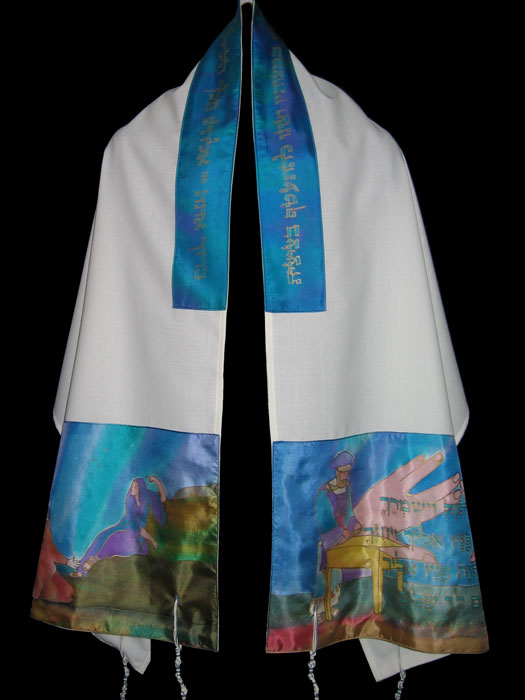
Parasha Nasso Tallit
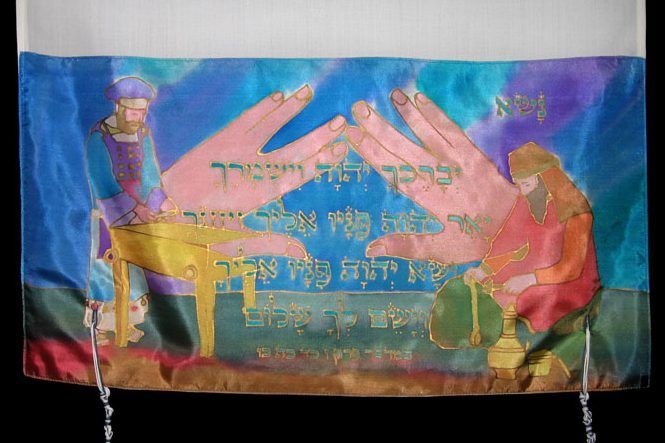
Tallit Band I
The priestly blessing is being recited.
Translation of Hebrew (Numbers 6 , 24, 25, and 66):
“May God bless you and keep watch over you.
May God make His presence enlighten you and grant you grace. May God direct His providence toward you and grant you peace.”
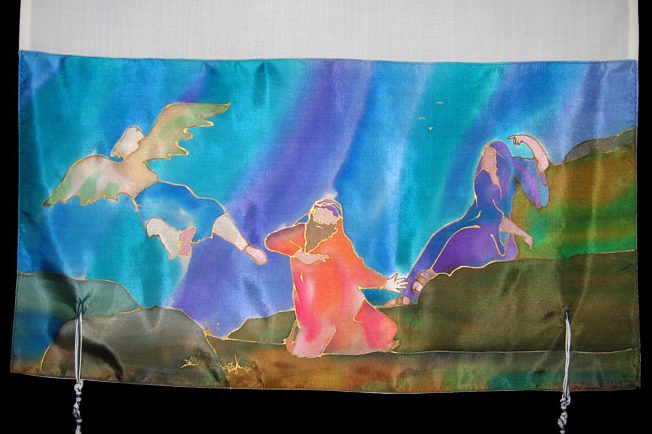
Tallit Band II
Haftorah Nasso: God’s angel appears to Manoach and his wife who is barren, to tell them she will have a child whose name is to be Samson.
Weekly Portion Parasha Beha’alotcha
May 30, 2026
Sample of free illustrations for download
The departure from Sinai, the Ark of the Covenant being set forward in a procession of the tribes of Israel.

The Menorah with two olive trees by it, is mentioned in the Haftorah (short reading read after the weekly portion) of Parashat Beha’alotcha , Zechariah 4, 3.
Parashat Beha’alotcha “When You Raise” פָּרָשַׁת בְּהַעֲלֹתְךָ Numbers 8:1-12:16 is the third Torah portion in Numbers, the the 4th Book of the five Books of the Bible and the 36th weekly Torah portion in the annual Jewish cycle of Torah reading which begins on Rosh Ha Shana, the Jewish New Year.

Parashat Beha’alotcha begins with commands concerning the Menorah, Sanctuary laws, keeping of the Passover, and the use of silver trumpets. Traveling with the Ark is discussed. The unhappiness of the people with their desert menu, results in G-d's bombardment of them with quail followed by plague, and the portion ends with Miriam and Aaron complaining about Zipporah, Moses' wife, and Miriam being made leprous temporarily as a result.
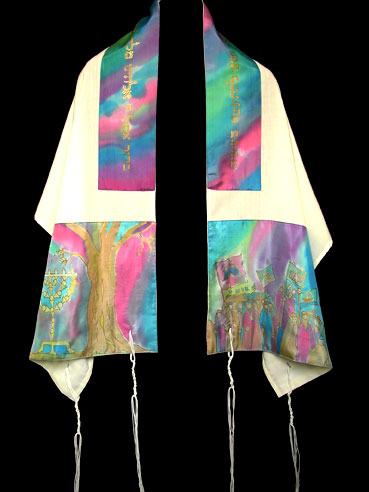
Parasha Beha’alotcha Tallit
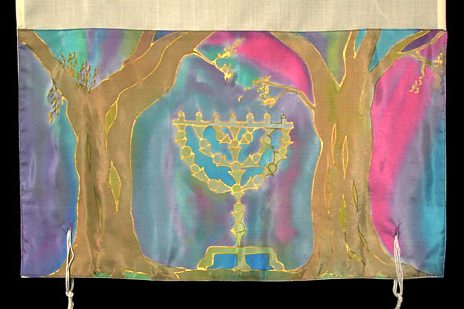
Tallit Band I
The Menorah with two olive trees by it, mentioned in the Haftorah of Behaalotecha, Zechariah 4,3.
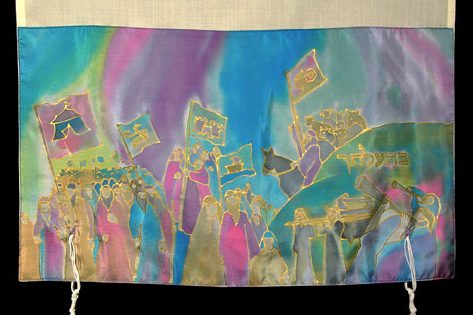
Tallit Band II
The departure from Sinai, the Ark of the Covenant being set forward in a procession of the tribes of Israel.
Weekly Portion Parasha Sh’lach
June 6, 2026
Sample of free illustrations for download
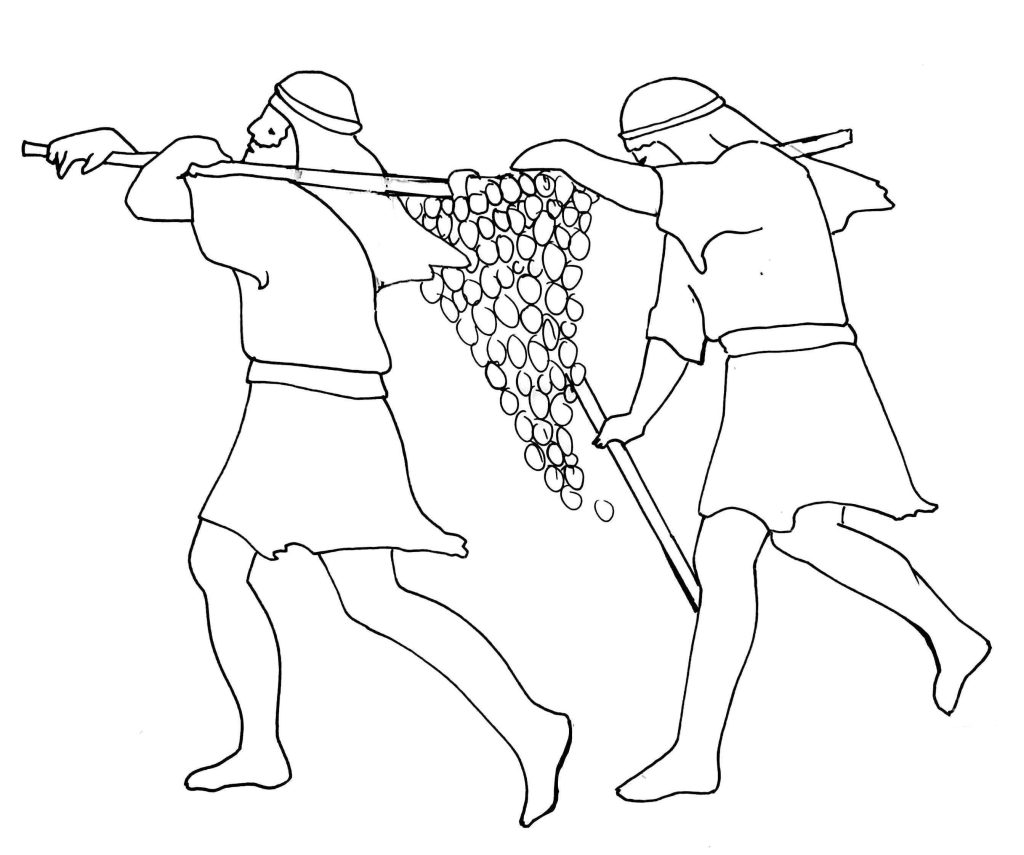
A great cluster of grapes is being brought back by messengers who have seen the land of Canaan.
Translation of Numbers 13, 23:
“And they came unto the valley of Eshcol, and cut down from thence a branch with one cluster of grapes, and they bore it upon a pole…”
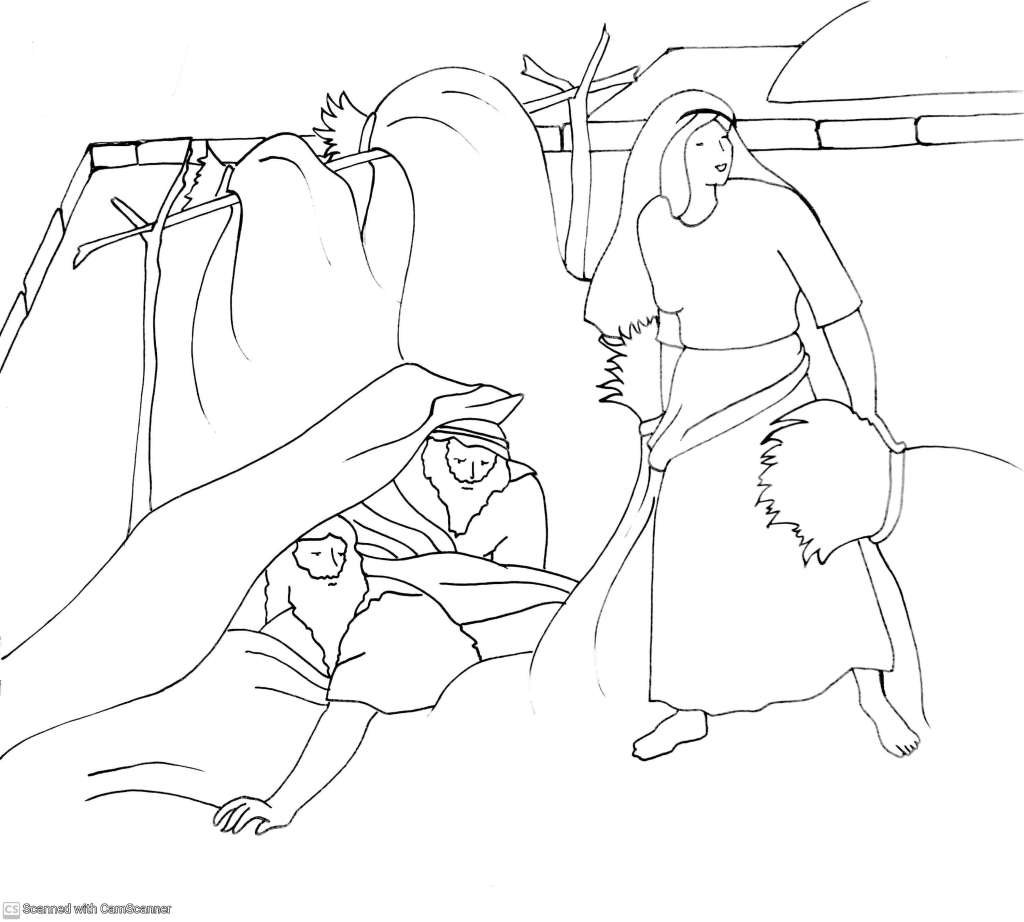
Haftorah Shlach Joshua 2, 1-24
Two spies sent to Jericho by Joshua are hidden by Rahab, who helps them escape.

Parashat  Sh’lach “Send”  פָּרָשַׁת שְׁלַח־לְךָ Numbers 8:1-12:16, is the fourth Torah portion in Numbers, the the 4th Book of the five Books of the Bible and the 37th weekly Torah portion in the annual Jewish cycle of Torah reading which begins on Rosh Ha Shana, the Jewish New Year.

In Parashat  Sh’lach, twelve messengers scout out the land of Canaan and return with exaggerated tales. Also in it, Jews are commanded with the mitzvah of tzitzit (saying a blessing over the tied threads).

Also below are illustrations from the  Parashat  Sh’lach Haftorah reading Joshua 2, 1-24 (in the Ashkenazi tradition), which is read after the weekly portion reading, where Joshua secretly sends two spies to Jericho who stay with Rahab, who hides them and helps them escape.
Parasha Sh’lach Tallit


Band II Haftorah Shlach
Joshua 2, 1-24
Two spies are sent by Joshua to Jericho where they are hidden and helped to escape by Rahab.
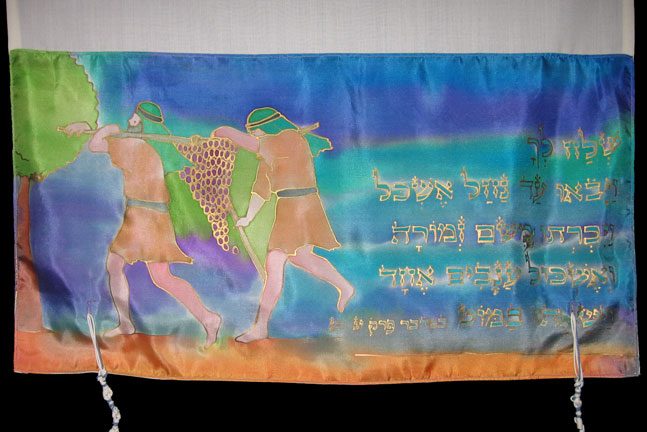
Tallit Band II
A great cluster of grapes is being brought back by messengers who have seen the land of Canaan.
Translation of Hebrew (Numbers chapter 13, verse 23):
“And they came unto the valley of Eshcol, and cut down from thence a branch with one cluster of grapes, and they bore it upon a pole…”
Weekly Portion Parashat Korach
June 13, 2026
Sample of free illustrations for download

A subsequent plague is stopped by Aaron’s offering of incense. Aaron’s staff miraculously blossoms and brings forth almonds, to prove that his designation as high priest is divinely ordained.
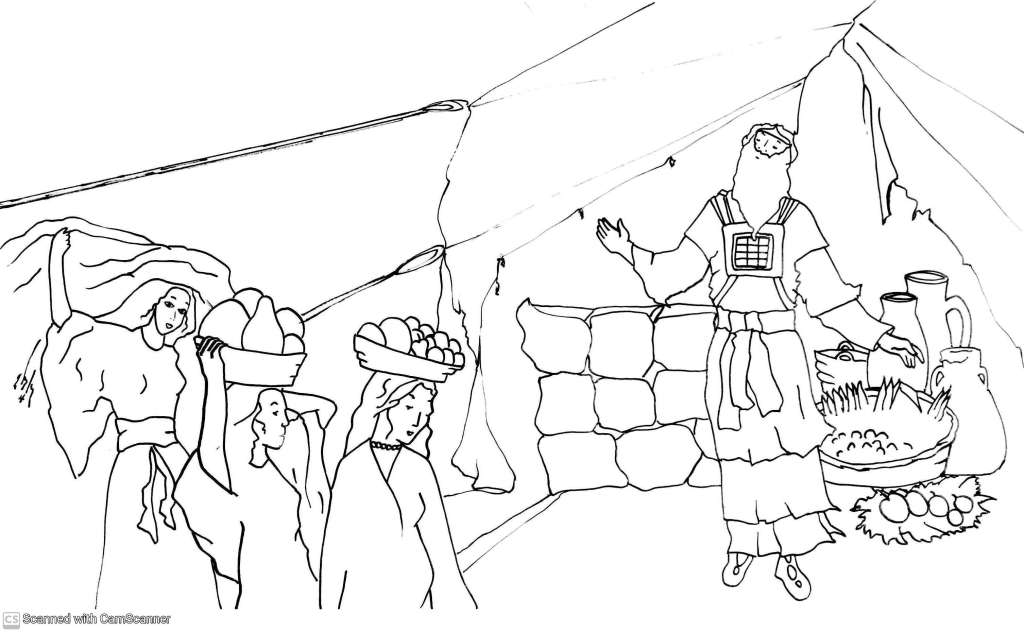
Donations being given to the Kohanim (priests).
Parashat Korach פָּרָשַׁת קוֹרַח Numbers 16:1-18:32, is the fifth Torah portion in Numbers, the the 4th Book of the five Books of the Bible and the 38th weekly Torah portion in the annual Jewish cycle of Torah reading which begins on Rosh Ha Shana, the Jewish New Year.

The name of the Parasha, "Korach," refers to Korach, head of the rebellion against Moses and Aaron.

In Parashat Korach, Korach, who is a Levi, is accompanied by Moses’ inveterate foes, Dathan and Abiram and 250 distinguished members of the community, offer incense to prove their worthiness for the priesthood. G-d, in his anger, opens the earth and swallows Korach and his followers.

A subsequent plague is stopped by Aaron’s offering of incense. Aaron’s staff miraculously blossoms and brings forth almonds, to prove that his designation as high priest is divinely ordained.

G‑d also commands a donation from each crop of grain, wine and oil, as well as all firstborn sheep and cattle, and other specified gifts, be given to the Kohanim (priests).

Unfortunately, the photos of the Korah Tallit have not survived.
Weekly Portion Parashat Chukat
June 20, 2026
Sample of free illustrations for download
Parashat Chukat “Law Of” פָּרָשַׁת חֻקַּת Numbers 19:1-22:1, is the sixth Torah portion in Numbers, the the 4th Book of the five Books of the Bible and the 39th weekly Torah portion in the annual Jewish cycle of Torah reading which begins on Rosh Ha Shana, the Jewish New Year.
Moses’ sister, Miriam, dies in Parasha Chukat and the well which followed the Israelites in their wanderings through the desert as a sign of Miriam’s merit, ceases to flow. Moses strikes a rock with his staff, providing water for the Israelites. However, the way he goes about it is not pleasing to G-d and for this reason, Moses is not allowed to enter the Promised Land. However, Moses does see it. He dies on Mount Nevo, just East of Canaan and overlooking it.
Parasha Chukat and Parasha Balak are read together on regular years and separately on leap year.
Both have been designed here as one tallit.
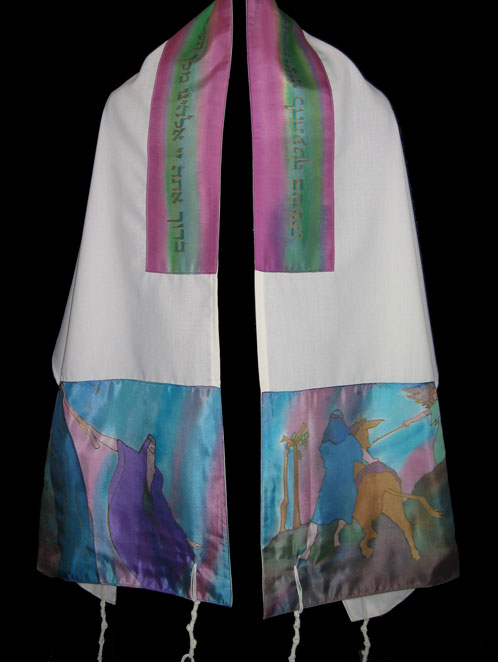
Chukat-Balak Tallit
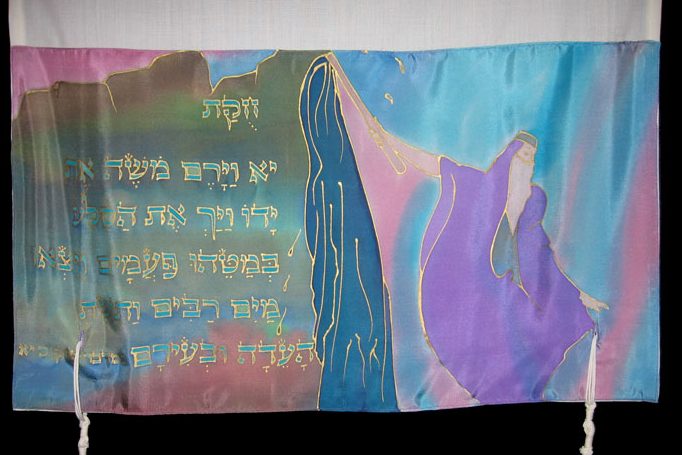
Band I Chukat
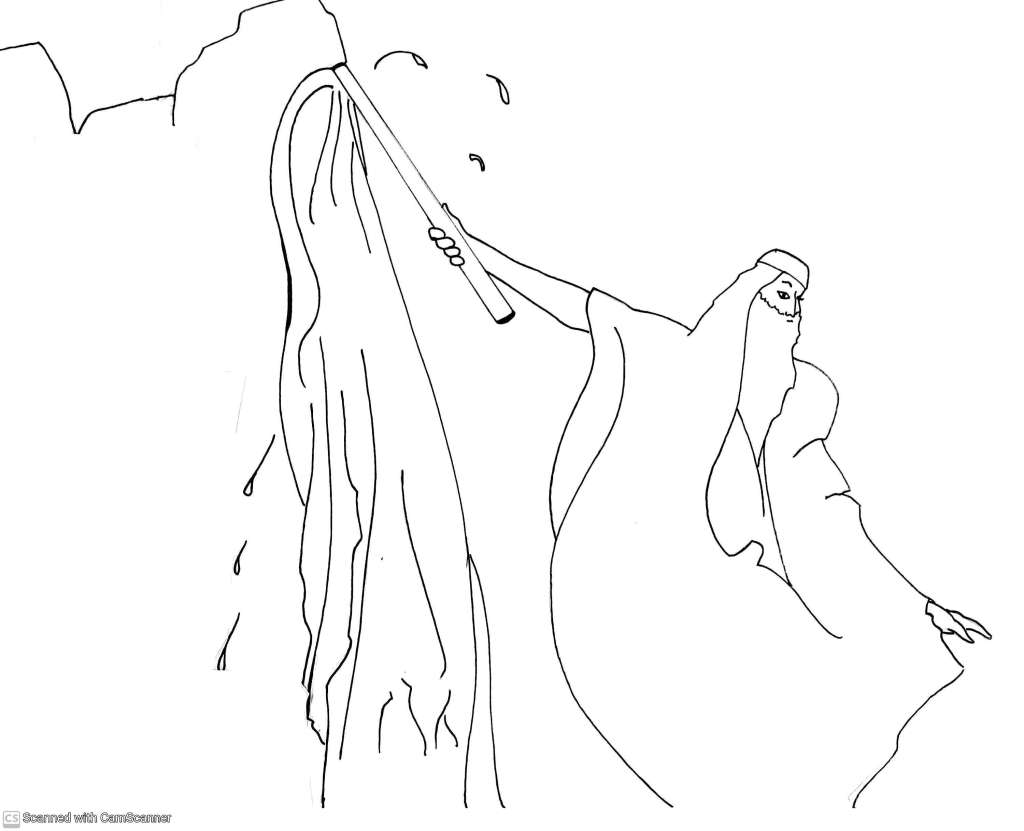
Moses strikes a rock with his staff, providing water for the Israelites.
Translation of Hebrew (Numbers 20, 11):
“And Moses lifted up his hand, and smote the rock with his rod twice; and water came forth abundantly, and the congregation drank, and their cattle.”
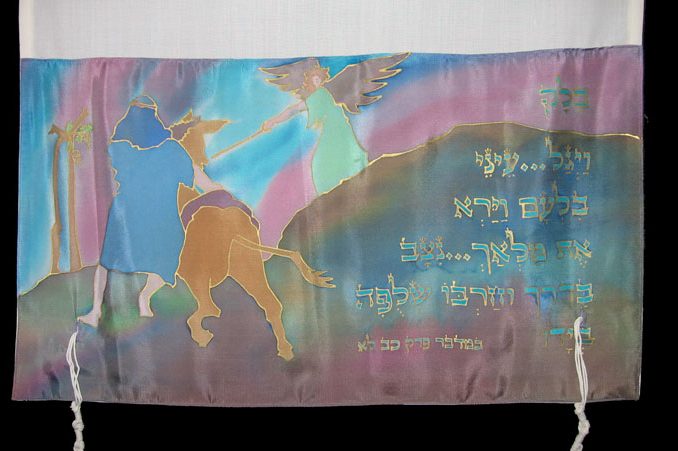
Band II Balak
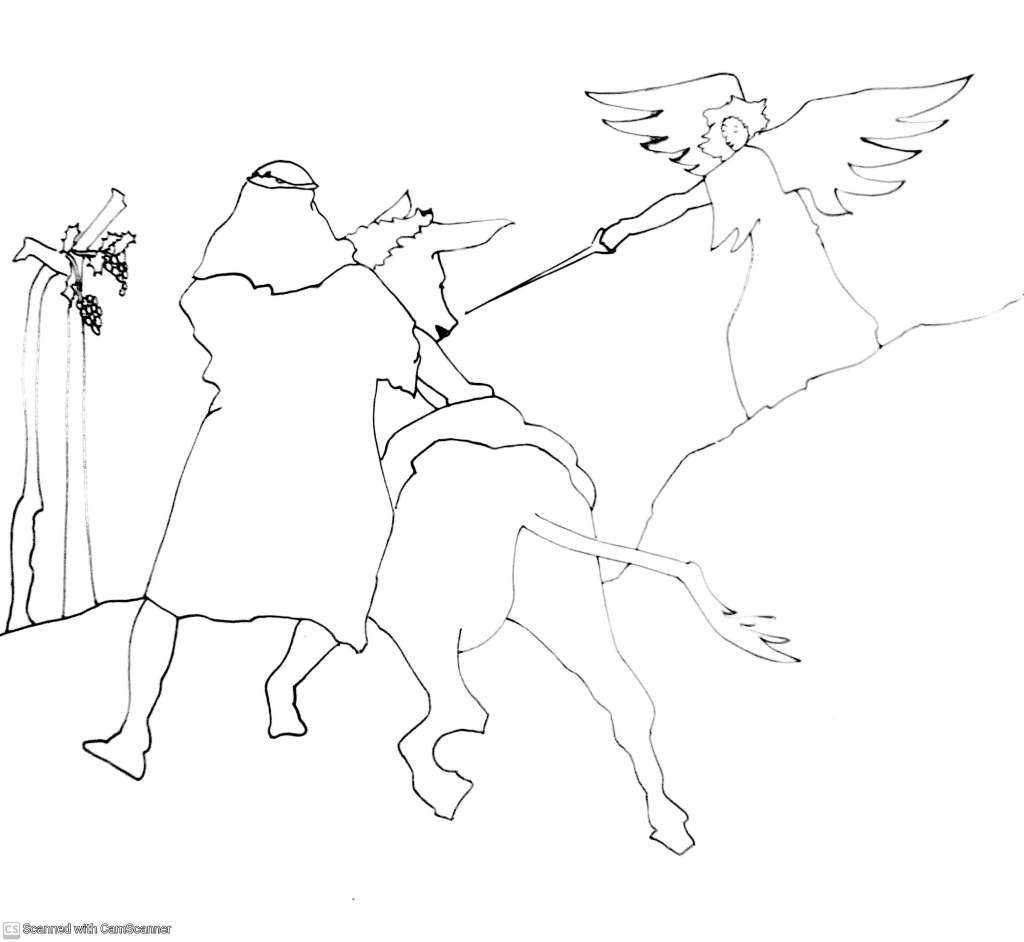
Balaam forces his donkey ahead, whose way is being blocked by an angel that Balaam doesn’t see.
Translation of Hebrew (Numbers 22, 31):
“Then [the Lord] opened the eyes of Balaam, and he saw the angel of the Lord standing in the way, with his sword drawn in his hand…”
Weekly Portion Parashat Balak
June 27, 2026
Sample of free illustrations for download
Balaam, angry with his donkey
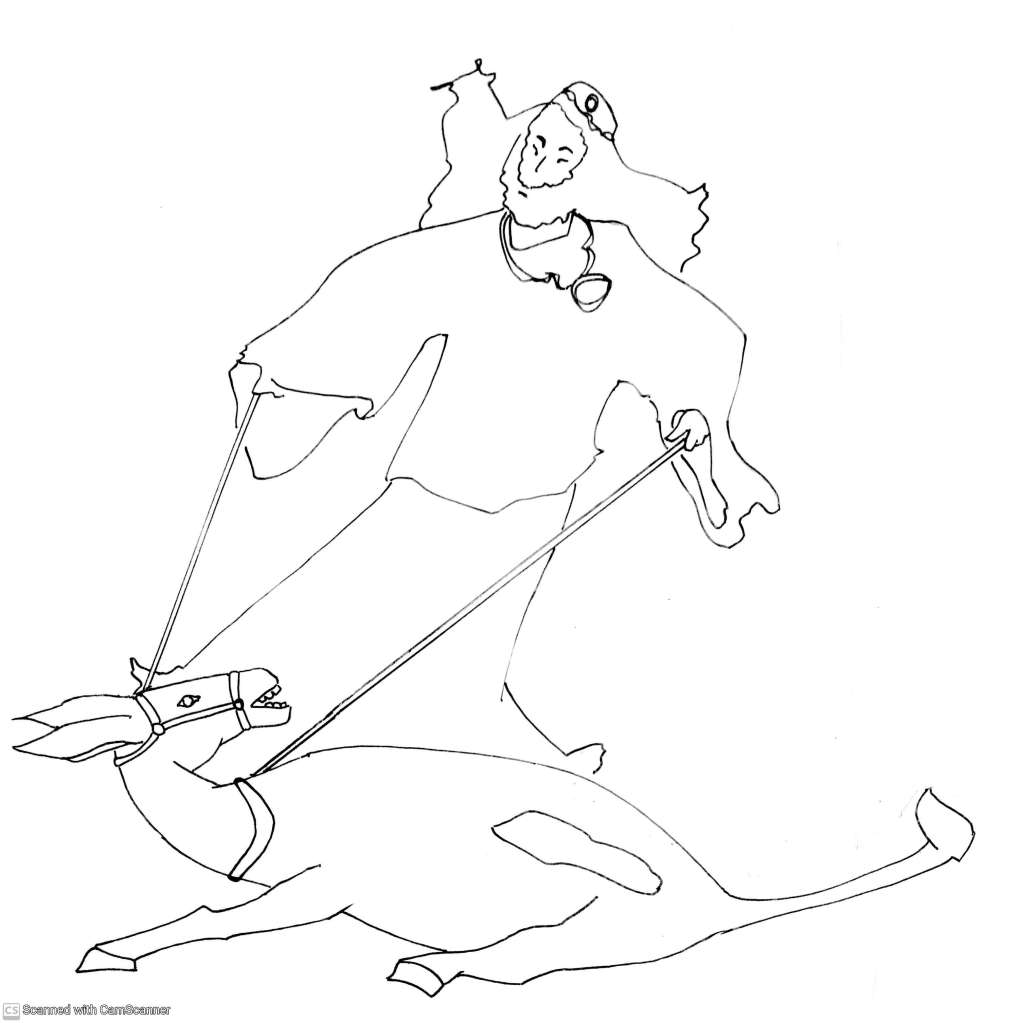
Balaam’s at odds with his talking donkey
Parashat Balak פָּרָשַׁת בָּלָק Numbers 22:2-25:9, is the seventh Torah portion in Numbers, the the 4th Book of the five Books of the Bible and the 40th weekly Torah portion in the annual Jewish cycle of Torah reading which begins on Rosh Ha Shana, the Jewish New Year.
Parasha Balak tells the story of Balak, the King of Moab, who sends messengers to the Prophet Balaam, to curse the People of Israel. G-d sends an angel to dissuade Balaam. Balaam doesn’t see the angel but his donkey does and gets beaten by Balaam for trying to avoid it.
Parasha Chukat and Parasha Balak are read together on regular years and separately on leap year.
Both have been designed here as one tallit.
Chukat-Balak Tallit
Band II Balak
Balaam forces his donkey ahead, whose way is being blocked by an angel that Balaam doesn’t see.
Translation of Hebrew (Numbers 22, 31):
“Then [the Lord] opened the eyes of Balaam, and he saw the angel of the Lord standing in the way, with his sword drawn in his hand…”
Weekly Portion Parashat Pinchas
July 4, 2026
Sample of free illustrations for download
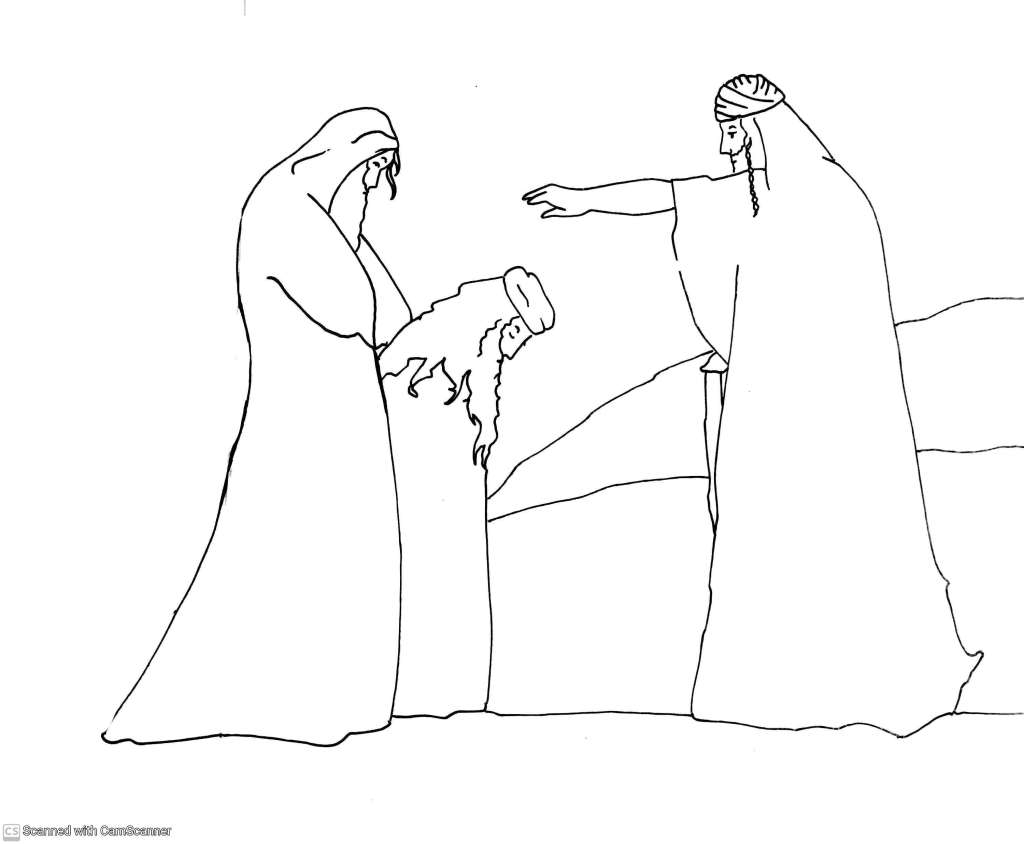
Moses passes responsibility of the Israelites to Joshua in a ceremony including the high priest, Eleazar.
Translation of Hebrew (Numbers 27, 22-23):
“Joshua, the son of Nun, who stands before thee, he shall go in thither: encourage thou him, for he shall cause Israel to inherit it.”
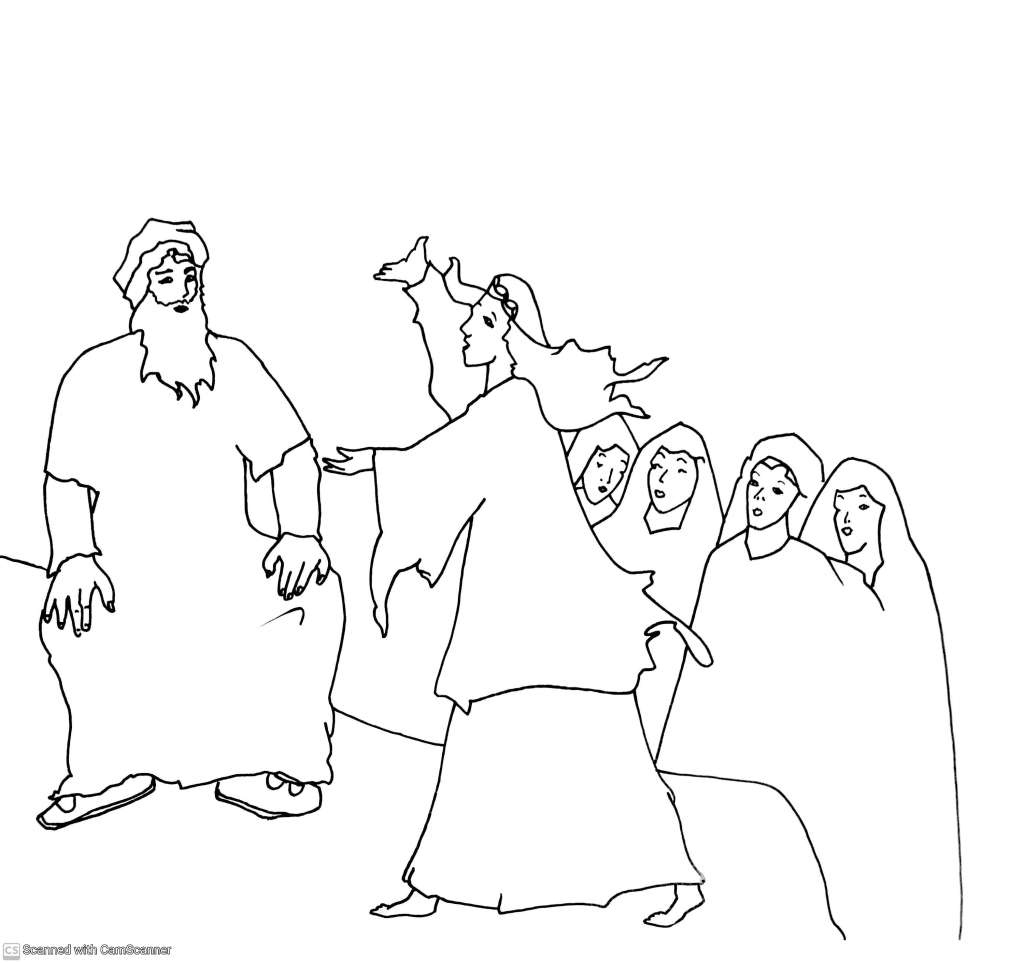
The five Zelufhad sisters petition Moses to grant them the portion of the land belonging to their father, who died without son.
Parashat Pinchas פָּרָשַׁת פִּינְחָס Numbers 25:10-30:1, is the eighth Torah portion in Numbers, the the 4th Book of the five Books of the Bible and the 41st weekly Torah portion in the annual Jewish cycle of Torah reading which begins on Rosh Ha Shana, the Jewish New Year.
Pinhas is known for his zealousness for G-d’s holiness. He is the son of Eleazar and grandson of Aaron, the high priest. He is most noted for his decisive action in stopping a plague among the Israelites by executing an Israelite man and a Midianite woman who were flagrantly disobeying God’s commands (Numbers 25:7-8).
In Parasha Pinhas, a census is taken to ensure that each tribe receives the land it deserves according to its size. A census of the people counts 601,730 men between the ages of twenty and sixty. Moses is instructed on how the Land is to be divided by lottery among the tribes and families of Israel. Moses empowers Joshua to succeed him and lead the people into the Land of Israel.
And in conclusion, the five Zelufhad sisters of the Tribe of Manasseh, petition Moses to grant them the portion of the land belonging to their father, who died without sons. Their claim is granted, establishing the order of Biblical inheritance to include women.
Parashat Pinchas Tallit
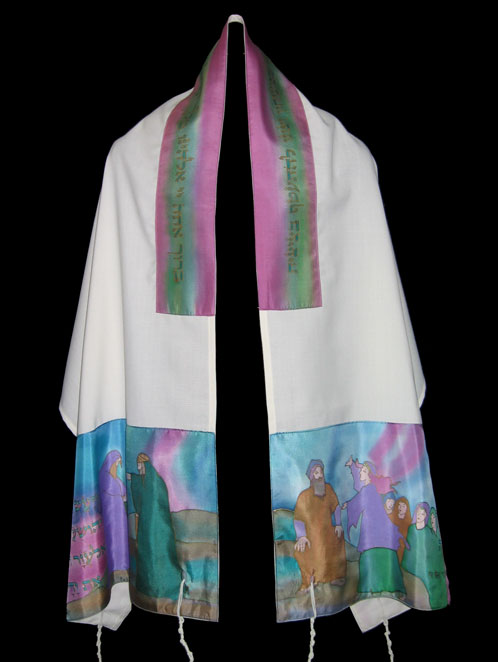

Tallit Band I
Moses passes responsibility of the Israelites to Joshua in a ceremony including the high priest, Eleazar.
Translation of Hebrew (Numbers 27, 22-23):
“Joshua, the son of Nun, who stands before thee, he shall go in thither: encourage thou him, for he shall cause Israel to inherit it.”
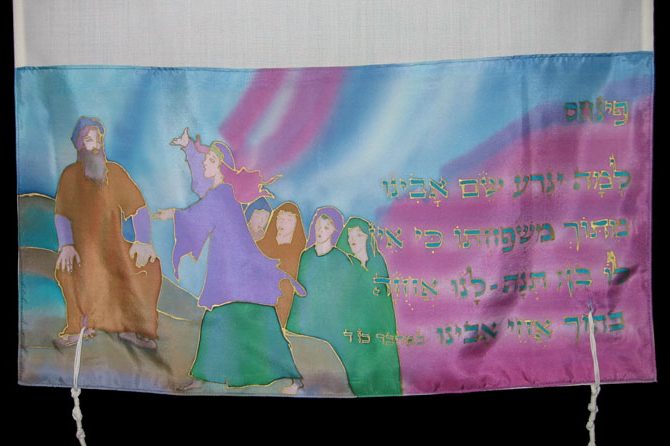
Tallit Band II
The Zelophad sisters bring their case of inheritance up with Moses, and win a victory, establishing the order of inheritance to include women.
Weekly Portion Matot-Masei
July 11, 2026
Weekly Portion Parasha Matot-Masei, May 31, 2025
Sample of free illustrations for download
Matot
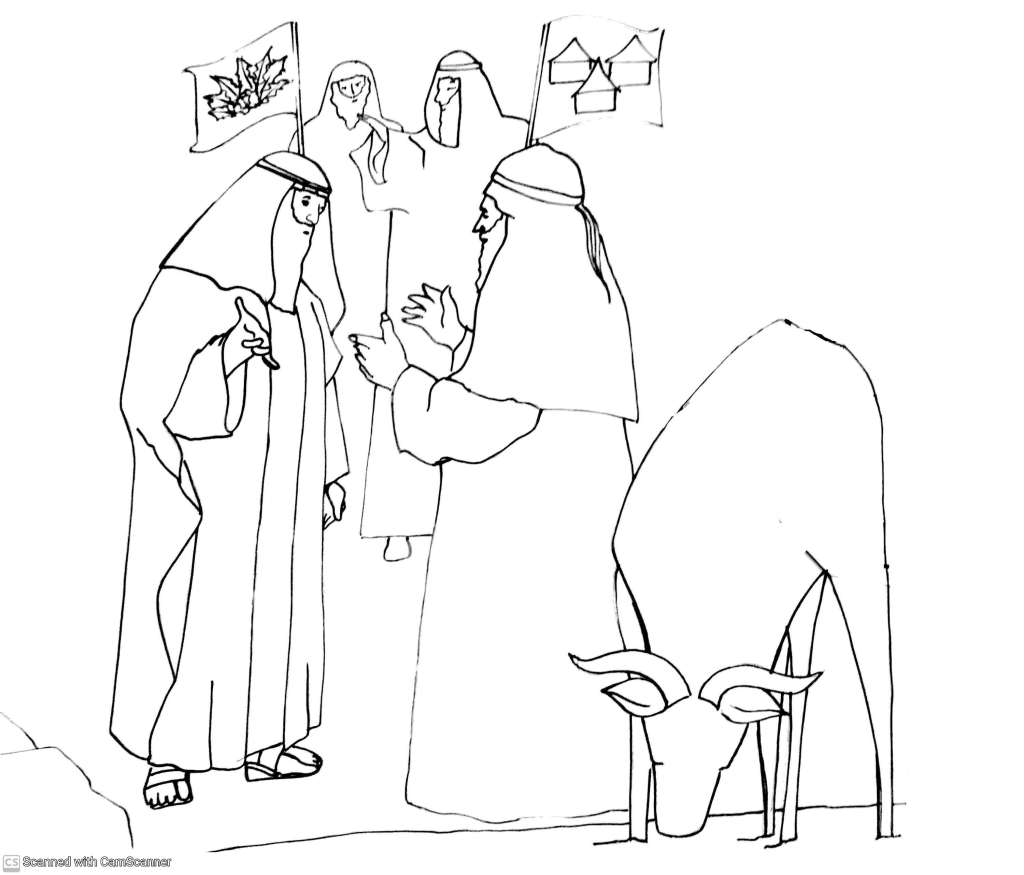
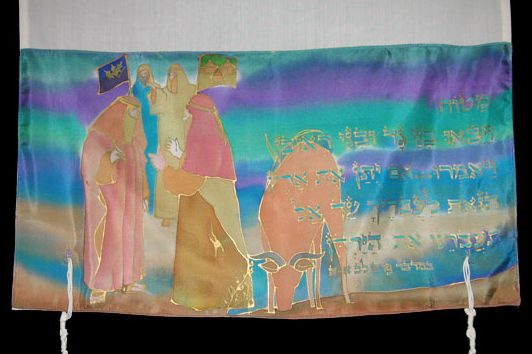
The Gadites and Reubenites, their tribal banners flying, come to request of Moses that they receive land on the east side of the Jordan, suitable for their cattle.
Translation of Numbers chapter 32, verse 1-5:
“…The children of Gad and the children of Reuben come [to Moses saying] let this land be given unto your servants, bring us not over the Jordan.”
Masei
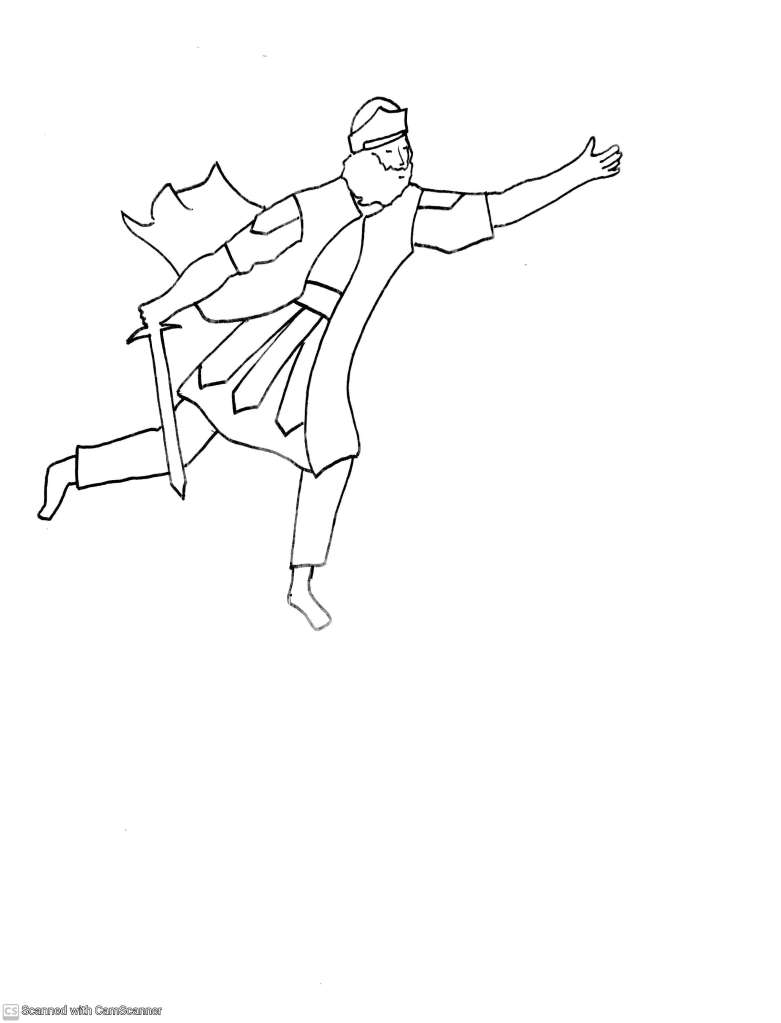
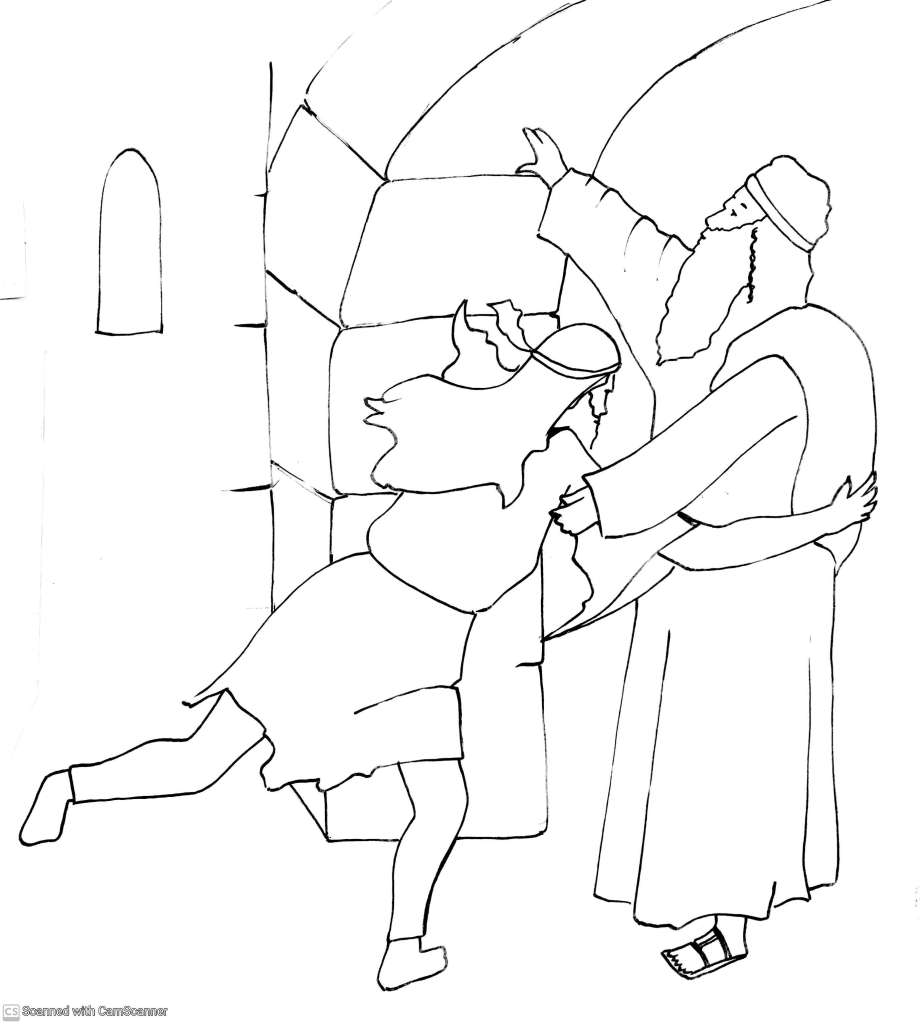
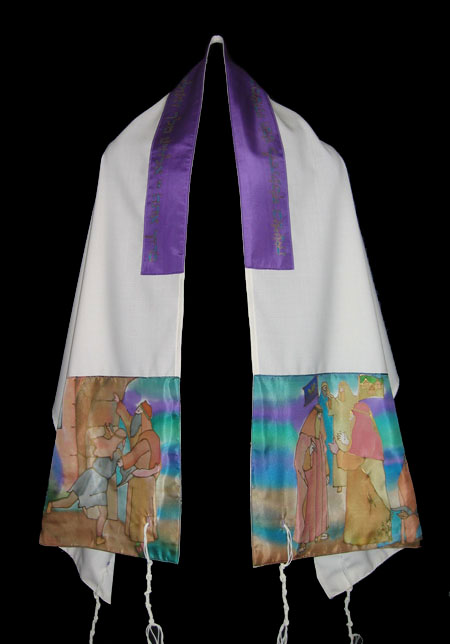
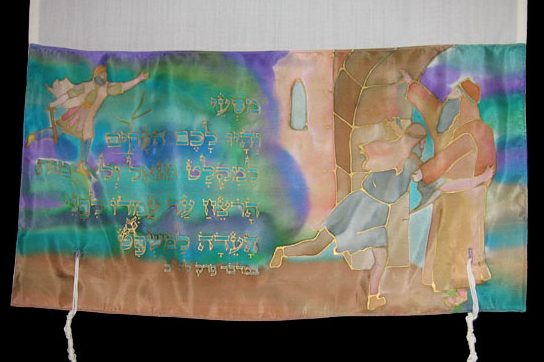
A fugitive who is being pursued, is entering a city of refuge.
Parashat Matot "Tribes" פָּרָשַׁת מַּטּוֹת Numbers 30:2-32:42, is the ninth Torah portion in The Book of Numbers, the the 4th Book of the five Books of the Bible and the 40th weekly Torah portion in the annual Jewish cycle of Torah reading which begins on Rosh Ha Shana, the Jewish New Year.
In Parasha Matot, the tribes of Reuben and Gad negotiate with Moses for land on the east side of the Jordan which is suitable for their cattle herds. Moses acquiesces on the condition that they help conquer it.
Parashat Masei “Travels” פָּרָשַׁת מַּטּוֹת Numbers 33:1-36:13, is the last Torah portion in Numbers, the the 4th Book of the five Books of the Bible and the 41st weekly Torah portion in the annual Jewish cycle of Torah reading which begins on Rosh Ha Shana, the Jewish New Year.
Parasha Masei designates cities of refuge in the Land the Israelites are about to enter.
Matot-Masei Tallit
Tallit Band I
A fugitive who is being pursued, is entering a city of refuge.
Translation of Hebrew (Numbers chapter 35, verse 12):
“And the cities shall be unto you for refuge from the avenger, that the manslayer die not, until he stand before the congregation for judgment.”
Tallit Band II
The Gadites and Reubenites, their tribal banners flying, come to request of Moses that they receive land on the east side of the Jordan, suitable for their cattle.
Translation of Hebrew (Deuteronomy chapter 32, verse 1-5):
“…The children of Gad and the children of Reuben come [to Moses saying] let this land be given unto your servants, bring us not over the Jordan.”
Book of Deuteronomy
Weekly Portion Parasha Devarim
July 18, 2026
Sample of free illustrations for download
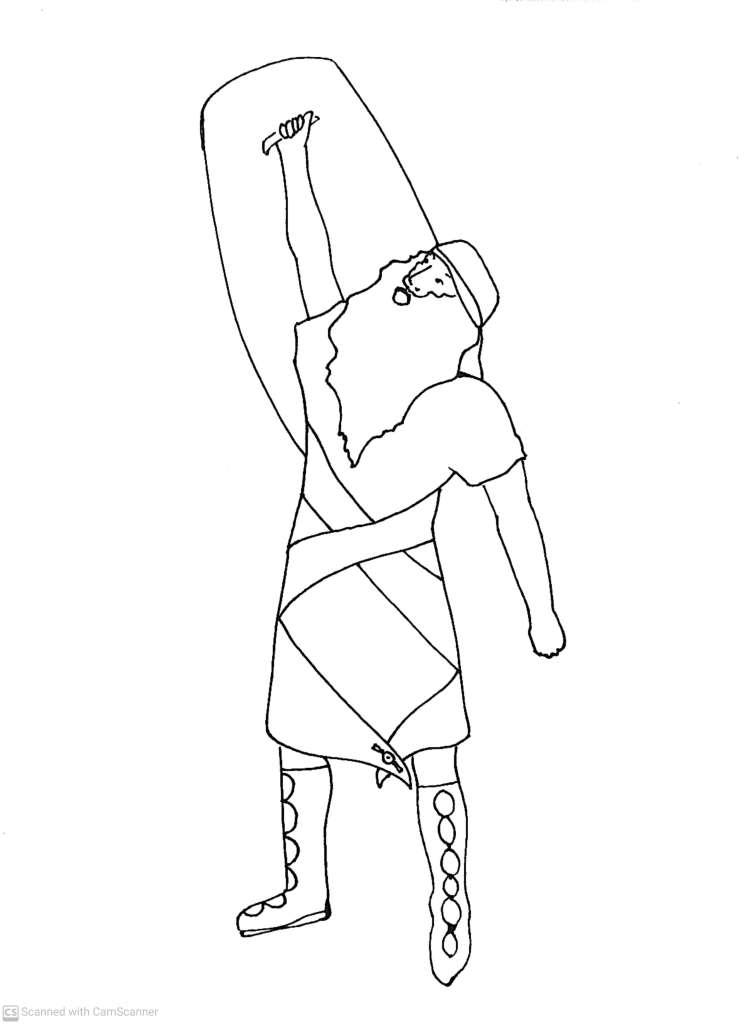
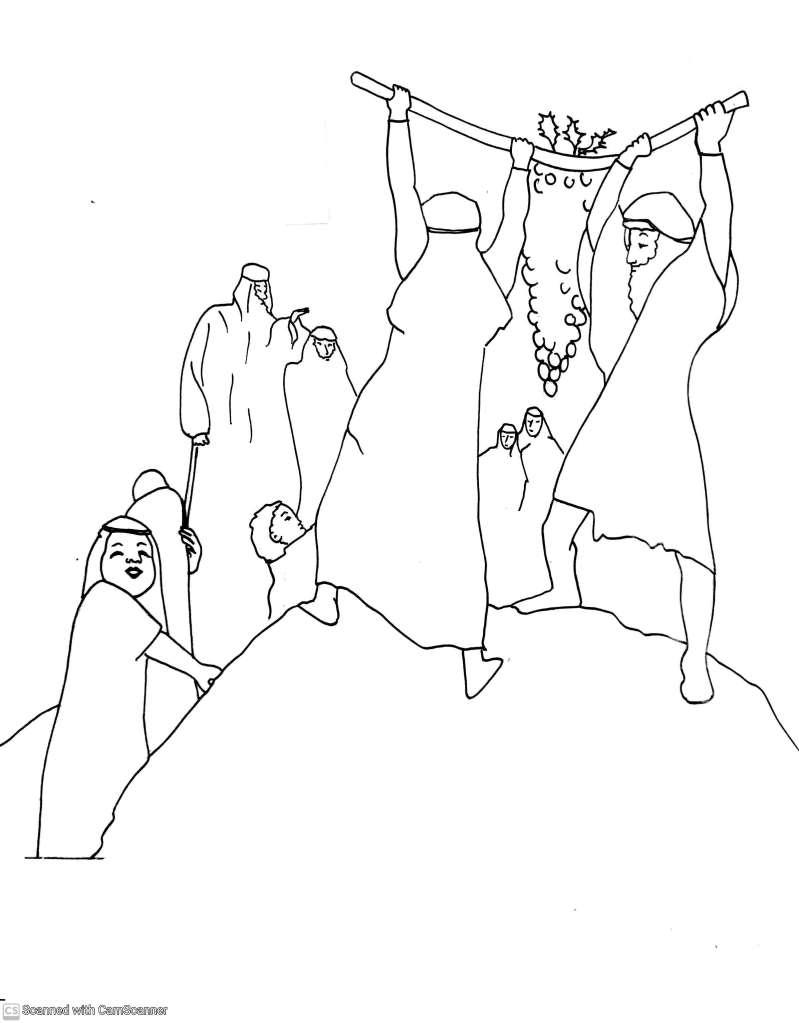
The bounty of the Land is revealed. Translation of Hebrew (Deuteronomy 1, 25):
“And they took of the fruit of the land in their hands, and brought it down unto us…”
Parasha Devarim “Words” פָּרָשַׁת דְּבָרִים Deuteronomy 1:1-3:22, is the first Torah portion in Deuteronomy, the 5th and last Book of the Bible, and the 44th weekly Torah portion in the annual Jewish cycle of Torah reading which begins on Rosh Ha Shana, the Jewish New Year.

Parasha Devarim recounts the Israelite's forty years of wandering in the desert. And Joshua scouts out the land they are about to enter.
Devarim Tallit

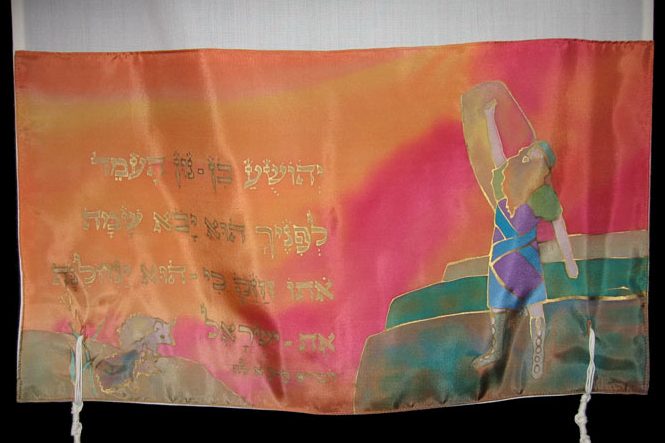
Tallit Band I
Joshua Son of Nun prepares to conquer the land of Canaan.
Translation of Hebrew (Deuteronomy 1, 38):
“Joshua, the son of Nun, who stands before thee, he shall go in thither: encourage thou him, for he shall cause Israel to inherit it.”
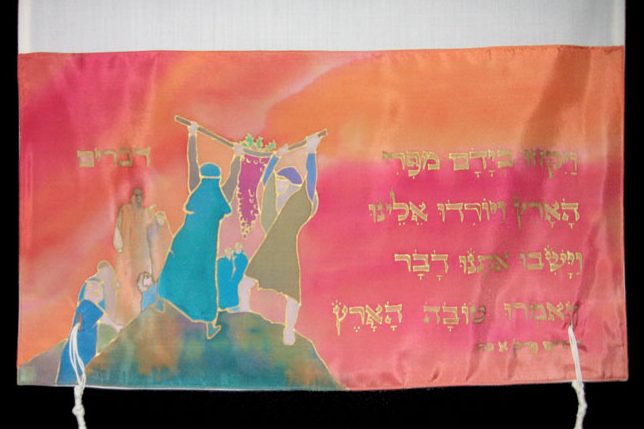
Tallit Band II
The bounty of the land is revealed.
Translation of Hebrew (Deuteronomy 1, 25):
“And they took of the fruit of the land in their hands, and brought it down unto us…”
Weekly Portion Parasha Vaetchanan
July 25, 2026
Sample of free illustrations for download
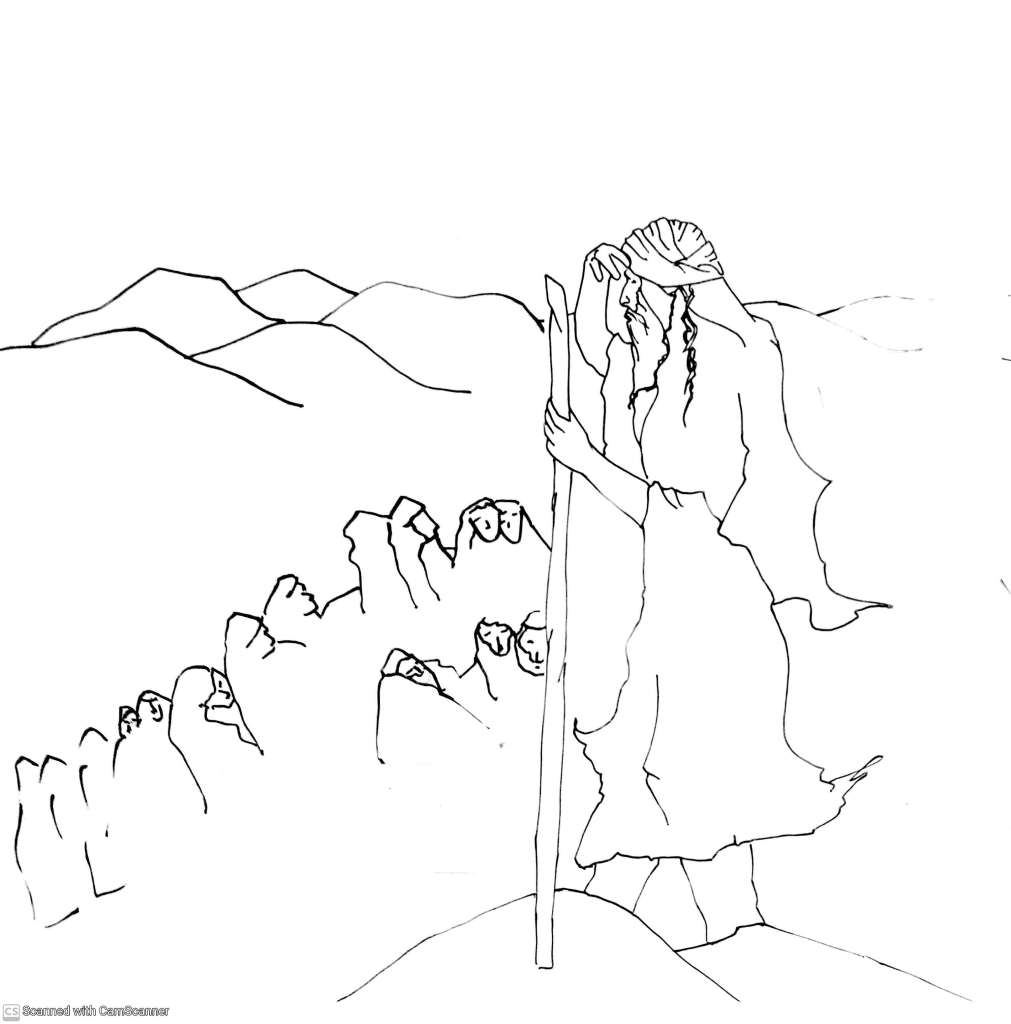
Moses pleas in vain to be allowed to enter the land before his death.
Deuteronomy 3, 27:
“Climb to the top of the cliff, and gaze to the west, north, south and east. Let your eyes feast on it, since you will not cross the Jordan.”
Parasha Vaetchanan “I Pleaded” פָּרָשַׁת וָאֶתְחַנַּן Deuteronomy 1:1-3:22, is the second Torah portion in Deuteronomy, the 5th and last Book of the Bible, and the 45th weekly Torah portion in the annual Jewish cycle of Torah reading which begins on Rosh Ha Shana, the Jewish New Year.

In Parasha Vaetchanan, Moses pleas in vain to be allowed to enter the land before his death. Moses warns the Israelites not to pursue idolatry and recounts the giving of the Ten Commandments. The portion also contains the Shema, a declaration of faith and a central text in Jewish prayer.
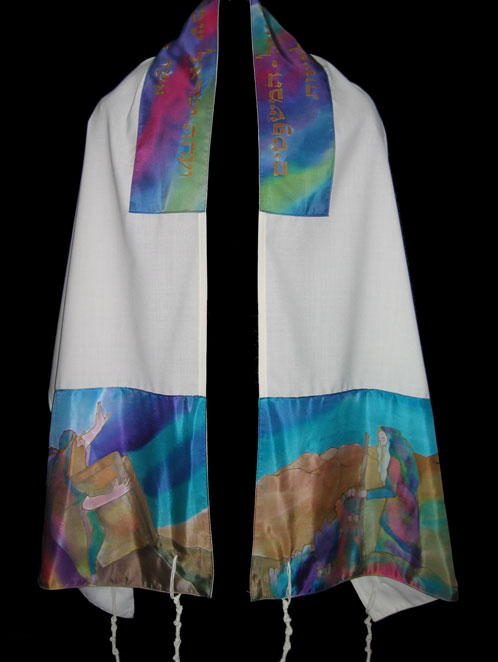
Vaetchanan Band I
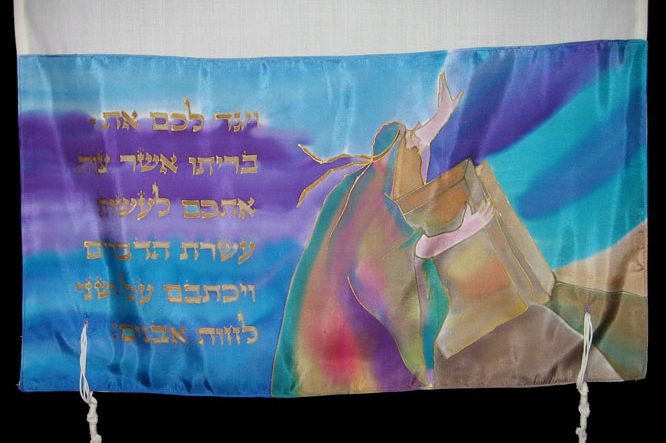
Tallit Band I
Moses receives the Tablets of the Ten Commandments.
Translation of Hebrew (Deuteronomy 4, 13):
“He announced to you His covenant, instructing you to keep the Ten Commandments and He wrote them on two stone Tablets.”behind the alter of offering.
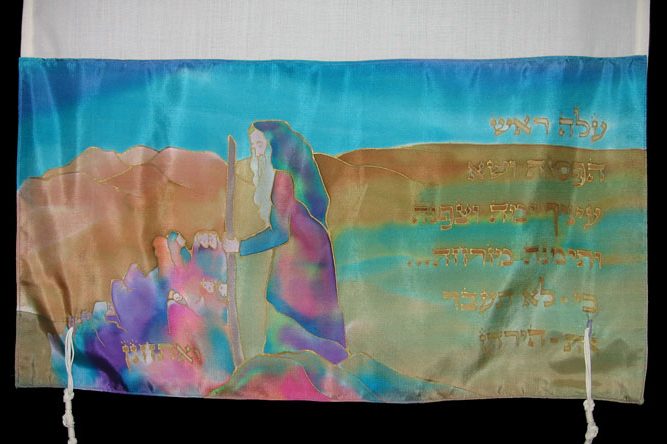
Tallit Band II
Moses yearns for the land he will not set foot in.
Weekly Portion
Parasha Eikev
August 1, 2026
Sample of free illustrations for download
Eikev
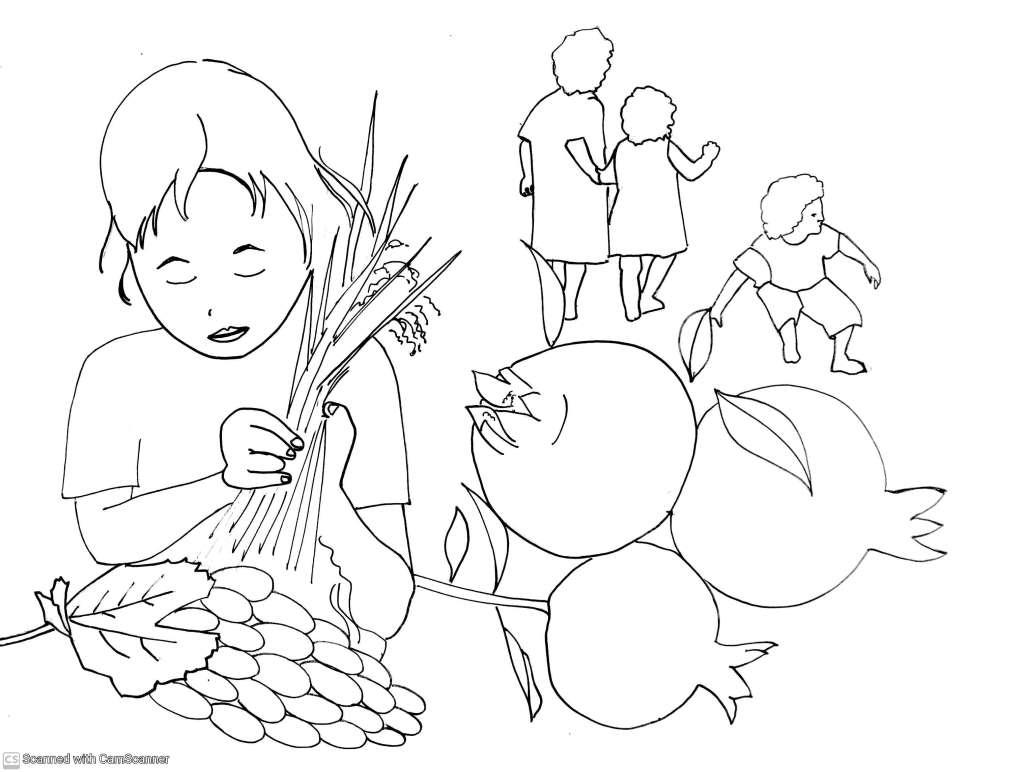
A child is collecting grain, amidst the fruit of the land.
Deuteronomy 7:3:
“And He will love thee, and bless thee, and multiply thee; He will also bless the fruit of thy body and the fruit of thy land.”
Parashat Eikev “As a Result” פָּרָשַׁת עֵקֶב Deuteronomy 7:12-11:25, is the third Torah portion in Deuteronomy, the 5th and last Book of the Bible, and the 47th weekly Torah portion in the annual Jewish cycle of Torah reading which begins on Rosh Ha Shana, the Jewish New Year.

In Parashat Eikev Moses describes the rewards of following the Torah and retells how he received the tablets of the law. Deuteronomy 9:10 "And the LORD delivered unto me two tables of stone written with the finger of God."
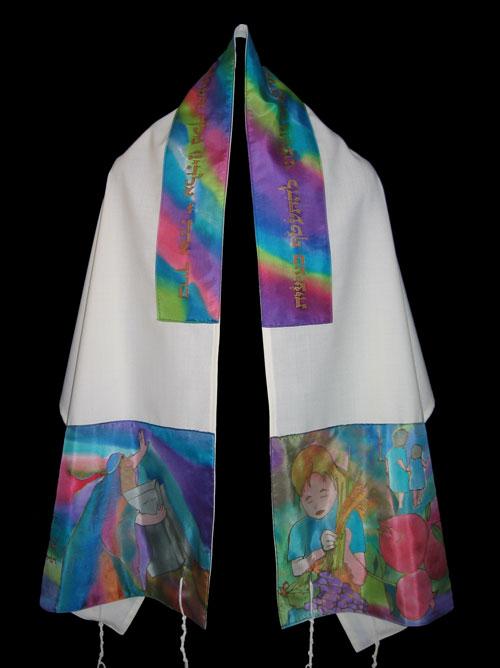
Eikev Tallit

Band I
Moses receives the tablets of the law.
Translation of Hebrew (Deuteronomy chapter 9, verse 10):
“And the LORD delivered unto me two tables of stone written with the finger of God.”
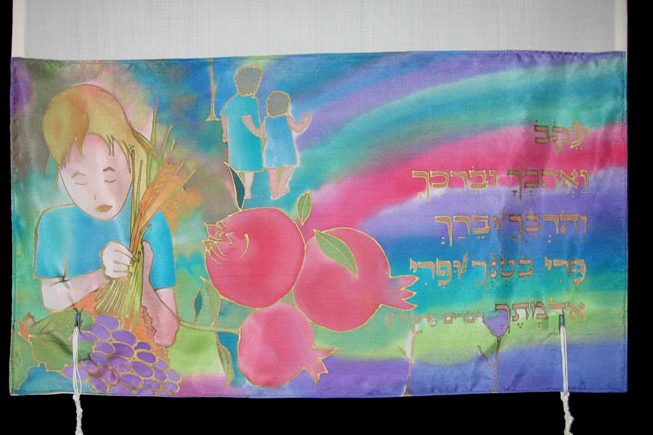
Band II
A child is collecting grain, amidst the fruit of the land.
Translation of Hebrew (Deuteronomy chapter 7, verse 13):
“And He will love thee, and bless thee, and multiply thee; He will also bless the fruit of thy body and the fruit of thy land.”
Weekly Portion
Parasha Re’eh
August 8, 2026
Sample of free illustrations for download
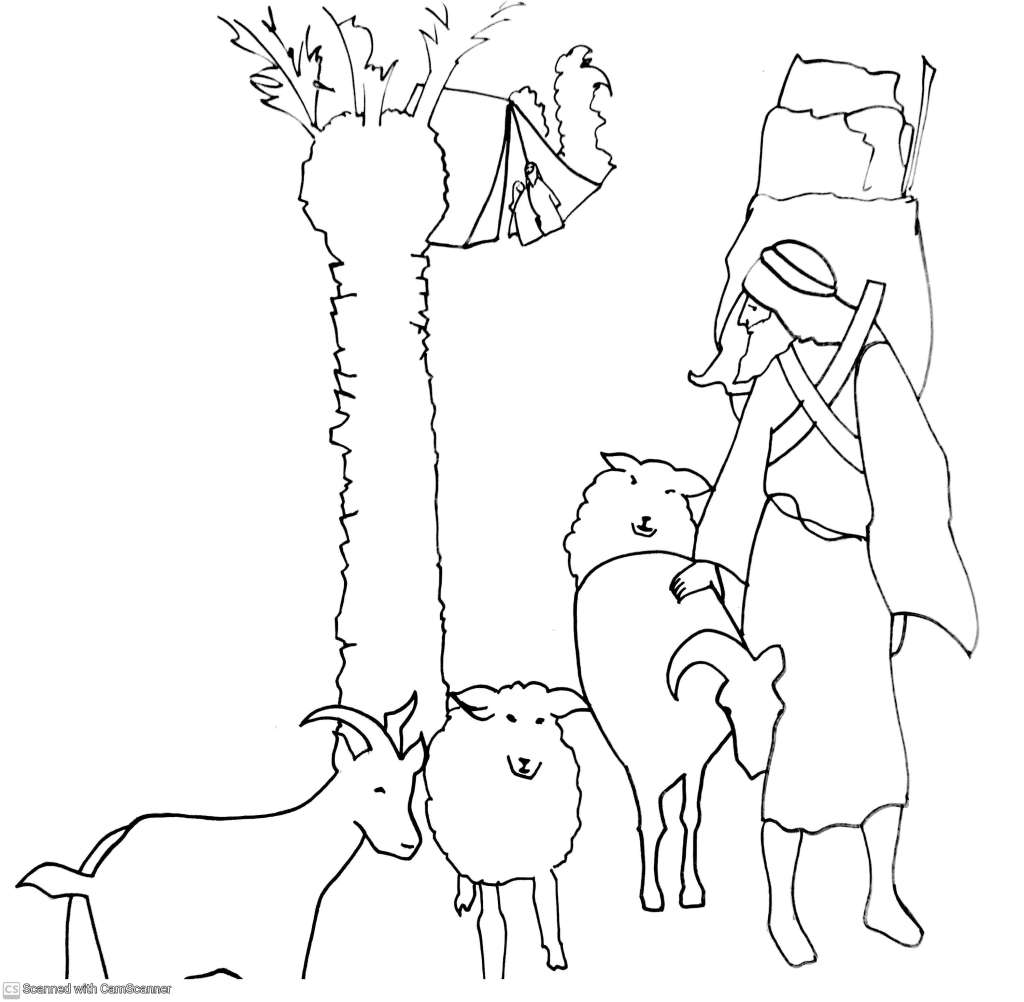
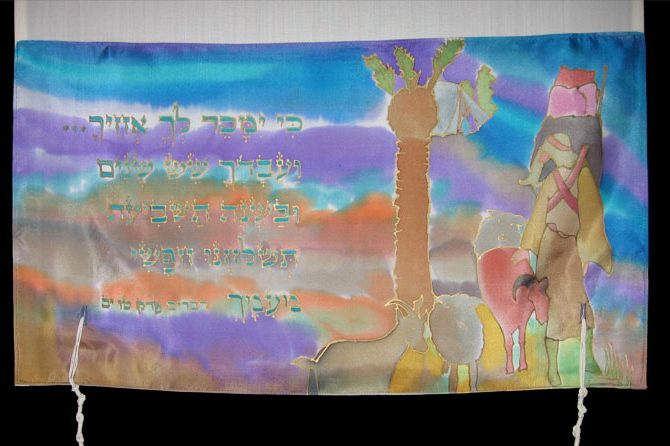
A slave is freed.
Deuteronomy 15:12):
“If thy brother, a Hebrew man, or a Hebrew woman, be sold unto thee, he shall serve thee six years; and in the seventh year thou shalt let him go free from thee.”
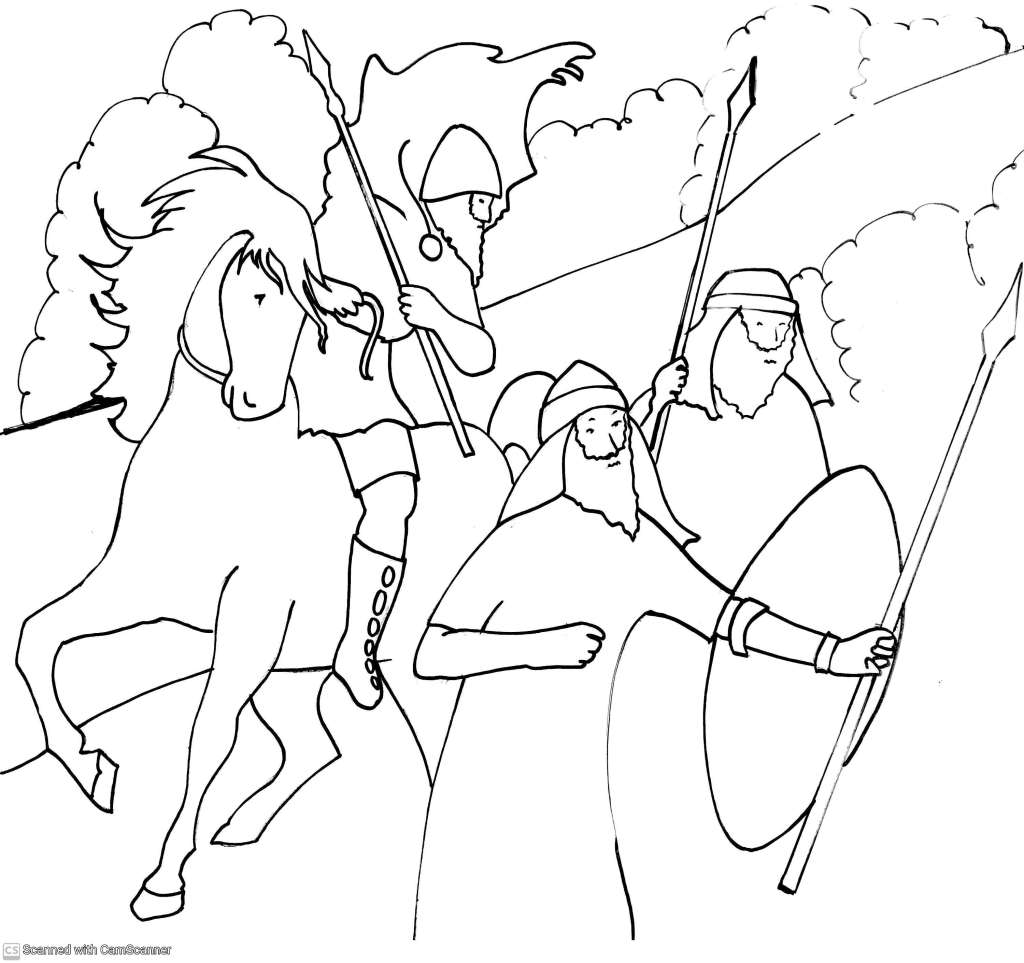
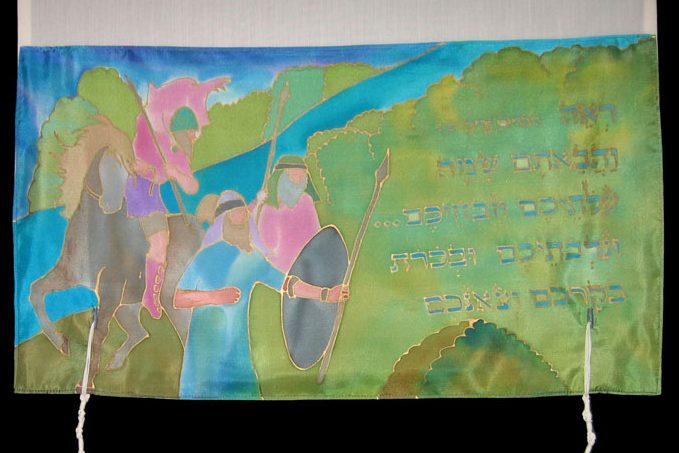
Joshua Ben Nun crossing the Jordan
Deuteronomy 12:6:
“For ye are to pass over the Jordan to go in to possess the land…”
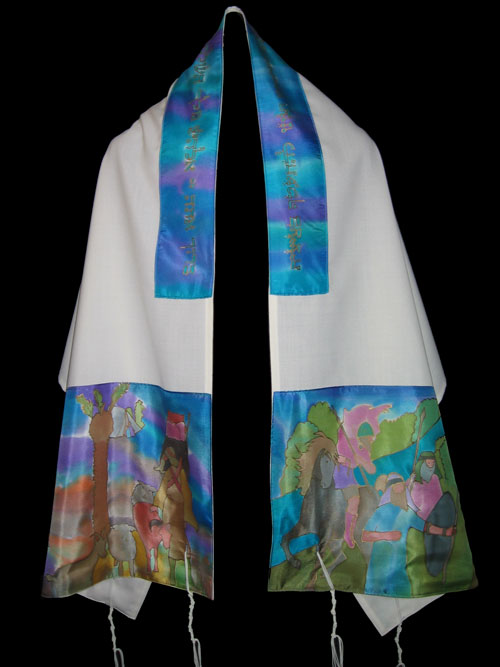
Parashat Re’eh “See” פָּרָשַׁת רְאֵה Deuteronomy 11:26-16:17, is the third Torah portion in Deuteronomy, the 5th and last Book of the Bible, and the 46th weekly Torah portion in the annual Jewish cycle of Torah reading which begins on Rosh Ha Shana, the Jewish New Year.
Parasha Reeh tells of Joshua Ben Nun crossing the Jordan River into the land which has been promised to the Israelites and discusses rules of conduct including the freeing of slaves after a six year period.
Re’eh Tallit
Band I
A slave is freed.
Translation of Hebrew (Deuteronomy chapter 15, verse 12):
“If thy brother, a Hebrew man, or a Hebrew woman, be sold unto thee, he shall serve thee six years; and in the seventh year thou shalt let him go free from thee.”
Band II
Joshua Ben Nun is crossing the Jordan, based on Deuteronomy chapter 12 verse 6, “For ye are to pass over the Jordan to go in to possess the land…”
Weekly Portion Parasha Shoftim
August 15, 2025
Sample of free illustrations for download
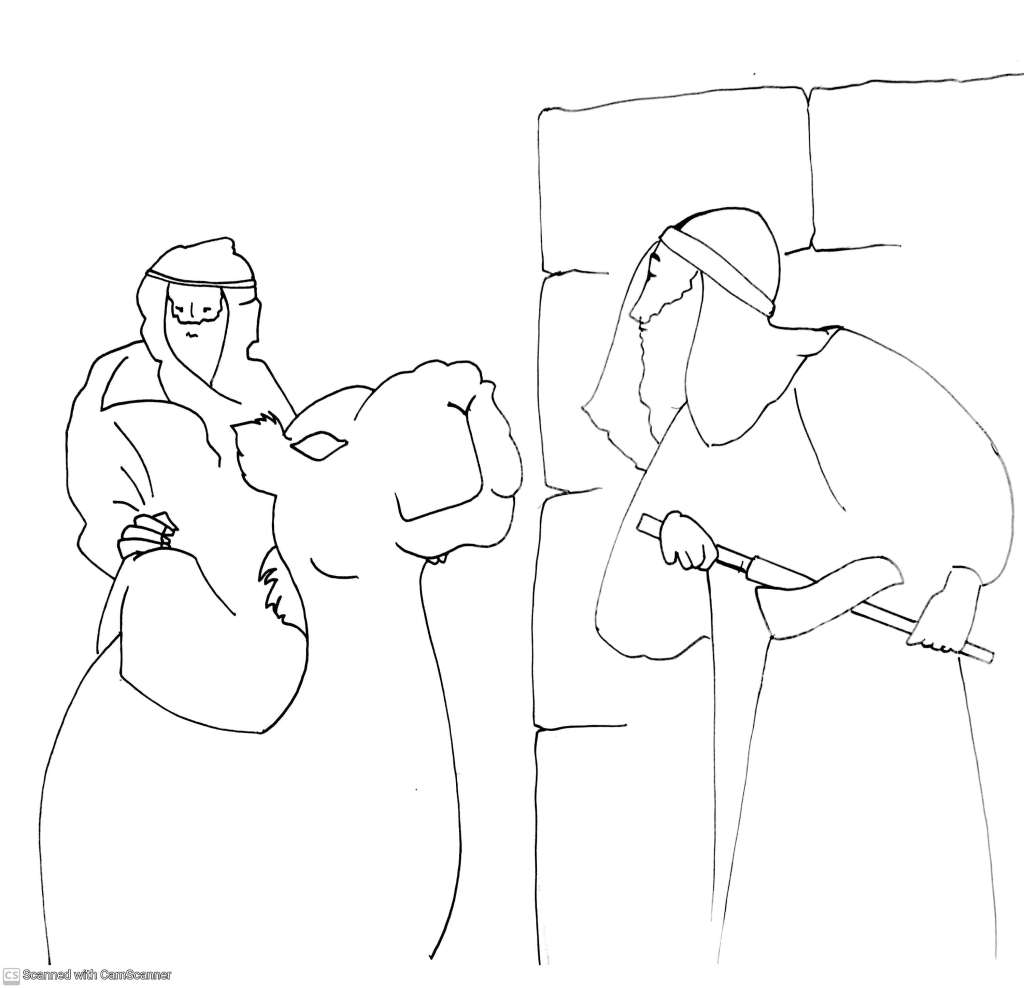
A man is lying in wait for his neighbor.
Deuteronomy 19:11-12
“But if any man hate his neighbor, and lie in wait for him, and rise up against him, and smite him mortally that he die; and he flee into one of these cities…”

A priest listening to a dispute.
Deuteronomy 17:9
“And thou shalt come unto the priests the Levites, and unto the judge that shall be in those days; and thou shalt inquire, and they shall declare unto thee the sentence of judgment.”
Parashat Shoftim “Judges” פָּרָשַׁת שׁוֹפְטִים Deuteronomy 16:18-21:9, is the fourth Torah portion in Deuteronomy, the 5th and last Book of the Bible, and the 48th weekly Torah portion in the annual Jewish cycle of Torah reading which begins on Rosh Ha Shana, the Jewish New Year.
Parasha Shoftim discusses the appointment of judges and cases involving cities of refuge.

Shoftim Tallit
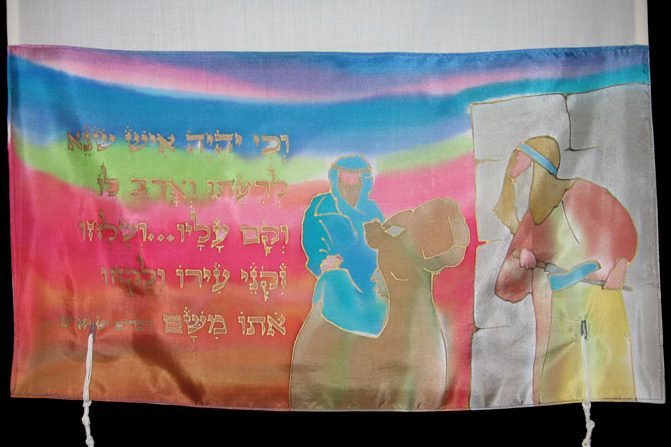
Shoftim Tallit Band I
A man is lying in wait for his neighbor.
Translation of Hebrew
Book chapter 19, verse 11 and 12:
"But if any man hate his neighbor, and lie in wait for him, and rise up against him, and smite him mortally that he die; and he flee into one of these cities; [12] then the elders of his city shall send and fetch him thence…"
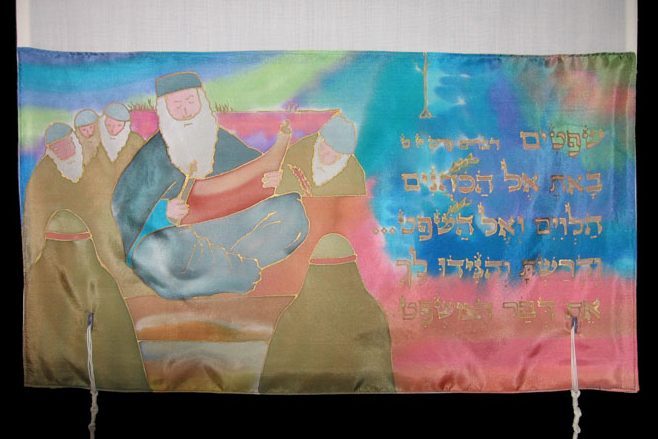
Shoftim Tallit Band II
A priest is listening to a dispute.
Translation of Hebrew (Book chapter 17, verse 9):
"And thou shalt come unto the priests the Levites, and unto the judge that shall be in those days; and though shalt inquire, and they shall declare unto thee the sentence of judgment."
Weekly Portion Parashat Ki Teitzei
August 22, 2026
Sample of free illustrations for download
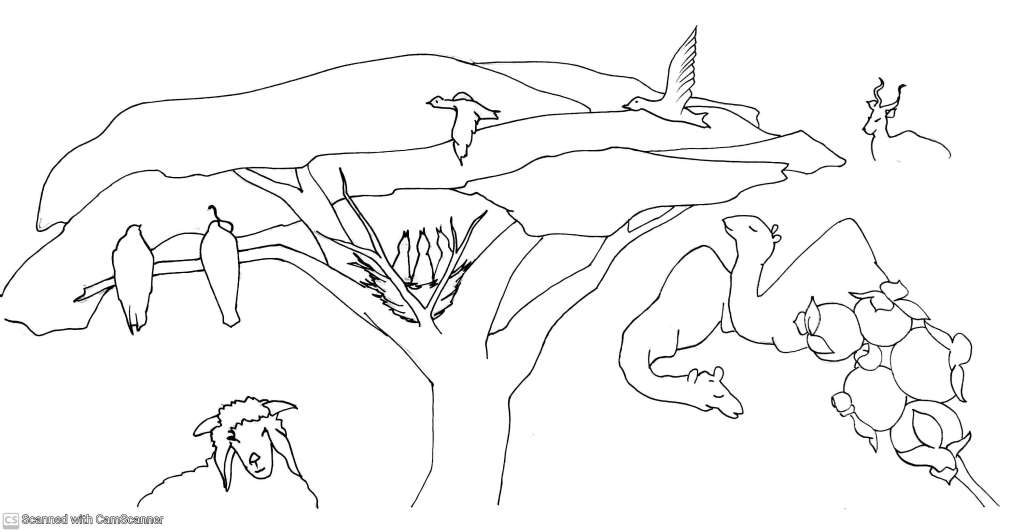
This scene is meant to express the peace and tranquility which can be enjoyed by the animal kingdom as well as by mankind if the laws of the Torah are practiced.

Oxen work the fields unmuzzled so they can eat if they are hungry. They are paired with their own kind in order to share their burden equally, as required by Jewish law.
Parashat Ki Teitzei “When You Go Out” פָּרָשַׁת כִּי־תֵצֵא Deuteronomy 21:10-25:19, is the fifth Torah portion in Deuteronomy, the 5th and last Book of the Bible, and the 48th weekly Torah portion in the annual Jewish cycle of Torah reading which begins on Rosh Ha Shana, the Jewish New Year.
Parashat Ki Teitzei deals with laws of war, inheritance, marriage and divorce, and proper conduct in regard to all of G-d’s creatures.
Ki Teitzei Tallit
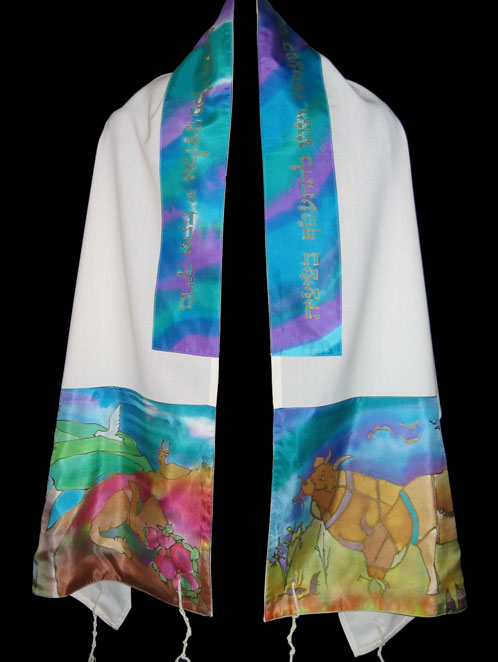

Tallit Band I
This scene expresses the peace and tranquility which can be enjoyed by the animal kingdom as well as by mankind if the laws of the Torah are practiced.
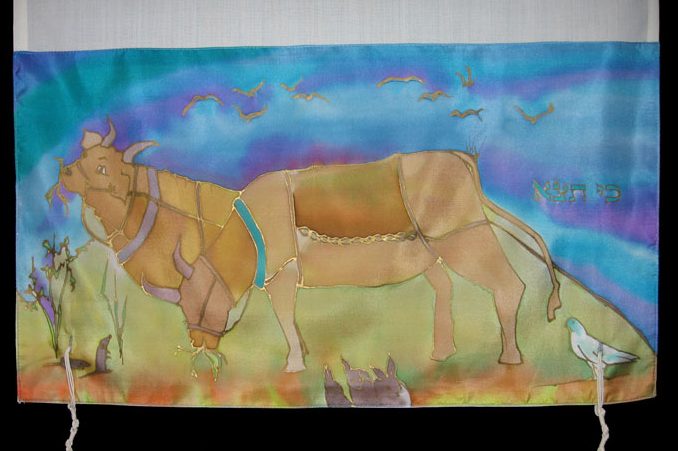
Tallit Band II
Oxen work the fields unmuzzled so they can eat if they are hungry. They are paired with their own kind in order to share their burden equally, as required by Jewish law.
Weekly Portion Parasha Ki Tavo
August 29, 2026
Sample of free illustrations for download
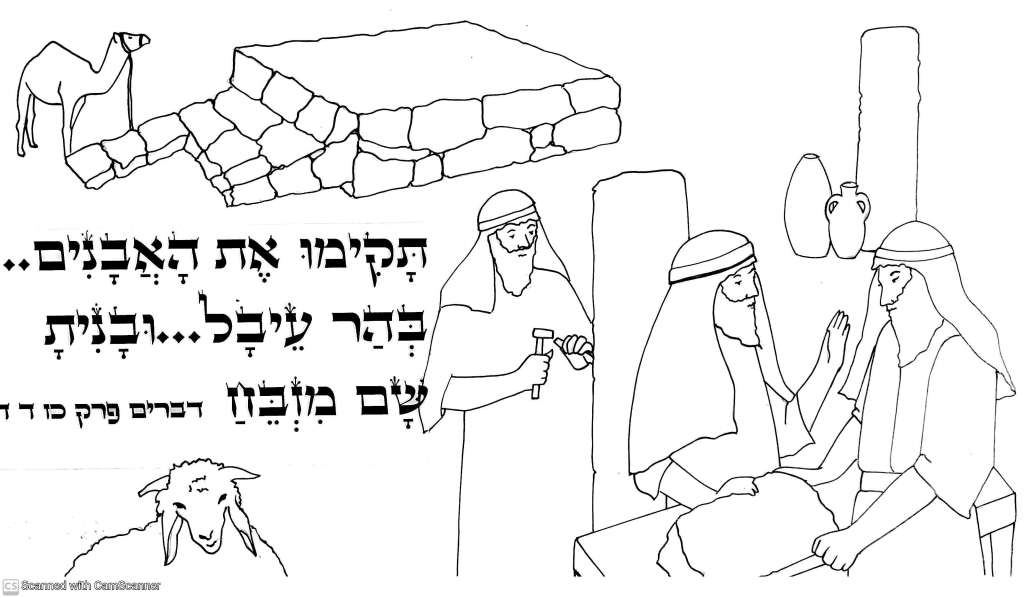
The Israelites are setting up the prescribed stones and altar at Mount Ebal.
Translation of Hebrew Deuteronomy 27:4-5:
“When you cross the Jordan, you shall set up the stones…on Mount Ebal…there you shall then build an altar”
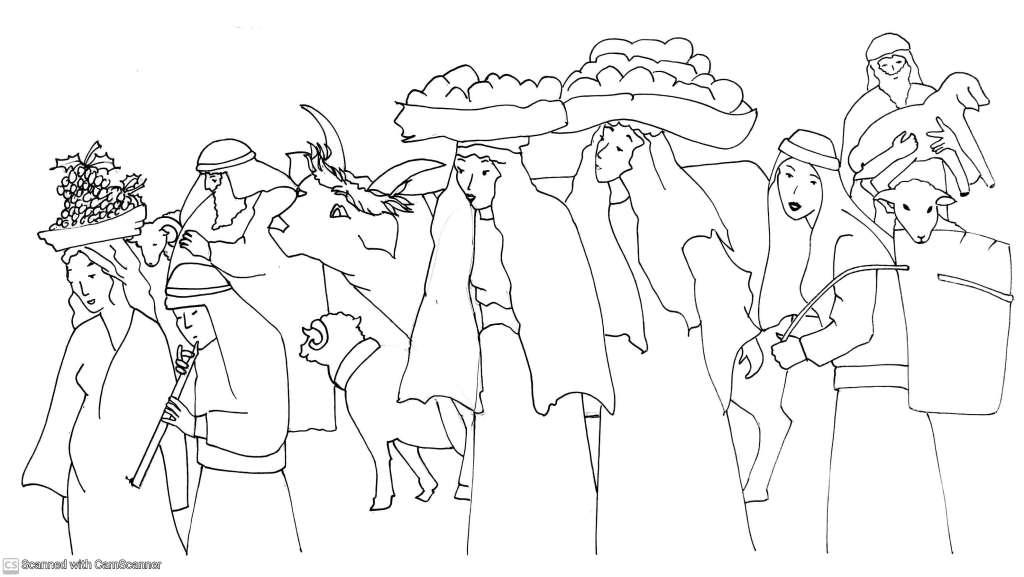
First fruits
Parashat Ki Tavo “When You Come” פָּרָשַׁת כִּי־תָבוֹא Deuteronomy 26:1-29:8, is the sixth Torah portion in Deuteronomy, the last Book of the Bible, and the 50th weekly Torah portion in the annual Jewish cycle of Torah reading which begins on Rosh Ha Shana, the Jewish New Year.
Parashat Ki Tavo deals with how the Israelites are to enter the land with Joshua as their leader. They are to bring the first fruits. At Mount Ebal, they are to erect stones on which the law is to be written, and build an altar.
Ki Tavo Tallit


Tallit Band I
The Israelites are setting up the prescribed stones and alter at Mount Ebal.
Translation of Hebrew (Deuteronomy chapter 27, verse 4-5):
“When you cross the Jordan, you shall set up the stones…on Mount Ebal…there you shall then build an altar”
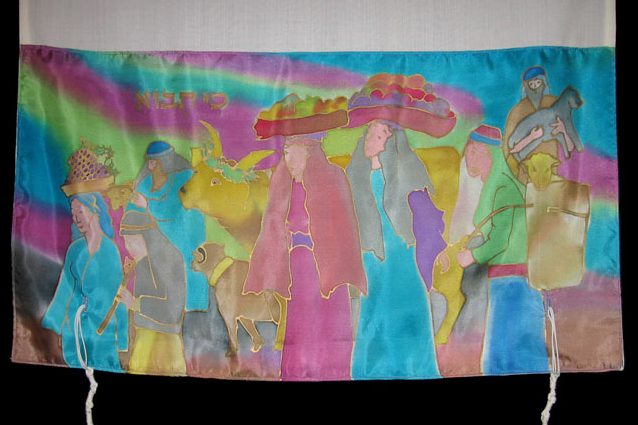
Tallit Band II
First fruits
Weekly Portion Parasha Nitzavim, Parasha Vayeilech
September 5, 2026
Sample of free illustrations for download
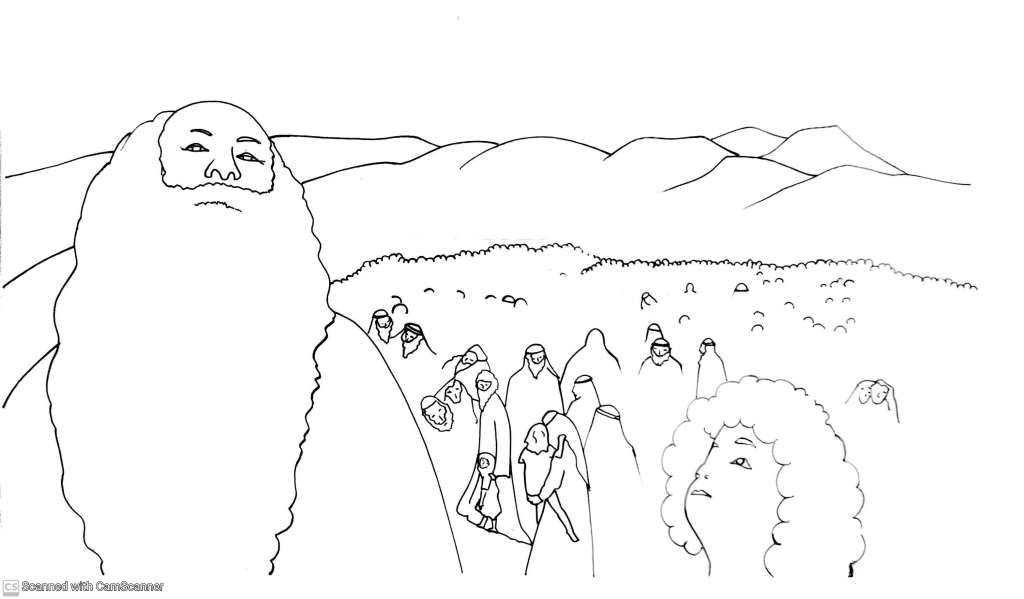
Moses on Mount Nebo speaking to the Israelites.
Parasha Nitzavim and Parasha Vayeilech are read together on regular years and read separately on leap year.
Both have been designed here as one tallit.
Parasha Nitzavim discusses G-d’s covenant.
Parasha Vayeilech deals with new leadership and the final preparations for entering the promised land.
Parashat Nitzavim “Standing” פָּרָשַׁת נִצָּבִים Deuteronomy 29:9-30:20, is the seventh Torah portion in Deuteronomy, the last Book of the Bible, and the 51st weekly Torah portion in the annual Jewish cycle of Torah reading which begins on Rosh Ha Shana, the Jewish New Year.
In Parasha Nitzavim Moses addresses the Israelites, emphasizes the importance of following G-d’s covenant.
Nitzavim-Vayeilech Tallit
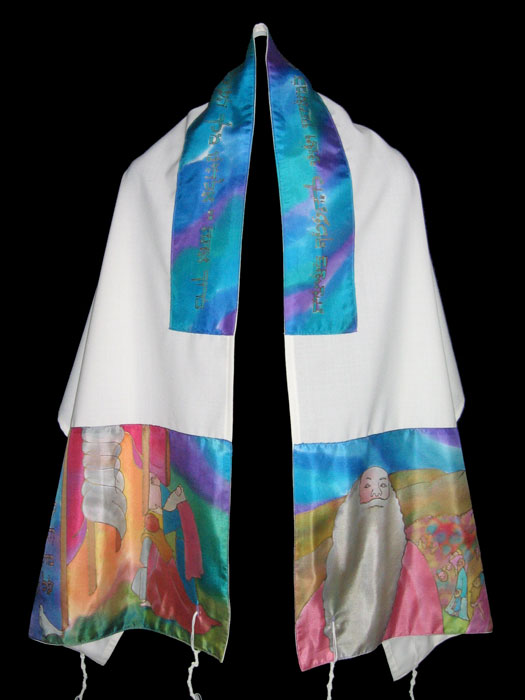

Band II Parasha Nitzavim
Moses on Mount Nevo speaking to the Israelites
Weekly Portion Parasha Vayeilech
September 5, 2026
Sample of free illustrations for download
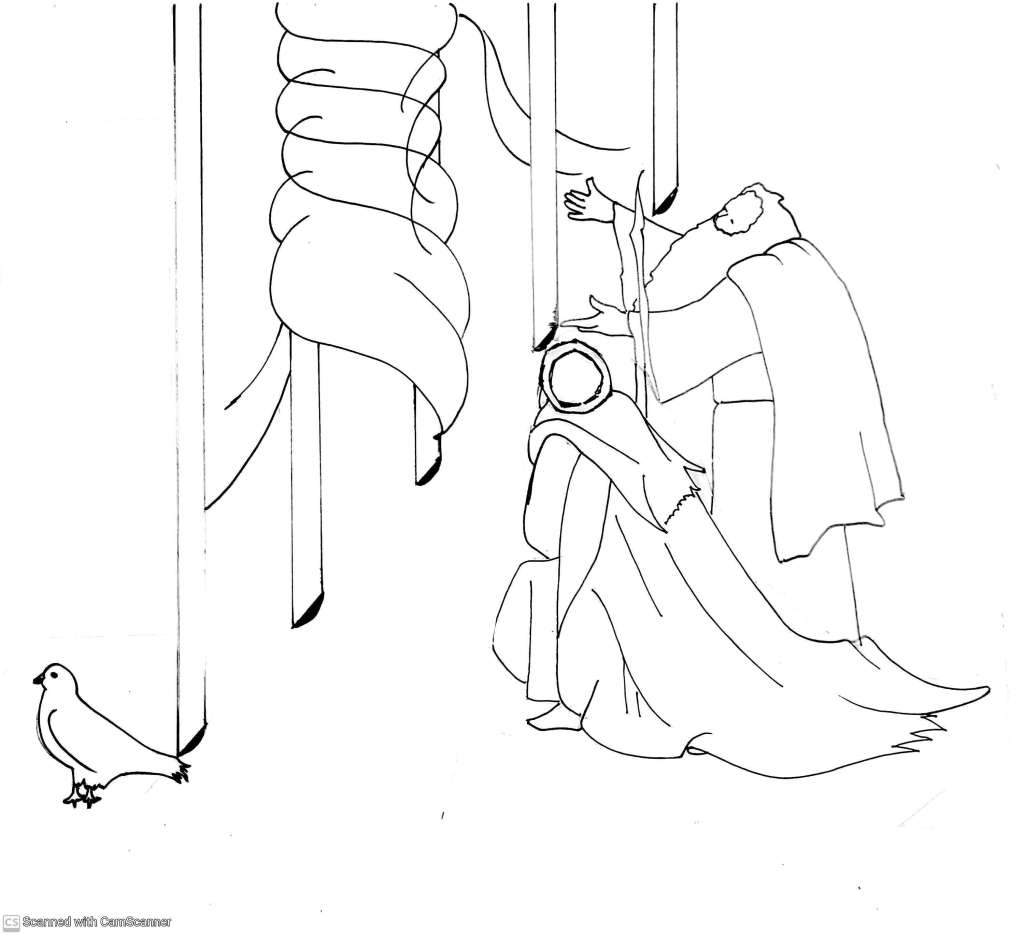
Joshua Ben Nun and Moses present themselves at the Tent of Meeting where G-d appears in a pillar of smoke.
Translation of Hebrew Deuteronomy 31:14-15:
“And the Lord said unto Moses: ‘…call Joshua, and present yourselves in the tent of meeting…’ And Moses and Joshua went, and presented themselves in the tent of meeting. 15 …and the pillar of cloud stood over the door of the Tent…”
Parasha Nitzavim and Parasha Vayeilech are read together on regular years and read separately on leap year.
Both have been designed here as one tallit.
Parasha Nitzavim discusses G-d’s covenant.
Parasha Vayeilech deals with new leadership and the final preparations for entering the promised land.
Parashat Vayeilech “He Went” פָּרָשַׁת וַיֵּלֶךְ Deuteronomy 31:1-31:30, is the eighth Torah portion in Deuteronomy, the last Book of the Bible, and the 52nd weekly Torah portion in the annual Jewish cycle of Torah reading which begins on Rosh Ha Shana, the Jewish New Year.
Parasha Vayeilech deals with new leadership and the final preparations for entering the promised Land.
Nitzavim-Vayeilech Tallit

Band I Parasha Vayeilech
Joshua Ben Nun and Moses present themselves at the Tent of Meeting where God has appeared in a pillar of smoke.
Weekly Portion Parasha Ha’azinu
September19, 2026
Sample of free illustrations for download
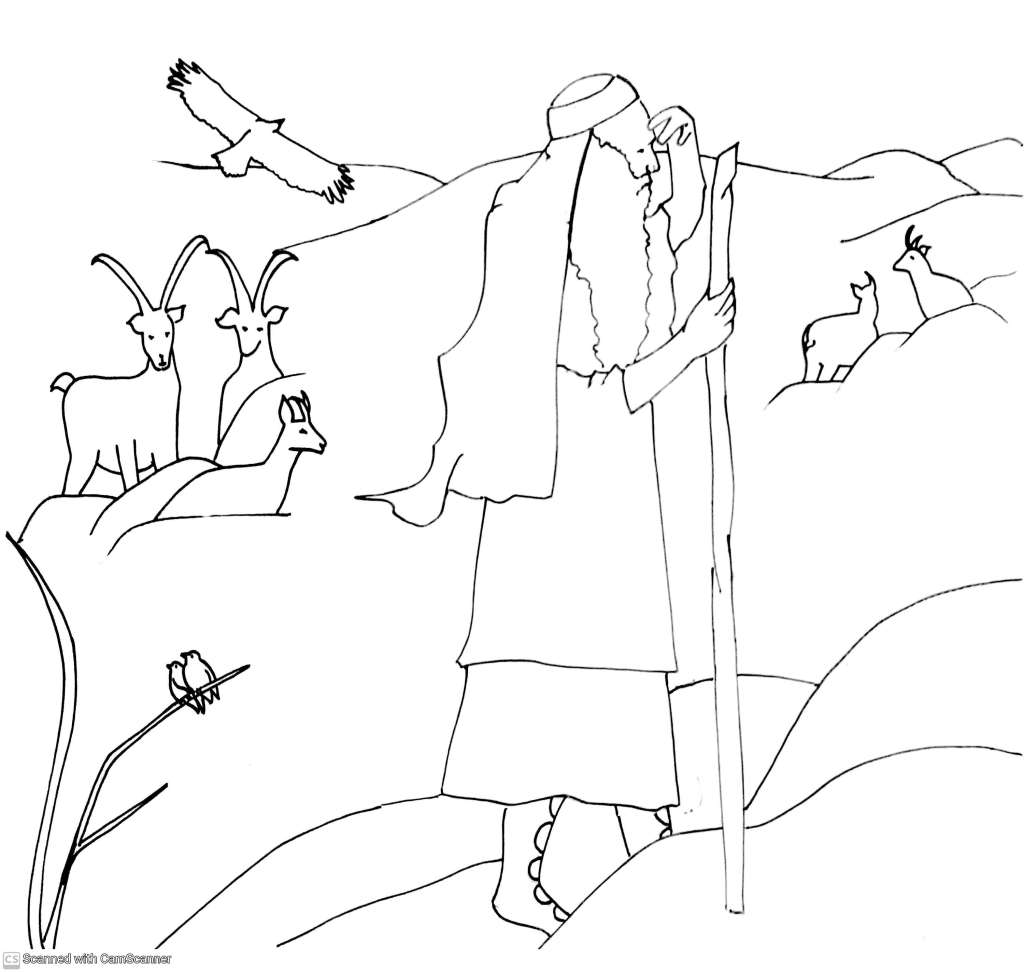
Moses ascends Mount Nebo.
Deuteronomy 32:48:
“And the Lord spoke unto Moses…saying…’Get thee up into this mountain of Abarim, unto mount Nebo…’ “
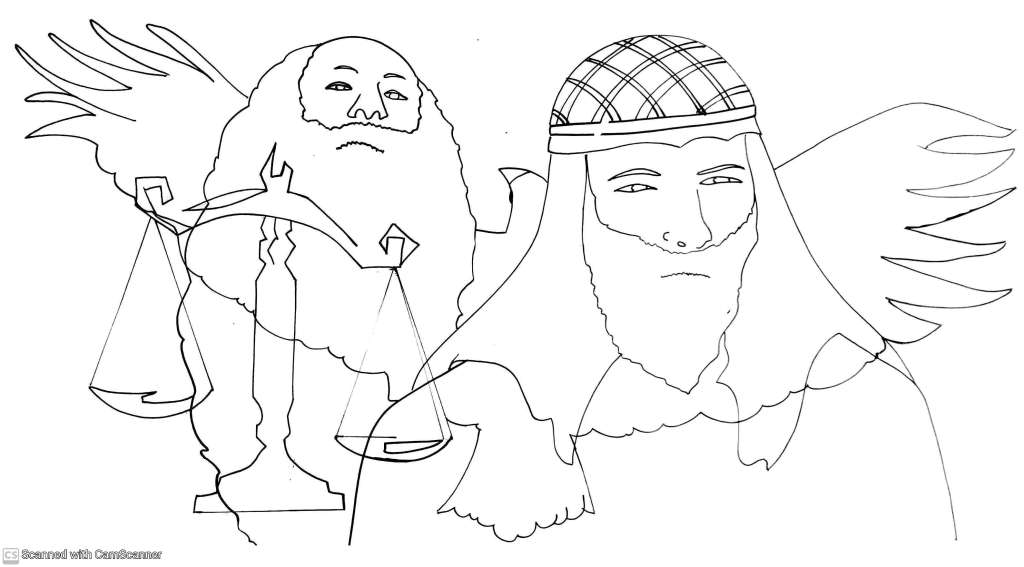
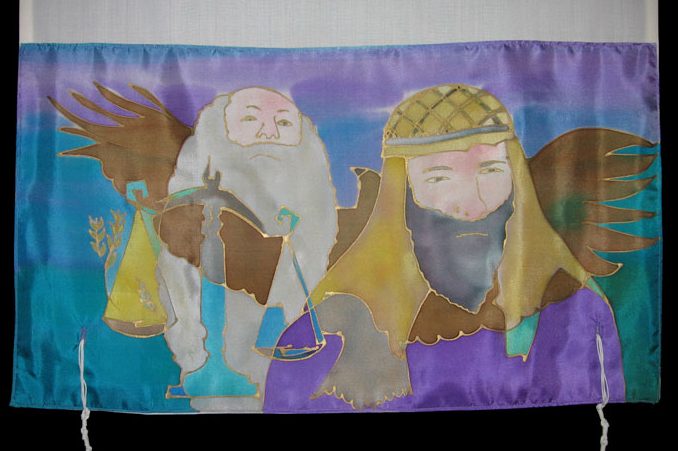
A montage of themes from Moses’ farewell poem: the eagle who treats his young with love and affection, like G-d, who has everlasting patience for his people; the scales of justice; Moses, the elderly lawgiver; and Joshua Ben Nun who is about to take his place.
Parashat Ha’azinu “ Listen” פָּרָשַׁת הַאֲזִינוּ Deuteronomy 32:1-32:52, is the ninth Torah portion in Deuteronomy, the last Book of the Bible, and the 53rd weekly Torah portion in the annual Jewish cycle of Torah reading which begins on Rosh Ha Shana, the Jewish New Year.
In Parashat Ha’azinu Moses calls upon the nations to rejoice in his farewell poem, and ascends Mount Nebo from where he can see the Promised Land.
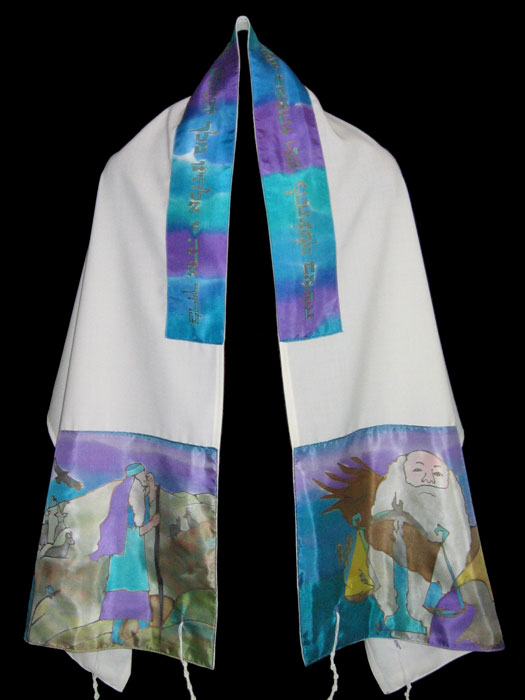
Ha’azinu Tallit
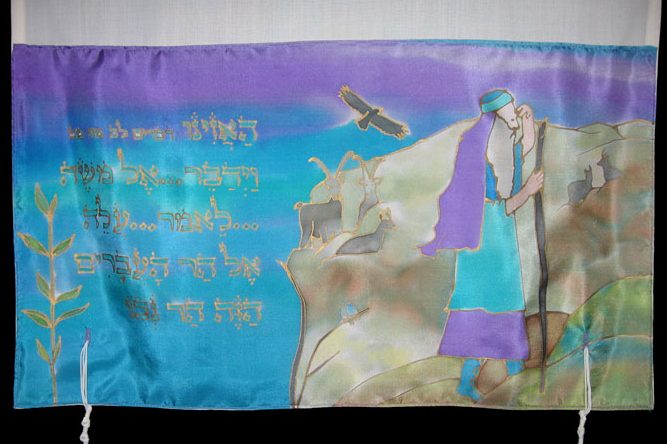
Tallit Band I
Moses ascends Mount Nebo.
Translation of Hebrew (Deuteronomy 32, 48):
“And the Lord spoke unto Moses…saying…’Get thee up into this mountain of Abarim, unto mount Nebo…’ “
Tallit Band II
A montage of themes from Moses’ farewell poem: the eagle who treats his young with love and affection, a metaphor for G-d, who has everlasting patience for his people; the scales of justice; Moses, the elderly lawgiver; and Joshua Ben Nun who is about to take his place.
Weekly Portion Parasha Vezot Haberahah
October 3, 2026
Sample of free illustrations for download
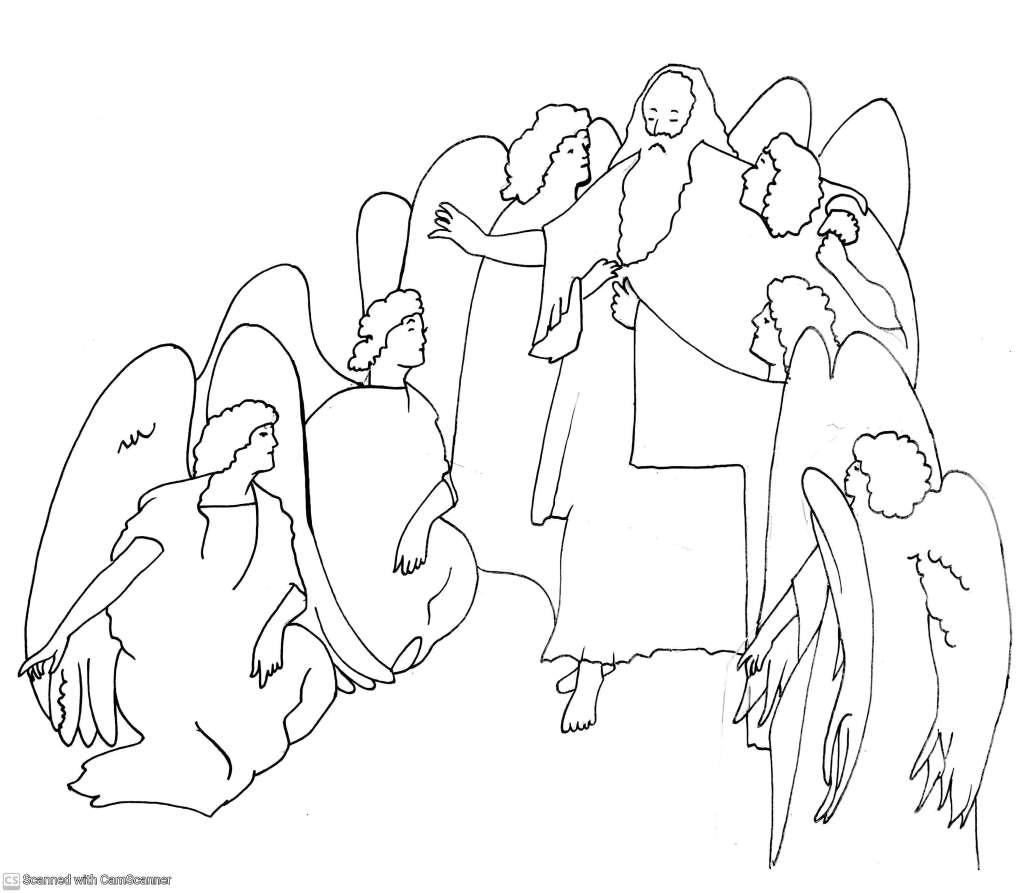
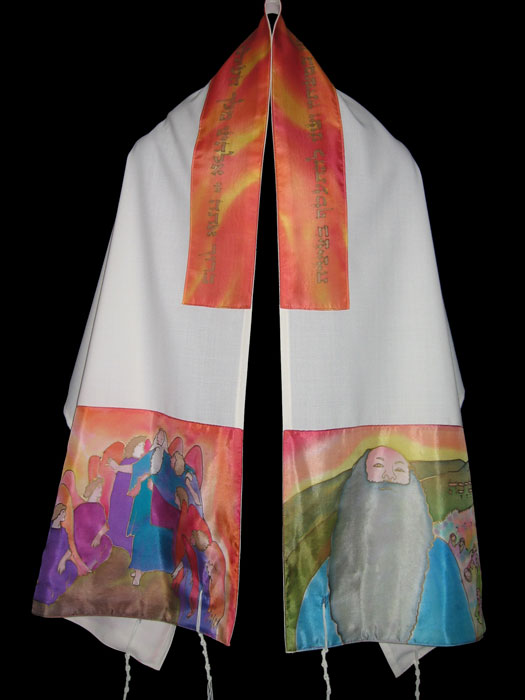
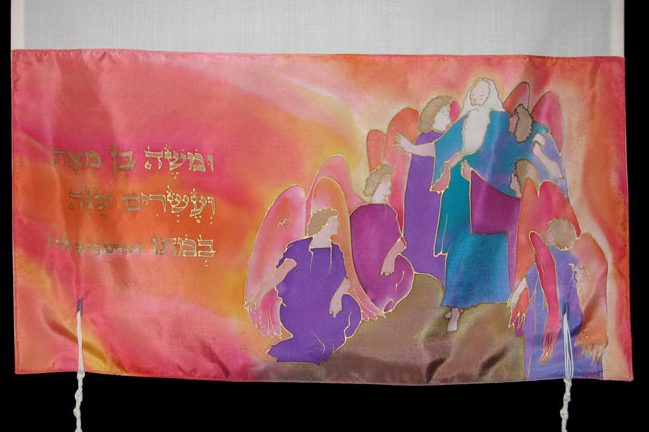
Moses appears to the Israelites for the last time on Mount Nebo.
Moses dies.
Deuteronomy 34:7
“And Moses was a hundred and twenty years old when he died…”
Parasha Vezot Haberahah “ And this is the blessing”   פָּרָשַׁת וְזֹאת הַבְּרָכָה Deuteronomy 33:1-34:12, is the last Torah portion in Deuteronomy, the last of the five Books of the Bible, and the 54th and last weekly Torah portion in the annual Jewish cycle of Torah reading which begins on Rosh Ha Shana, the Jewish New Year.

In Parasha Vezot Haberahah Moses speaks to the Israelites, blesses the tribes, and dies at the age of one hundred and twenty.
Vezot Haberahah Tallit
Band II
Moses dies.
Translation of Hebrew (Deuteronomy chapter 34, verse 7):
“And Moses was a hundred and twenty years old when he died…”
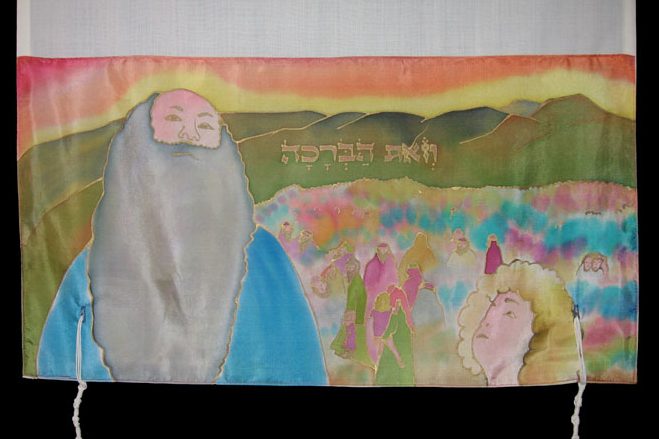
Tallit Band I
Moses appears to the Israelites for the last time.
 Israelcraft