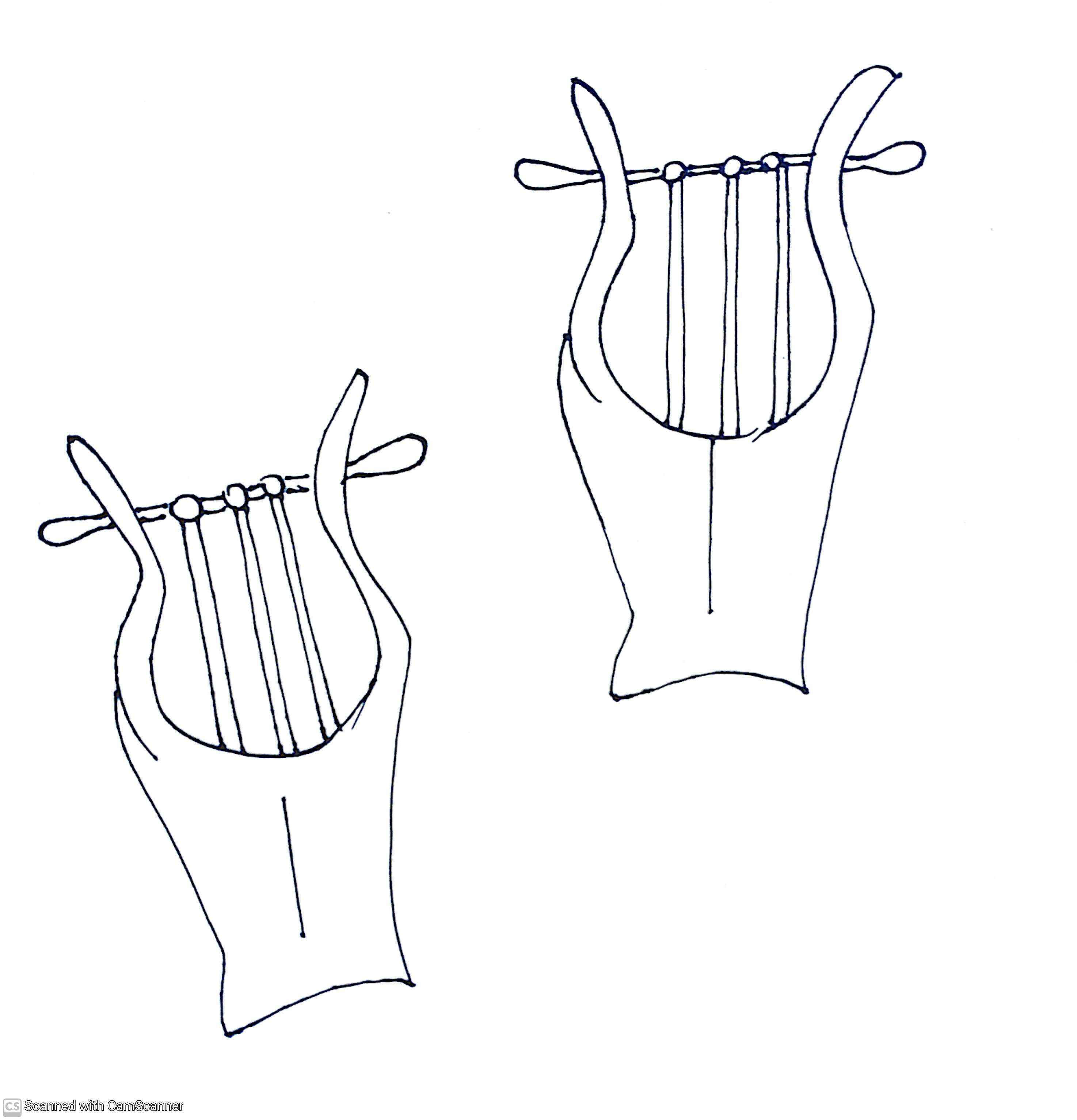
Chapter 6 Background Dr. Cohen
Dr. Cohen was a bit of an oddball, but an oddball with an overflowing heart and strong convictions. If you aren’t aware, the Cohanim (plural for Cohen in transliterated Hebrew) were priests and judges of the Israelites from about 3,500 to 2000 years ago.
From Chabad.org
All Kohanim can (theoretically) trace their lineage, through a direct line of males, to Aaron, brother of Moses and the first High Priest. Since Aaron lived more than 3,000 years ago, we can estimate that most Kohanim have approximately 100 links in the chain between them and Aaron.
For roughly 1,200 years of Jewish history, the Kohanim had a major role to play in the centralized worship that took place (first in the Tabernacle and then) in the Holy Temples in Jerusalem. In the Temple, the Kohanim offered the sacrifices and filled many other sacred roles.
In Biblical times, the Kohanim were often also Torah teachers and bearers of tradition.
Still today, the Kohanim perform a special ritual known as Birkat Kohanim (“Priestly Blessing”). Standing in front of the congregation, with outstretched arms covered by their tallit, the priests chant the three-part blessing mandated by G‑d in Numbers 6:22.
Dr. Cohen’s grandfather had been a Rebbe (religious leader) and scholar in Kalvaria, a town in southwestern Lithuania, directly on the border with Poland which was a significant Jewish settlement and trade hub on the road between St. Petersburg and Warsaw.|
As an aside, Jews worldwide were religious until a few generations ago. With the industrial revolution in the last half of the 1800’s, and persecution and resettlement to the West in many cases, their religious and family ties began to weaken. Many put their religion aside, or on a back burner, in order to assimilate.
Dr. Cohen’s father was among these and kept tradition in the family down to a minimum. Dr. Cohen’s education was a secular one. Eventually, he found it insufficient. He loved America, but felt he had been stripped of his Jewish identity, and resolved to change that.
Because he had strayed so far from Jewish tradition, though not of his own choosing, it was slow going. He applied himself and learnt that it was all about following the Ten Commandments; not doing to his fellow man what was hateful to himself; performing good deeds in this world, and studying.
He became a doctor, married and had children who were now grown and married, with their own children on the way.
He volunteered at the Animal Shelter to help four footed travelers on life’s challenging journey; was active in the community, and on committees; one to encourage the planting of trees in neglected areas of the city, and another recommending locations for additional parks and upgrading existing ones.
And he worked at a kitty clinic just past Catnip Arcade as a kitty psychiatrist.
Some called him a cat whisperer.
Chapter 7 Johannes Volunteers at the The Animal Shelter
Johannes waited just a beat, and then walked through the front door of the animal shelter. Perhaps by volunteering, he could get close enough to the backpack to look inside.
He walked up to the young woman at the front desk and asked if he might volunteer. He was given a questionnaire which he filled out. He was asked for identification, to which he said he didn’t have any papers with him; that he just happened to be passing and would like to help. He was given a thumbs up. Johannes wasn’t familiar with the thumbs up gesture, but he understood. He was then asked if he would prefer to cuddle one of their charges, or take some of the dogs out for a walk. Johannes wasn’t familiar with the concept of dog walking. It wasn’t done in Delft or Utrecht in the 1600’s; or in any case, not to his knowledge. Anyway, he had no intention of leaving Stubbytail, so he asked if he could cuddle the cat in the cage on the intake table, and got a second thumbs up. The cuddling area by the reception desk was pointed out to him and he was left to his own devices.
He walked over to the intake table, stood with his back to the desk, blocking any view of the backpack, and opened it. Sure enough, his sketchbook was inside.
Now he didn’t know what to do. Should he go back to Utrecht with his sketchbook? It was, after all, what he had come for.
So what was his hesitation?
Like Stonewall, the more time he spent around Stubbytail, the greater his affection for her grew. He didn’t want to leave just yet.
Johannes had a special affinity with cats; not just with Stubbytail. His love affair with the species began when he picked a kitten up for the first time as a young child. But since encountering Stubbytail, things had escalated exponentially.
Time travel, Johannes remembered having read, was a known intensifier of relationships.
Johannes began to wonder where this was going; but decided not to worry about it.
He put the sketchbook back in the backpack, opened the cage, reached in, picked up a very docile Stubbytail, and sat down with her in the cuddling area.
Now Johannes had time to think.
He was already running out of folio sheets. He had drawn the cat that had been spewed out of the irrigation tunnel and landed on Stubbytail in Stubbytail’s dream; and he had drawn Stubbytail asleep in the Public Garden. If he didn’t reclaim his sketchbook, he would have to start using Stubbytail’s notebook. It would be better than nothing, but the pages in it didn’t look to him like they were made for drawing.
Johannes knew how important paper was. His apprenticeship had begun with a week long workshop on paper. They had even made it using mashed shredded worn out cotton material which they spread on screens and dried in the courtyard.
And what about his newly acquired drawing tools? Johannes never ceased to be amazed at man’s inventiveness. But he couldn’t bring them back to Utrecht with him, or use them there, if he wanted to keep his time travel ability a secret. And they didn’t belong there.
But his sketchbook did.
Johannes was aware that nothing should be altered during time travel as it could have future ramifications. This was another reason at the back of his mind, that he hadn’t taken his sketchbook back immediately when he discovered it in the backpack.
Stubbytail had already broken this rule by taking his sketchbook in the first place, and Johannes still wondered why she had; she clearly wasn’t a thief.
Under these circumstances, retrieving it could be seen as a correction; and corrections were made all the time.
Johannes followed this line of thinking.
But he hadn’t followed Stubbytail straight here from Utrecht; he had taken a detour into the future, been in a dream, drawn a cat with a tail there; been corrected out of the dream and into a Public Garden where he had drawn Stubbytail a second time. It couldn’t have taken more than an hour. But an hour is time, so there might be consequences if he were to repossess his sketchbook at this point.
An idea was beginning to take form. Even if Stubbytail’s notebook paper wasn’t top quality, it was a product of this era, as was the pointed shaft. He could fill Stubbytail’s notebook with sketches drawn with the pointed shaft; then take his own sketchbook back, and replace it with Stubbytail’s sketch-filled notebook. This made sense to him; a sort of cosmic tit for that.
Or he could earn some money, buy a present day sketchbook of top quality that was closer to, or the same dimensions as his own sketchbook, fill it with sketches, and then exchange it for his own when the opportunity arose. This possibility appealed to him as it would give him an opportunity to discover if other advances in the quality of drawing materials and tools had been made since his time.
Either course would require sticking around.
So it was decided.
He was sticking around.


Leave a Reply