The Tying of the Threads of a Prayer Shawl, Legal Issues Regarding Prayer Shawls and Threads, Tallit Information
The Tying of the Threads
of a Prayer Shawl
(Note: The tying method below is not the one used for prayer shawls with a genuine blue thread included in the corner threads. They are tied differently. If anyone has any questions or difficulties with the unraveling or untying of these corner threads, or wants to know about the method of tying, they can contact me, Marilyn Jackler, through the Israelcraft website. Anyone who has bought a prayer shawl with the genuine blue threads from Israelcraft also receives information that includes the address of the manufacturer, who can give the best information on them.)
The white threads come in sets of 12 strings about 2 feet long, and 4 strings about 3 feet long. These will suffice for the four corners of one prayer shawl. They must be divided into four sets, one for each corner, each with three shorter strings and one longer string.
The longer string is the one you wrap around the others.
Even up the strings at one end and put them through the buttonhole in the center of the corner of the prayer shawl.
Double the four strands in half. You should be left with seven even strings and one long one.
1. Tie a double knot using all the strings.
2. Wrap the long strand around the other seven strands seven times.
3. Tie a double knot using all the strings.
4. Wrap the long strand around the other seven strands eight times.
5. Tie another double knot using all the strings.
6. Wrap the long strand around the other seven strands eleven times.
7. Tie another double knot using all the strings.
8. Wrap the long strand around the other seven strands thirteen times.
9. Make another double knot using all the strings.There are Rabbinic reasons for every knot and twist.
The first two sets of windings (seven plus eight) equal fifteen. The third set of windings is eleven. Together they come to twenty-six.
Every Hebrew letter has a numerical value (aleph is one, bet is two, etc.). The number twenty-six is equal to the Hebrew letters YOD HAY VAV HAY. These letters form the Name of God.
Now the final thirteen wrappings (the last set) equals the Hebrew letters Alef Chet Dalet.
These make the Hebrew word “Echad,” “One”. So, whenever you look at the threads, you are reminded of “Hear, oh Israel, the Lord is one”.
Also, the number value for the Hebrew letters of the word for fringes is : 400 10 90 10 90. Together, 600. In each fringe, there are eight threads plus five double knots.
Thus, whenever you look at the corner threads, you see 600 plus eight, plus five, which equals 613, which is the number of commandments. So every time you look at the corner threads, you see a reminder of all of the commandments.
Legal Issues Regarding Prayer Shawls and Threads
Defining the term, “threads”: Menachot 41b, 42a
Whether the commandment is person-based, or garment-based: Shabbat 131a-b;
Menachot 41a, 42b
Whether having threads on all of the four corners constitutes four separate
commandments, or they are all necessary to fulfill a single commandment: Menachot
37b-38a
Not travelling 4 cubits without threads: Shabbat 118b
Doing the commandment with beautiful threads: Shabbat 133b
Whether Kohanim are obligated: Menachot 43a
Whether women are obligated: Succah 11a [See Rashi “LePirzuma”]; Menachot 43a
Whether blind people are obligated: Menachot 43a
When minors become obligated: Succah 42a
Whether slaves wear them: Menachot 43a
Putting them on a corpse before burial: Menachot 41a
Requiring that one separate the threads: Menachot 42a
The threads are items of a commandment, not items of intrisic holiness, and so
may be disposed of after their use is finished: Megillah 26b
The Garment
The minimum size of such a garment: Menachot 40b-41a
Validity of threads for an undersized garment: Menachot 40b-41a
A borrowed garment: Menachot 44a
A garment which is entirely dyed blue: Menachot 38b, 41b
A garment with 5 corners: Menachot 43b
A garment with 3 corners: Menachot 43b
Making wool threads for a garment of flax: Menachot 39a, 39b-40b
Making flax threads for a garment of wool: Menachot 39b
A garment of various types of silk: Menachot 39b
A nighttime garment: Menachot 40b, 41a, 46a
A garment which is stored in a box, where it is [not] intended for eventual
wearing: Menachot 41a
A garment which has a corner, or some other part, made of leather: Menachot 40b
A garment which is currently folded in half, and not sewn up, partly sewn, or fully
sewn: Menachot 41a
If the garment is torn, more or less than 3 finger-breadths from the corner:
Menachot 41a
Attaching a section of another garment to this one: Menachot 41a
The Threads
Threading the dyed threads on the intermediate days of holidays, in an
altered manner: Moed Katan 19a [2x]
Minimum/Maximum length of the threads: Menachot 41b-42a
Using stolen threads: Succah 9a
Using threads which already extend, as loose threads, from the garment:
Menachot 42b
Requiring that the threads be created with intent for use for the commandment: Succah
9a; Menachot 42b
Whether the material of the threads is determined by the material in the garment
[“Min Kanaf”]: Menachot 38a, 38b, 39a, 39b
The validity of threads which are truncated, depending upon the size of the
remainder: Menachot 38b, 39a, 41b
Using threads of wool and linen: Menachot 39b
Using threads which will create, with the garment, a mixture of wool and linen, in
Jerusalem: Menachot 40a
Blue Dye
Description of the snail from which the dye is taken: Menachot 44a
The snail from which the blue dye for threads is extracted, was
found in Zevulun’s portion in Israel: Megillah 6a
Definition of the color of blue dye: R. Berachot 9b “Techelet”
How the dye is processed: Menachot 42b
The dye’s color, as reminiscent of the sea, which reminds of the heavens,
which reminds of the Divine Throne: Menachot 43b
The White Threads
Dyeing the “white” threads to be the same color as the garment: Menachot 41b
The white as threads he holier threads: Menachot 39a [See Rashi]
Whether threads are valid without white threads: Menachot 38a-b
Whether white threads must precede the blue, or this is just the ideal
format: Menachot 38a-b
It is worse to not have the white threads than to not have the blue-dyed
threads, because the white threads are easier to get: Menachot 43b
Making Threads
Whether one makes a blessing on making threads: Menachot 42a
Using threads which were connected to the garment beforehand: Succah
9a, 11a-b; Menachot 40b [2x]
Moving threads from one article of clothing to another: Pesachim 101a;
Menachot 41a-b
Threads made by a gentile: Menachot 42a-b
Whether one may sell theads to a gentile, and why there should be a
concern: Menachot 43a
Dyeing the blue thread with intent for the sake of the commandment: Eruvin
96b; Menachot 42b
Wearing Threads
Making a blessing on each donning of threads: Menachot 43a
The Lord puts one who doesn’t wear threads in ex-communication: Pesachim 113b
Reward for care in commandment of threads: Shabbat 118b
One should always be wearing threads: Shabbat 153a
Exemption of a merchant of threads from other commandments while engaged in marketing the threads: Succah 26a
Wearing invalid threads outside on Shabbat: Shabbat 139b; Menachot 37b-38aHecht Museum in Haifa, Israel. The Hecht Museum also houses an exhibit of the sea-faring Phoenicians where one can see examples of the sea snail (the chilazon in Hebrew) from which the blue dye for the threads was made.
Tallit Information
The rule of wearing threads on the corners of one’s clothing is a commandment found in the Bible itself:
The Lord said to Moses:
Speak to the children of Israel and tell them to make fringes on the corners of their garments for all time; have them attach a thread of blue to the fringe at each corner. And it shall be a fringe for you to see and remember all God’s good deeds and do them and stray not after your heart and after your eyes to sin. Remember and do all My commandments and become holy to Your God. I am the Lord Your God who took you out of the land of Egypt to be Your God. I am the Lord Your God. (Numbers 15:37-41)
As a reminder of the blue thread which was once required in each corner of the prayer shawl, we traditionally include either blue or black stripes in the prayer shawl itself.
The blue stripes in the Israeli flag was put there as a reminder of the blue stripe that was traditionally put in the prayer shawl.
According to Jewish tradition, the act of putting on a prayer shawl has religious merit only if it is put on in the light of day.
In the Book of Ruth there is a beautiful scene on the threshing floor. Boaz covers Ruth with a corner of his garment. (In those times, the threads were attached to garments rather than to a prayer shawl and he covered her with a corner of his garment that had the threads attached to it).A prayer shawl found in the Bar Kochva caves (132 of the common era) has threads which are of indigo dye, which is indistinguishable from the required blue dye, but not the correct dye prescribed for the making of the blue threads.
In the Israel Museum in Jerusalem, in the building which houses the Dead Sea Scrolls, there is a small Bar Kochva exhibit. In it, one can see the remains of that prayer shawl.
On the subject of Bar Kochva, anyone reading this and interested in Jewish history should look into this era if you are not already familiar with it.
To summarize it, the Romans took control of the Mediterranean Area after the Greeks, and were far too great a foe for the Jews. They destroyed the Second Temple in the 60th year of the Common Era.
Seventy-two years later the Jews tried to make a comeback, headed by Bar Kochva.
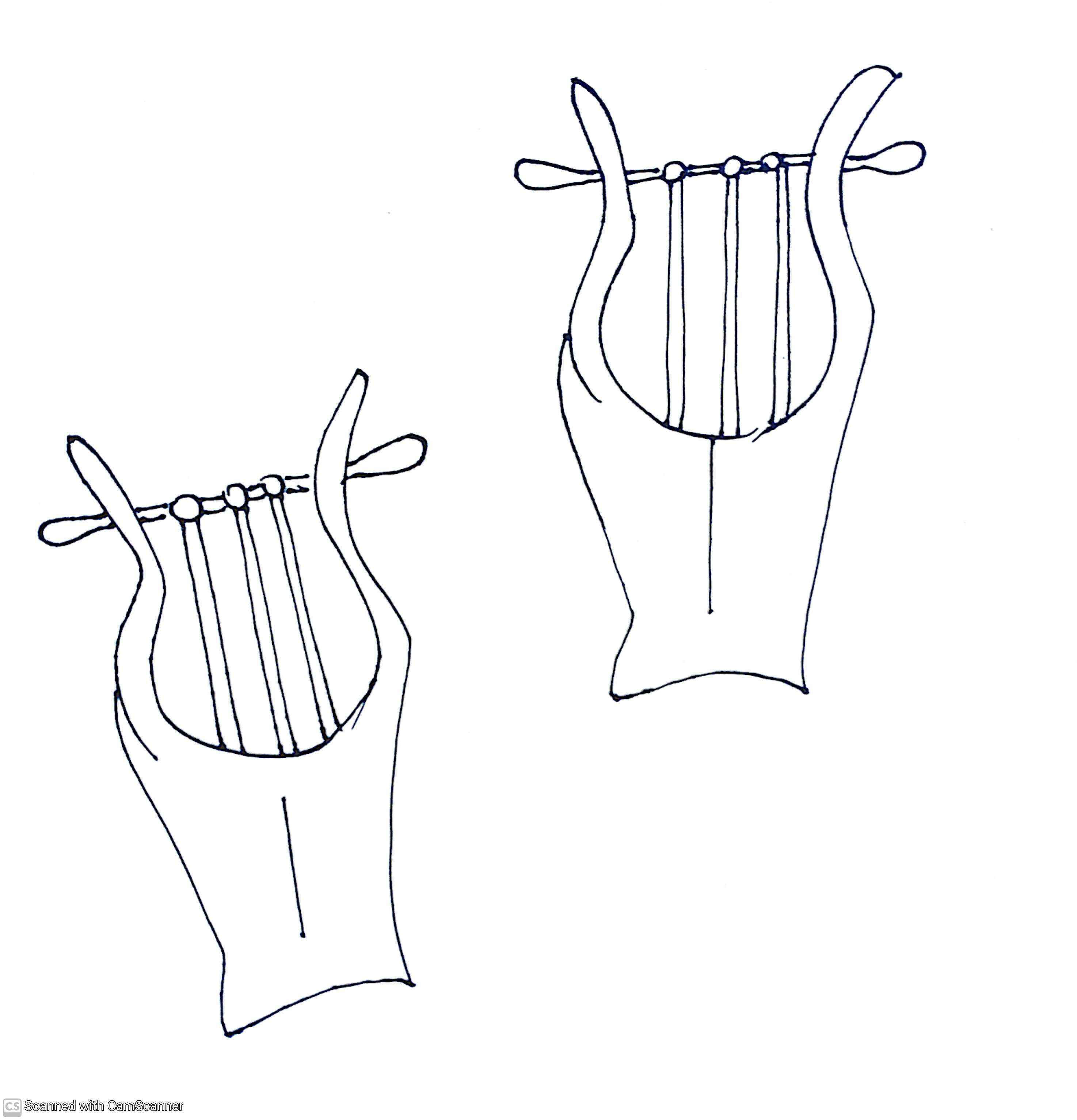
We have the dry climate of the Judaen desert to thank for the preservation of written documents and artifacts from this heroic period of Jewish history. Jews struck motifs of the Second Temple Period coins over the Roman coin motifs of the time. These Second Temple Period motifs included date palms, grapes, grape leaves, the palm frond, etrog, myrtle and willow, the harp of that time, the Holy of Holies of the Second Temple, and the seven species: barley, wheat, date, olive, pomegranate, grape and fig.
The coins of this period can be seen at the University of Haifa Talmudic Sources


Leave a comment